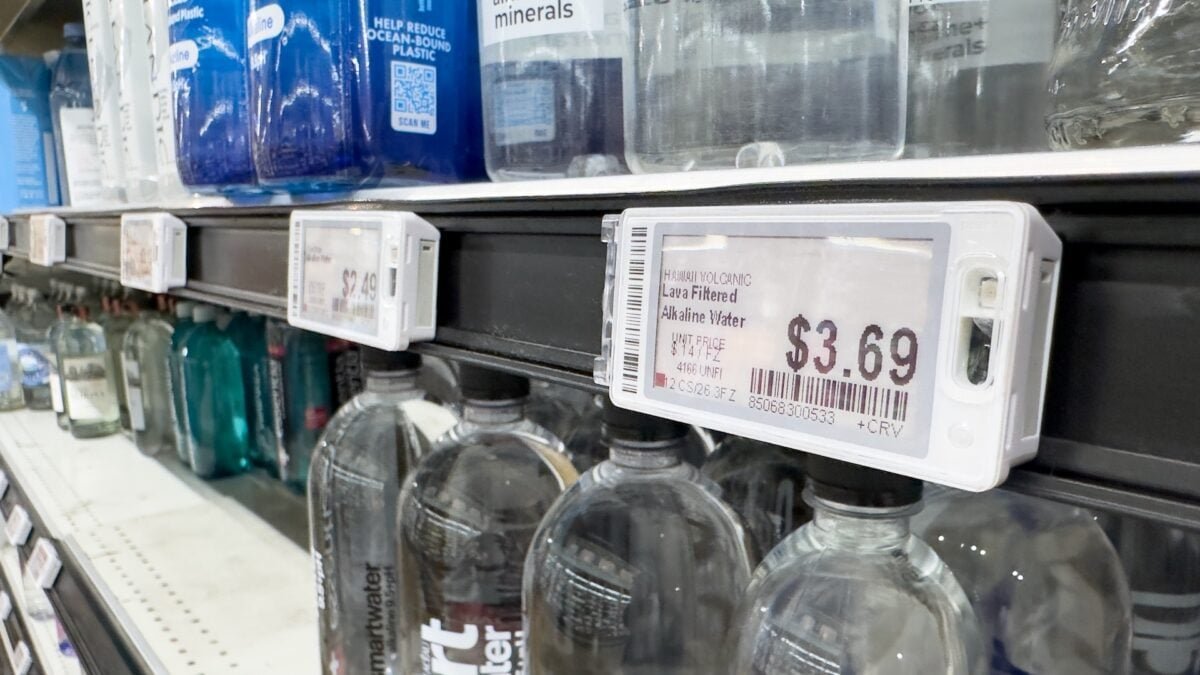

The new bill would require stores to disclose their use of facial recognition technology and ban electronic shelf labels (ESL) in large grocery stores. ESLs are controversial because they allow retailers to remotely change the price of a given item, opening the possibility that they could be tied to algorithms that raise and lower prices based on conditions in the store or who is trying to buy something.
Hypothetically, stores could charge different prices at different times of the day or rely on different inputs, even personalizing a price based on who was looking at a given item, as seen with facial recognition technology. The concern is that factors such as race, gender and income level may be used to determine how much people are charged. A 2025 study found that Instacart was charging customers different prices for the same product, sometimes as much as 23% higher. A few weeks after the study received negative press coverage, Instacart announced it was pausing its AI-powered pricing.
“In New Mexico and across the country, Americans are struggling to put food on the table,” Senator Luján said in a statement posted online. “With costs rising due to President Trump’s trade war and Republican cuts to SNAP, Congress must act to ensure that technologies are being used to improve Americans’ lives, not increase their grocery bills. Our friends, family and neighbors should be able to shop at their local grocery stores without worrying about predatory pricing.”
At least six states have introduced legislation to stop surge pricing and monitor pricing, according to the United Food and Commercial Workers International Union (UFCW), which also developed a 30-second ad to spread the word on the threat.
It’s unclear how many grocery stores are actually using in-store monitored pricing, but one reason legislators feel the need for new laws is that they want to get ahead of things before this practice becomes commonplace.
“This law is really very simple: If two people are buying the same item at the same store, they have to pay the same price,” Washington state Rep. Mary Fossey said in an emailed statement.
Fosse added, “Big retailers are investing in AI, algorithms and data systems that can change prices instantly, individually and anonymously.” “We need to stop register rigging before these practices become the norm. Technology must serve workers and consumers, not exploit them.”
The Biden administration launched an investigation into surveillance pricing in 2024, with FTC Chairwoman Lina Khan launching a study into the ways it harms American consumers. But after President Donald Trump took office in 2025, his administration scrapped the study.
Surge pricing for food is extremely unpopular, one of the most famous cases occurred in 2024 when Wendy’s discussed the possibility of introducing it in 2025. Within days the response was so bad that the company refused to even consider the idea, despite fairly clear evidence that it was working on surge pricing. The restaurant chain’s CEO even said in an earnings call that it would “start testing more advanced features like dynamic pricing”.
Consumers are extremely price-sensitive when it comes to food these days, and it’s no surprise as people struggle to stay afloat in an economy that prioritizes stock prices and Wall Street.
“Americans are being hurt by the affordability crisis, and UFCW members see the pain on their faces every time they enter the grocery store,” UFCW International President Milton Jones said in a statement to Gizmodo. “Our members also feel it themselves when they shop for their families.”
“We’re launching this national campaign to stop corporations from changing prices before their eyes because they live in the wrong zip code or are a new parent. We’re proud to work with elected officials in every part of the country to lead the fight for affordable groceries and good jobs because that’s what our members want.”
<a href