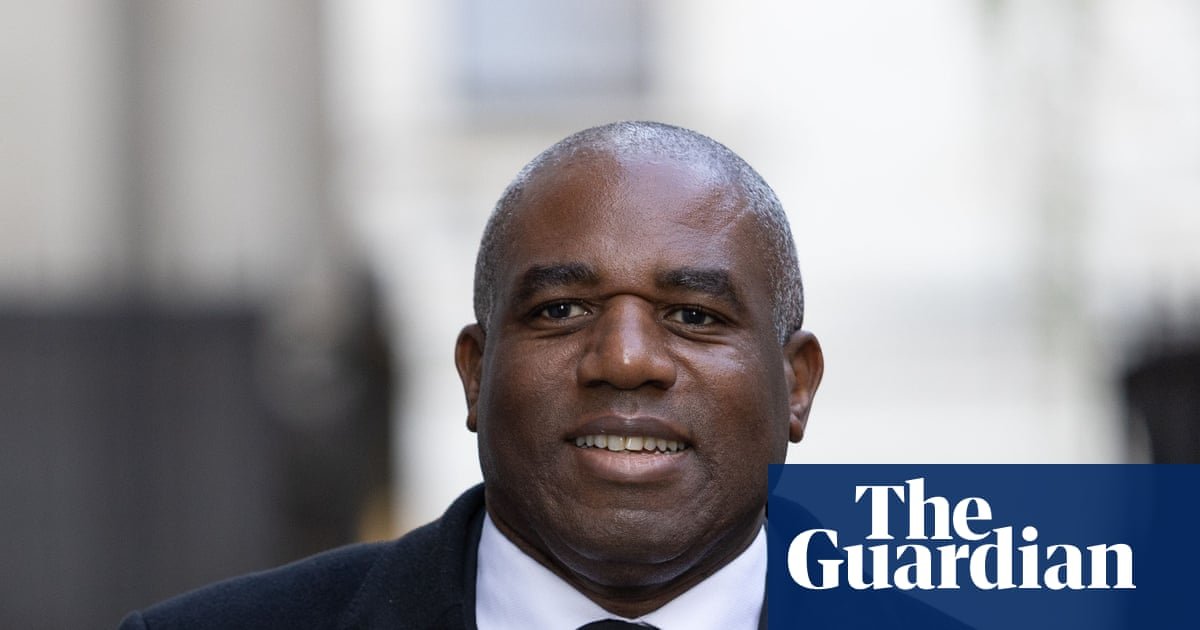
David Lammy is expected to back down from removing jury trials for all but the most serious charges of murder, manslaughter and rape, but will still reduce trials by jury for more minor crimes.
The Justice Secretary said there was “Cabinet feedback” on the plans and suggested on Tuesday he was considering following the recommendation in a report by retired senior judge Sir Brian Leveson that crimes “in any way” likely to result in a sentence of three years or less should be tried by magistrates’ courts or a new judge-only division.
A memo leaked last week suggested Lammy was considering going further, suggesting that jury trials would apply only to crimes of public interest that carry a prison sentence of more than five years, removing thousands of defendants’ ancient right to a trial before a jury.
Lammy described the current court backlog as a “court emergency” that will exceed 100,000 outstanding cases, saying it is causing victims to wait years for justice.
The proposals to be tabled by Lammy on Tuesday will now be closer to the Leveson report, which suggested transferring more crimes to magistrates courts or a new intermediate court called the Crown Court Bench Division.
Speaking on Sky News, Lammy said: “Where should the limit be? (Leveson) suggested it should be three years… and that’s what I’m considering.”
That limit would mean that more serious crimes beyond rape, murder and manslaughter would be tried by a jury, but lesser assaults, theft and handling of stolen goods could be dealt with by magistrate or judge-only trials.
The Justice Secretary suggested on Sky News that the current proposals had emerged from Cabinet discussions, raising the possibility that there would be a Cabinet response to such radical reforms.
Lammy dismissed it as a “process question” – but said: “I will make a statement in Parliament later and set out my view. There is a process by which you discuss with Cabinet colleagues what you are seeing. They respond. You make a decision.”
Asked if there had been any reaction, Lammy said: “Of course you discuss these things with cabinet colleagues. It is on that basis that you reach a decision, and I will explain that decision later.”
He said: “I also fundamentally believe in the jury system, and I thank the 300,000 or so people every year who serve on our juries. It is fundamental to our system. I have stood for juries all my life, fundamentally believe in it. But I don’t want the system to collapse. I want it to continue.”
The proposals have faced opposition from parliamentarians and legal professionals, including the Criminal Bar Association and the Bar Council, who said: “From both a theoretical and a practical position – there is no need to curtail the right to trial by jury.”
Juries will be reserved to hear the most serious cases and lesser “anyhow” crimes when a judge deems it appropriate.
The Law Society of England and Wales said it had seen no “real evidence” it would work to reduce the backlog. Criminal barrister Keir Monteith Casey, who has raised issues of institutional racism to help get the convictions of young black men overturned, said: “Lammy’s 180-degree U-turn to replace juries with judges is not only unconstitutional and politically naive, but it will create further injustice and miscarriages of justice for black and minority ethnic defendants.”
According to the MOJ, about half of the cases in the backlog relate to alleged violent and sexual crimes, and only 3% of criminal cases are heard with a judge and jury.
Lammy also confirmed that two prisoners remain free after being released by mistake. He told LBC that he could not give details of the circumstances of the two prisoners.
<a href