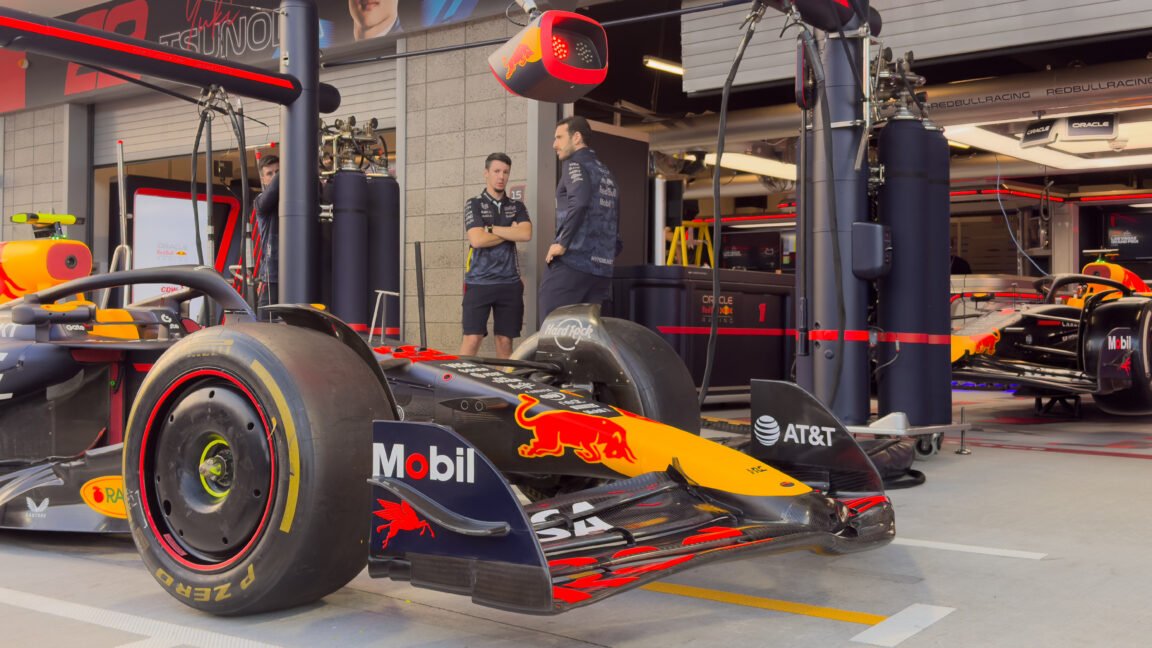
“We learned how to be more efficient because before… we were so focused on performance that we almost forgot about efficiency, it was absolute performance, and we have more people now than in 2017, for example, in the team, but we are spending less money,” Maia told me.
big Data
The number of sensors on each race car has tripled, there are about 750 of them, each sending back a separate data stream, which amounts to about 1.5 terabytes per car per race. Telemetry used to be pretty basic – a TV feed, throttle, brake and steering applications, etc. Now a small squad of engineers sit to the side of the screen at the back of the garage, away from the cameras, keeping in constant touch with their colleagues at the Milton Keynes factory.
“We also need to bring it straight to Milton Keynes because it’s helping us get the setup right – so when you’re here on Friday – and it’s also helping us make the best decisions for race strategy on Sunday. So it’s great to have a lot of data, but you also need to transfer it back and forth,” Maia said.
“As you know, it’s a game of milliseconds,” said Zie Hussain, head of global enterprise solutions at AT&T. “So speed of data, reliability of data, latency, security is absolutely critical. If the data is not going, traversing, at the highest possible speed, and it is not on a secure and reliable path, then that is absolutely without a doubt the difference between winning and losing,” Hussain said.
“I think the biggest latency we have is between Australia and the UK and it’s about 0.3 seconds. It’s nothing. I think if you’re on WhatsApp, calling someone is probably more latency… so that’s impressive,” Maia said.