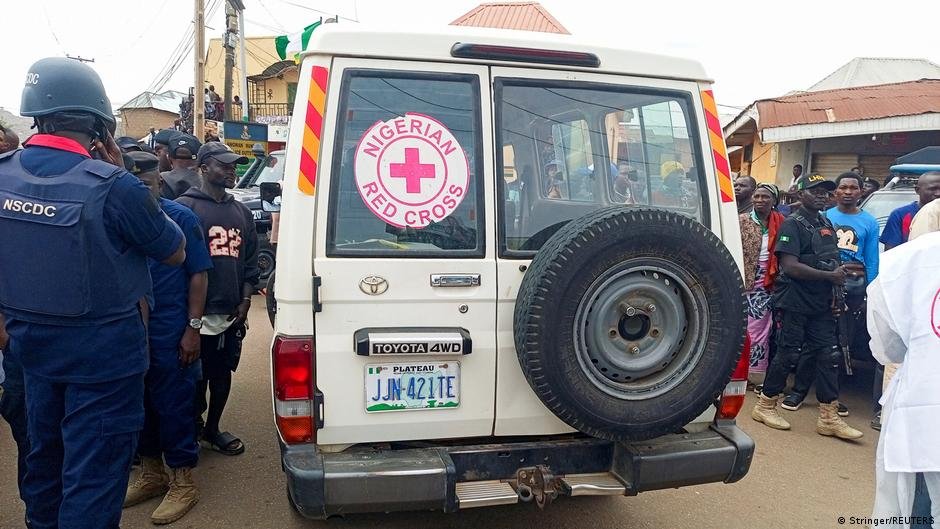
It said the curfew would remain in place until the end of Tuesday, calling it a “tragic security incident … which resulted in the loss of lives, while several others sustained varying degrees of injuries.”
The state government said, “The government under the leadership of His Excellency Governor Caleb Manasseh Mutafwang strongly condemns this barbaric and unprovoked attack on innocent civilians and assures the public that all necessary measures are being taken to arrest the culprits and bring them to justice.” He urged citizens to “remain calm, alert and fully cooperate with security agencies”.
What else do we know about the attack?
Although local officials did not comment on the number of people killed, both Reuters and AFP news agencies, citing separate local youth agency representatives, said at least 30 people were killed.
Residents said the gunmen arrived at Gari Ya Waye community in Angwan Rukuba district, which has close links to the University of Jos, and opened fire indiscriminately.
AFP also reported attacks by mobs attempting to retaliate after this.
The University of Jos canceled all examinations for two days in response.
State Governor Caleb Muthavwang said he visited the area “with a heavy heart” and spoke to the bereaved.
“I stood with the grieving families, heard their pain and shared in their loss. No words can truly convey the depth of grief at such moments, but I want every affected family to know that you are not alone. Your pain is my pain, and the pain of Plateau State. I assure you that those responsible for this evil act will not go unpunished,” he wrote online.
The state government said the investigation was “ongoing” and the culprits had not yet been identified.
Tension between Muslim herders and Christian farmers in Plateau State
US President Donald Trump last year designated Nigeria a “country of particular concern”, alleging that Christians were being targeted and authorities were failing to protect them.
The Nigerian government disputes Trump’s version of events in that country, whose population is fairly evenly divided between its two largest religious groups, Muslims and Christians.
Nevertheless, in the following months several mass kidnappings and attacks on Christian schools and church communities made headlines.
Parts of Plateau State have long been plagued by tensions between predominantly Muslim Fulani herders and predominantly Christian farmers, although the extent to which religion drives the conflict rather than factors such as competition for land and access to pasture due to population growth and climate change is disputed. Criminal gangs are also active.
Separate mass shootings reported at wedding party in Kaduna state
Also on Monday, the AFP news agency reported a mass shooting at a pre-wedding party in the northern state of Kaduna last night, killing at least 13 people.
“Bandits attacked a wedding ceremony in the village of Cahir… 13 people were killed and several wedding guests were injured,” AFP said, citing a security report prepared for the United Nations.
The report also said the attackers abducted an unknown number of people.
Acting police public relations officer Mansoor Hasan told AFP that his force was “aware of the attack but we are waiting for details from the divisional police officer of the area.”
Like many northern states, Kaduna faces threats from jihadist terrorist groups and gangs of armed criminals known locally as “bandits”, who often plunder villages and kidnap residents for ransom.
Nigeria’s governments, past and present, and its military have been trying to increase their security footprint in the north for years but have done nothing to pacify the region.
Last month, the US began deploying 200 troops to the country to provide expert training and technical support to the country’s troops fighting jihadist groups.
Edited by: Rana Taha
<a href