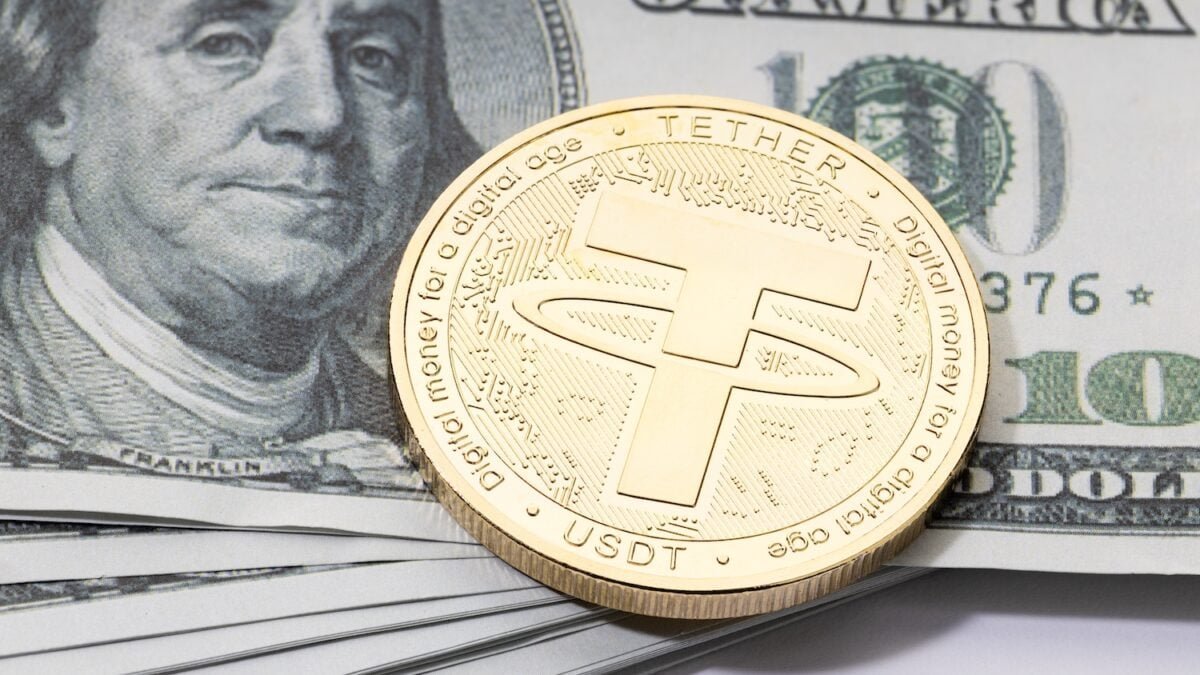

S&P originally launched its stablecoin rating framework in 2023 to assess risks such as liquidity, governance and asset backing in the emerging region. According to their recent report on USDT, Tether reserves have shifted towards more volatile holdings over the past year. These so-called risky assets like Bitcoin, gold, secured debt and corporate bonds now make up 24% of the reserve mix, up from 17% in 2024.
One of S&P’s sharpest criticisms in USDT’s downgrade is particularly its growing reliance on Bitcoin as a reserve asset, which now comprises 5.6% of support, well above the 3.9% reserve buffer Tether flagged in its latest quarterly report (PDF). According to S&P, this risk increases the risks associated with Bitcoin’s notorious volatility.
S&P also sees serious issues regarding transparency in Tether, as verifications of stablecoin issuers provide little more than a high-level snapshot, with no details on who holds these assets, how they are protected, or which counterparties are hiding in the shadows.
That said, Tether’s reserves are still heavily dependent on short-term US Treasuries and cash equivalents, which account for 75% of reserves. Despite alleged red flags from the S&P, USDT has maintained its $1 peg through crypto’s many wild rides over the past few years, most notably handling billions of redemptions without a hitch during the collapse of crypto exchange FTX.
Tether spokesperson told reuters The company “strongly disagrees” with S&P’s assessment, which uses an outdated model that ignores USDT’s track record and role as a critical infrastructure in emerging markets.
Tether CEO Paolo Ardoino went further on “The classical rating models created for legacy financial institutions historically led private and institutional investors to invest their money in companies that declined despite being accounted for in their investment grade ratings,” Ardoino said.
In another post, Ardoino pointed to Tether’s latest validation announcement, where the company also claimed to have an additional reserve buffer of close to $30 billion; However, this is apparently not part of the existing reserves of USDT.
In another post, Ardoino referred to the failures of the S&P during the 2008 financial crisis, which was portrayed by a blind woman in the related film The Big Short. S&P paid $1.375 billion in a related case with the U.S. Justice Department, which alleged that the ratings agency defrauded investors with ratings of its financial products in the lead-up to the housing crisis. Notably, Bitcoin was originally launched in January 2009, almost as a direct response to the collapse of confidence involved in the financial crisis.
S&P https://t.co/gGBOPhrVFX
– Paolo Ardoino 🤖 (@paoloardoino) 27 November 2025
Just weeks before investigating Tether, S&P also imposed a speculative ‘B-‘ issuer credit rating on Bitcoin Treasury Company Strategy, highlighting the firm’s bitcoin hoarding of more than $80 billion as a vulnerability that could disrupt loan payments amid the market downturn. The agency’s outlook is stable for now, but it flags the strategy’s negative cash flow and Bitcoin concentration as red flags, much like the volatility risks inherent in USDT’s reserves.
While S&P sees problems with Tether and strategies using Bitcoin as a reserve asset, several other well-known institutions, such as the Harvard University Endowment and the State of Texas, are buying the crypto asset for the long term and see it useful as a non-political, digital store of value.
It should also be noted that S&P focuses largely on the ability of stablecoin issuers to redeem tokens in exchange for dollars in their assessments, so an asset like USDT where the issuer is acting like a bank issuing its own private currency doesn’t necessarily fit the bill perfectly. In other words, USDT may be viewed negatively by many in the traditional financial system because it is operating on a new standard built on Bitcoin rather than the traditional, dollar-based system.
<a href