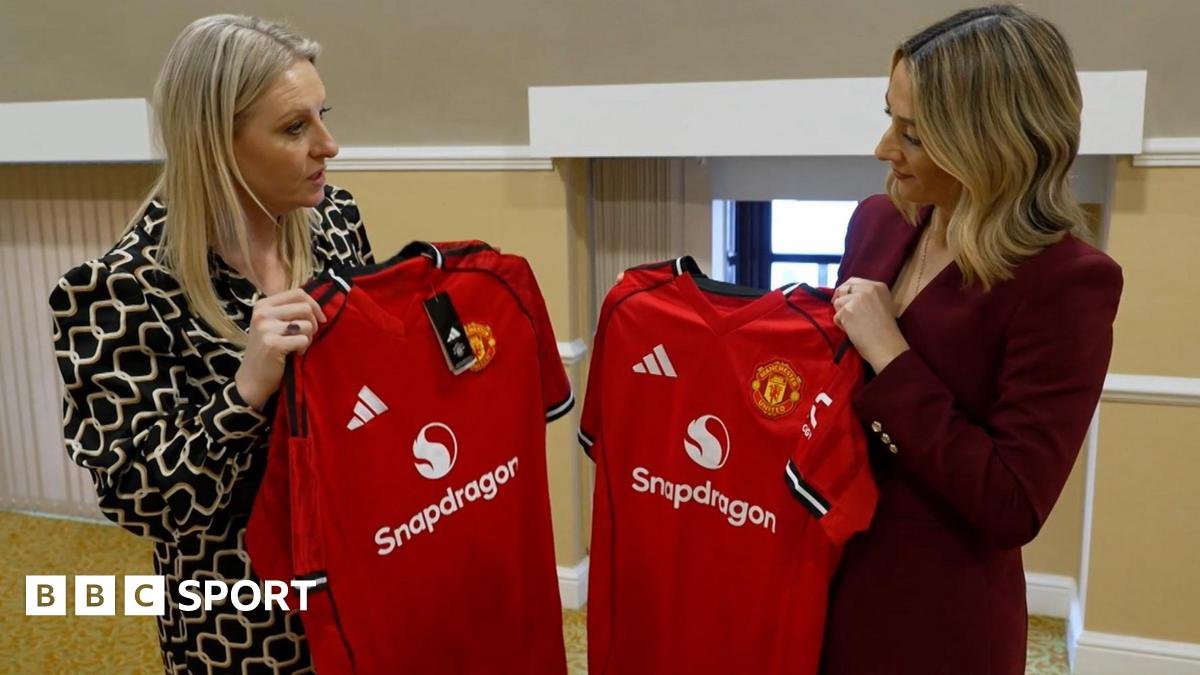
Side by side, there’s no obvious difference between these two Manchester United shirts – but the original shirt will cost £85 to buy, and the second for just £15.
Counterfeit football kits are not a new issue, but some experts have raised concerns that the poor quality materials used in their manufacture could even be harmful.
“We don’t know what’s in these kits – they could pose a health risk,” says Lewis Baxter-Scott of Trading Standards.
“They are poorly made but look legitimate, and the pressures of Christmas, plus the rising cost of living create a huge consumer vulnerability and push people towards cheaper alternatives.”
And Chloe Long, deputy director general of the Anti-Counterfeiting Group, has warned that counterfeit kits could leave even those wearing them in a hurry.
“Wearing that bandage can cause irritation,” she says. “It can cause even more significant problems — especially if harmful toxins or dyes were used to manufacture those products.”
Long has helped trace the supply chain of counterfeit goods, which often originate from factories in China.
Asked whether there is evidence of toxins in counterfeit strips, she says: “It is very difficult to know in retrospect what has been put into the product, but you can see in some cases that they could be harmful.
“And they don’t follow any rules. They’re not bound by the legalities and regulations that real manufacturers are.”
Long says fraudsters have no morals, no standards, and the only thing they are motivated by is price.
“They’ll do whatever they can get to make it look as close to the real thing as possible,” she says.
“So you don’t know what might happen when you put it in the washing machine with other products and, especially if you’re buying it for children, it’s not a risk you should take.”
<a href