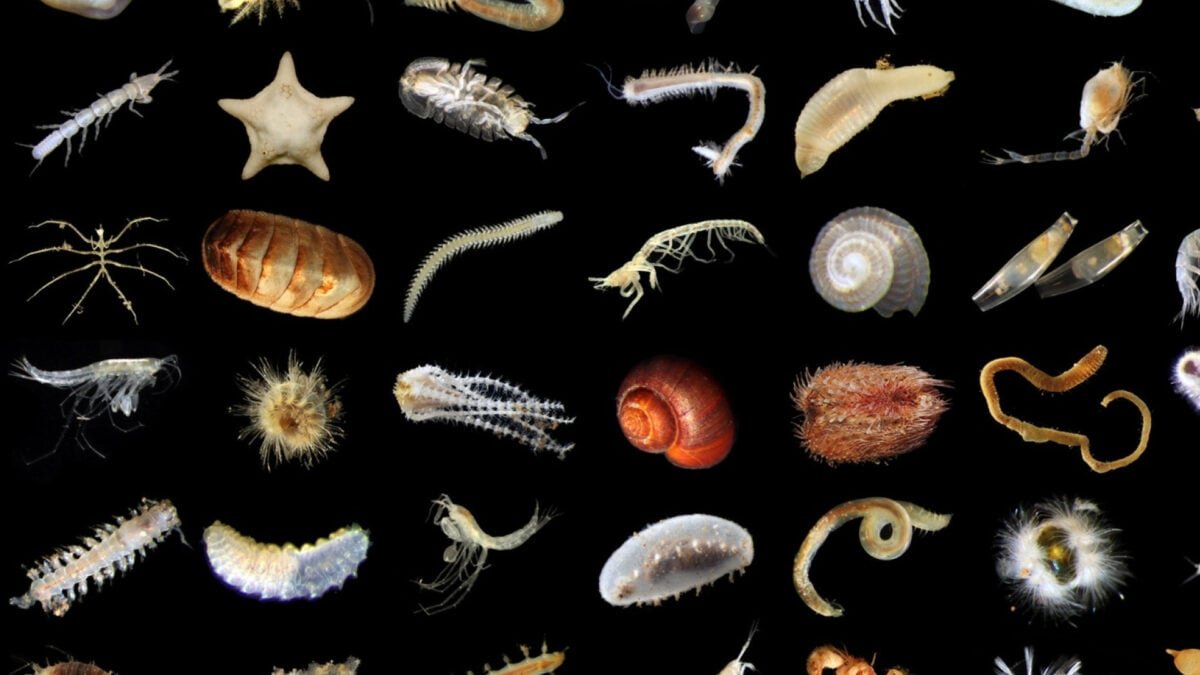
A team of European marine biologists and deep-sea mining company The Metals Company spent five years in the depths of the Clarion-Clipperton Zone, a part of the deep sea between Mexico and Hawaii. The unprecedented collaboration encountered thousands of sea creatures thriving 13,123 feet (4,000 meters) underwater, including strange hairy worms, bony spiders, tiny snails, mussels and more.
More worryingly, the team confirmed that mining vehicles have negatively impacted wildlife, although with some caveats. A paper on this project was recently published in Nature Ecology & Evolution.
hidden in the depths
The initial objective of the study was to assess the impact of deep sea mining technologies on the marine environment. Deep sea mining extracts important minerals such as lithium, cobalt or nickel from the depths of the ocean. As their name suggests, these minerals are vital elements for renewable energy technologies, such as solar panels, wind turbines, or electric vehicles.

But they are rare and always in short supply, prompting various stakeholders to seek new sources of critical minerals, including in less explored areas of the deep sea. Experts do not yet fully understand the extent to which mining can damage the ecosystem, and as a result, no commercial operations have been approved by the International Seabed Authority (ISA), which oversees human activity in international waters.
treasure trove of animals
The study was based on one of several investigations that ISA approved for preliminary assessments of mining impacts. In a comment to BBC News, the researchers clarified that their data was independent, as the metals company “was able to see the results before publication but was not allowed to change them.”
Researchers sampled sediment from the Clarion-Clipperton Zone several times before and after mining tests to evaluate whether biodiversity in the area had changed. These 80 samples revealed 4,350 deep-sea specimens, of which 88% could be identified as approximately 800 different species.

“Historically it was thought that deep-sea ecosystems would be very stable and unchanged over time because of how far they are from the ocean surface,” Eva Stewart, lead author of the study and a PhD student at the University of Southampton in the UK, explained in a statement. “But we actually found that there was a considerable amount of natural variation during the time we were studying.”
Mining doesn’t help, but…
The impact of mining was also very pronounced, as the presence of mining vehicles led to declines in animal numbers and species diversity by 37% and 32%, respectively, the paper said. When mining machines move across the seabed, they remove about two inches (five centimeters) of the seafloor — where “most of the animals live,” Stewart told the BBC.

“So obviously, if you’re removing sediment, you’re also removing the animals that are in it,” she added. However, some species were able to cope better with the disturbance, eventually crawling back to their original locations after the sediments settled.
“We were probably expecting a little bit more impact, but [we didn’t] “See a lot, just a change in which species was dominant over others,” Adrian Glover, the study’s senior author and a marine biologist at the Natural History Museum in Britain, told the BBC.
Overall, the team concluded that despite their findings, “it is still challenging to say with certainty how mining activity affects other animals in these deep-sea environments,” according to the release. One reason for this is that the study, confirming hundreds of new species, has reinforced humanity’s poor understanding of deep-sea environments.
To learn more, we just have to keep going – even if that puts the wildlife itself at risk.
<a href