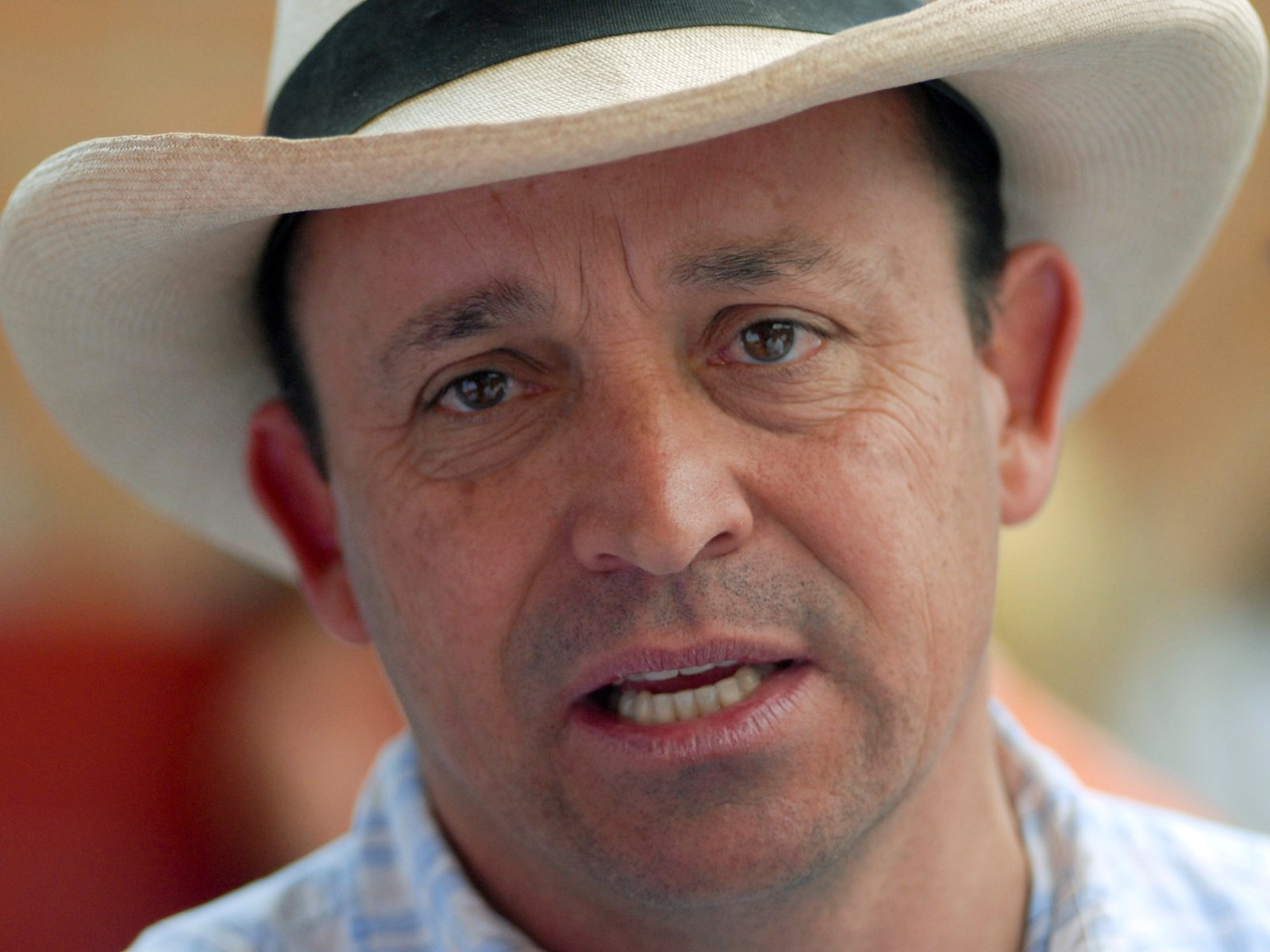
In Tuesday’s decision, the three-judge panel in the northwestern province of Antioquia ruled that, in the early 1990s, Uribe “formed and led an illegal armed group”.
Recommended Stories
list of 3 itemsend of list
Under Uribe’s leadership, the group reportedly “carried out a plan to systematically assassinate and exterminate people deemed undesirable”.
Uribe has denied any ties to paramilitary groups. His defense team plans to appeal.
The verdict reverses an acquittal by a lower court last year. The case will now go to the Supreme Court of Colombia for a final decision.
The conviction is the latest twist in a long-running criminal investigation into the Uribe family and its alleged paramilitary ties.

Critics have accused Uribe and his brother, the former president, of maintaining ties to groups involved in serious human rights abuses during Colombia’s six-decade-long internal conflict.
Tuesday’s sentencing relates to activities that took place on and around the Uribe family’s La Carolina cattle farm, located in Antioquia.
In its 307-page ruling, the court detailed how the ranch was used as a base for the 12 Apostles, a far-right paramilitary group formed by cattlemen in the early 1990s to combat leftist rebels, particularly the Revolutionary Armed Forces of Colombia (FARC).
The court described the 12 Apostles as a “death squad”, saying it carried out “social cleansing” by killing “undesirables”, including sex workers, drug users, people with mental illnesses and suspected leftist supporters.
According to the verdict, the paramilitary group not only held meetings in La Carolina, but also conducted training and weapons distribution at the site.
They were “acts that constituted crimes against humanity”, the judges wrote.
Describing Uribe as the leader of the 12 Apostles, the court found him responsible for ordering the murder of Camilo Barrientos, a bus driver who was shot near La Carolina in 1994 for being a suspected rebel collaborator.
Tuesday’s verdict also exposed collusion between paramilitaries and state security forces, saying the militias “enjoyed cooperation through the actions and inactions of state agents”.
Uribe was first investigated for his involvement with The 12 Apostles in the late 1990s, but the investigation was closed in 1999 due to lack of evidence.
Colombian authorities reopened their investigation in 2010 and took Uribe into custody on murder charges in 2016.

While the trial ended in 2020, the lower court delivered its verdict years later, in November 2024. The judge overseeing the case at the time, Jaime Herrera Niño, ruled that there was insufficient evidence and acquitted Uribe.
Tuesday’s decision overturns that decision. Human rights advocates hailed the decision as a step toward accountability, even at the highest levels of power.
“This sentence is extremely important,” said Laura Bonilla, deputy director of Colombia’s Peace and Reconciliation Foundation (Pérez). “This shows the level of penetration of paramilitarism into Colombian society.”
Gerson Arias, conflict and security researcher at the Ideas for Peace Foundation, a Colombian think tank, said the complexity of the case reflects the power structures involved.
“The roots of paramilitarism were deep in the upper echelons of society and so it takes years to clarify what happened,” he said.
“It is therefore possible that many of the collective things we know about paramilitarism are still pending resolution and discovery.”
The defendant’s brother, former President Alvaro Uribe, led Colombia from 2002 to 2010.
The former president was found guilty earlier this year of bribing former paramilitary members not to testify about his involvement with them.
The verdict was overturned in October, when a court ruled that the evidence had been gathered through illegal wiretaps. It also cited “structural shortcomings” in the prosecution’s arguments.
The former president remains a powerful figure in right-wing politics in Colombia, and has promised to form a coalition to oppose the leftist government in 2026 elections.
“I am deeply saddened by the sentence against my brother. May God help him,” the former president wrote on social media platform X after Tuesday’s verdict.
<a href