
 Jeff Owers/BBC/PA Wire
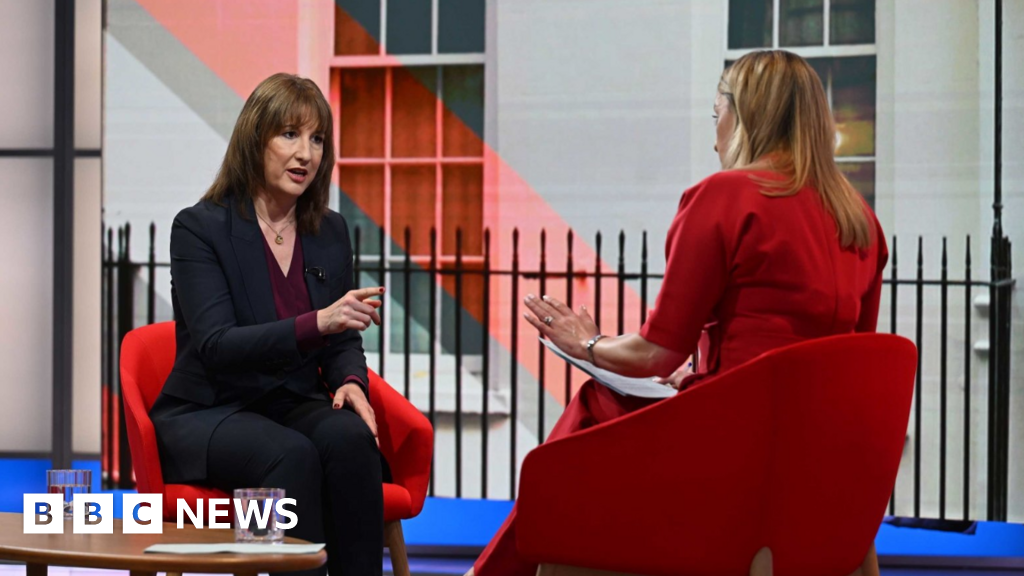
Chancellor Rachel Reeves says she can be trusted with the country’s finances and is “candid” about the reasons for her decisions, following claims she misled the public over her budget.
In an interview with Laura Kuenssberg for BBC One’s Sunday, Reeves was challenged to explain why he had repeatedly warned about a decline in UK economic productivity forecasts.
It has since emerged that the Office for Budget Responsibility (OBR) told him in mid-September that the public finances were in better shape than widely thought.
When pressed on the issue, she said she did not “accept” that it was misleading and added that she had been “precise” about all her plans in the past week and before the general election.
Conservative leader Kemi Badenoch, who was also present at the event, said she was not satisfied with the chancellor’s refusal and called on her to resign.
The Conservatives have accused the Chancellor of giving an overly pessimistic view of the public finances as a “smokescreen” for tax increases and Badenoch claimed Reeves had “lied to the public”.
Downing Street has denied he misled the public and is expected to back his budget decisions in a speech on Monday. Prime Minister Keir Starmer said the chancellor’s decisions would help tackle cost-of-living pressures and reduce inflation.
Beginning the interview, Kuenssberg asked Reeves if he could be trusted and the chancellor responded: “Yes.”
Kuenssberg then underlined what the Chancellor had said in a speech on 4 November, when Reeves indicated that there was less cash than previously forecast due to falling productivity, and that he was likely to need to raise taxes as a result.
Reeves explained that, despite what critics say, “I didn’t have an extra £4 billion to play with” but instead the OBR figures were reduced from £9.9 billion headroom in the spring to £4.2 billion in the autumn.
Headroom is the term for money left over after a government meets its expected budget costs, which provides a financial buffer for unexpected costs.
She said, “I obviously cannot deliver a budget with only £4.2 billion of headroom,” as it would have been “the lowest surplus any Chancellor has delivered”, and she would have “rightly” faced criticism for having too little headroom.
She said: “I was clear that I wanted to build that flexibility and that’s why I took these decisions to bring that headroom up to £21.7 billion.”
Pressed on whether he had exaggerated the situation to pave the way for a £16 billion increase in welfare, Reeves said he also had to take into account the policy choices made over the past six months on welfare and the winter fuel allowance.
She said: “When the policies changed just before the summer I said we had to find that money in the budget, so I was very clear about that.
“Yes, I took the decision in the Budget to scrap the two-child (benefits) limit – which was funded by increases in online gambling taxes as well as cracking down on tax avoidance and tax avoidance, fully cost-effective and fully funded and lifting half a million children out of poverty.”
Asked whether he had broken the spirit, if not the letter, of his manifesto commitment on taxation by lowering the income tax threshold, Reeves said: “I admit I didn’t say that in the manifesto, but since then we’ve had a significant downturn in productivity forecasts as well as huge global turmoil.”
She added: “I have to answer for all those things because, if I lose control of the public finances, we will be punished.
“Having £2.6 trillion of public debt is punished by financial markets, and punished by higher interest rates, which will impact not only the country, but every single business that borrows and every single household that has a mortgage.”
 Jeff Owers/BBC/PA Wire
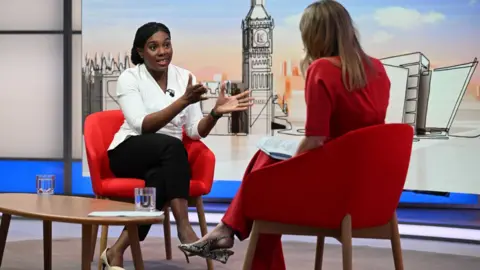
Appearing on the same show, Badenoch said she was “not at all satisfied” with Reeves’ explanation and that he should have cut welfare spending instead. He urged the Chancellor to step down.
He said: “The Chancellor called an emergency press conference and told everyone how bad the state of the finances was and now we have seen the OBR telling him the exact opposite.
“She was raising taxes to pay for welfare – the only thing that was unfunded were the welfare payments that she made, and she’s doing that on the backs of a lot of people who are working very hard and growing up poorer – and because of that I believe she should resign.”
Badenoch said his shadow chancellor, Mel Stride, has written a complaint letter to the Financial Conduct Authority demanding an investigation, accusing the chancellor of trying to “boost his budget”, which could amount to “market manipulation”.

<a href