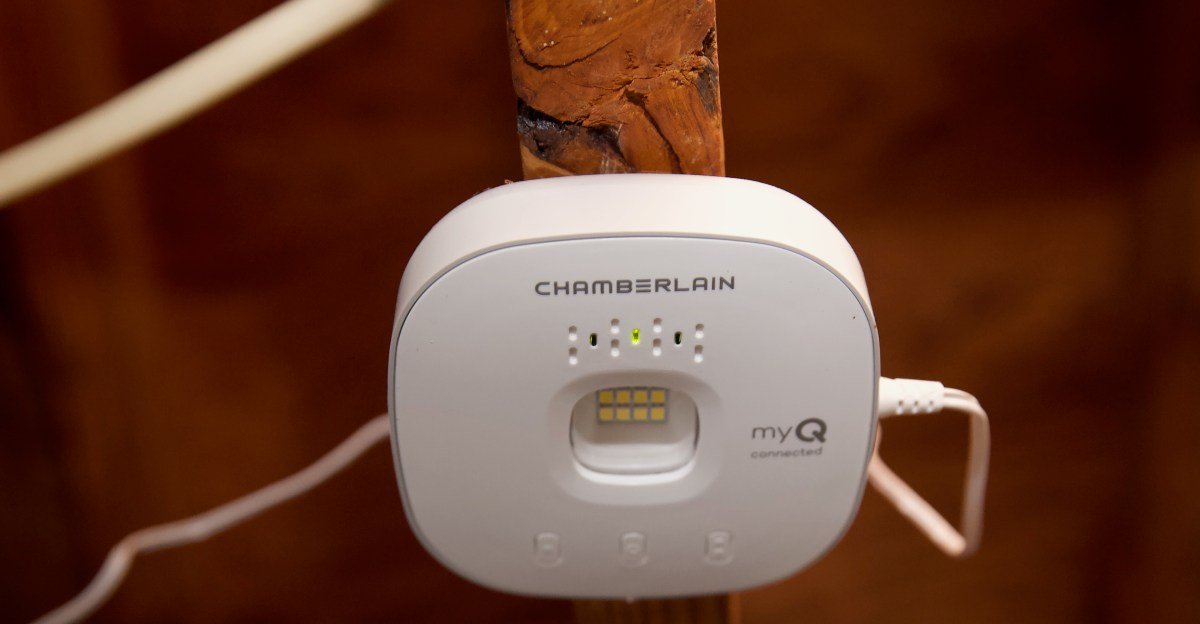
Garage door opener maker Chamberlain Group has launched a new version of the communications platform that powers its connected garage door openers — and it’s bad news for smart home users.
The new Security+ 3.0 platform, launching with Chamberlain’s latest openers, closes the workarounds that third-party accessory makers like Tailwind, Meros, and Ratgado developed to integrate your garage door with Apple Home, Home Assistant, Amazon Alexa, Google Home, and others.
Instead, you’re pushed into Chamberlain’s ad-filled MyQ app and a short list of partners and integrations, almost all of which require a paid subscription and none of which are major ecosystems. (Controlling your door in the MyQ app is still free).
It’s another sign that the garage door opener market leader has no interest in an open, interoperable smart home. Chamberlain is locking users deeper into its proprietary, subscription-focused ecosystem — a trend halted by its quiet exit from the Connectivity Standards Alliance, the industry group behind the interoperability smart home standard, Matter. Which, coincidentally, also announced support for garage door controllers.
For those unfamiliar, let me take you back to 2014, when Chamberlain launched the MyQ Garage, its first smart garage door controller. An accessory that connects wirelessly to your Chamberlain or LiftMaster (the company’s Pro-Install line) opener, MyQ lets you control your door opener from your phone — a huge upgrade that allows you to check on and close your door from anywhere. Subsequently, Chamberlain has integrated MyQ directly into its openers and now has a comprehensive MyQ ecosystem that includes security cameras, video doorbells, and keypads.
Competitors quickly entered the market, including third-party companies with universal controllers that wired into the back of the opener. But these companies soon discovered that the new Chamberlain openers featuring the patented Security+ 2.0 technology do not work with these dry-contact triggers. So, they developed workarounds, initially by connecting their devices to aftermarket remote controls, then by using a software-based solution to mimic the rolling security codes used by wired communications technology. It was first implemented by Ratgado (which stands for Rage Against the Garage Door Opener) when founder Paul Weiland became frustrated with the limitations of MyQ.
Meanwhile, Chamberlain, which was sold to private equity firm Blackstone in 2021, began spinning off its MyQ technology, which it had been building directly into its openers. It shut down its Apple HomeKit bridge, ended its Google Assistant integration (after trying to get people to pay for it first), and blocked unofficial Home Assistant integration. Today, most of the integrations it supports require a subscription or are tied to paid services like Amazon Key. These steps made aftermarket controllers more attractive to people who wanted to decide for themselves how to control the hardware in their garage.
Security+ 3.0 slams door shut
With Security+ 3.0, workarounds developed by those controllers stopped working. “Any aftermarket controller, such as Ratgado, Tailwind, Meros, Connected.io, none of these will work with Security 3.0 devices,” said Scott Riesebosch, president of Tailwind. The Verge in an interview. “And there’s no possibility of a firmware update for any of those products that will work, because all those devices communicate by a wired communication channel.”
I asked Chamberlain if this was the case. “Our approach to third-party partner integrations remains the same,” Christina Marenson, senior manager of marketing and PR for Chamberlain Group, said in an email. “We are focused on providing the most secure and seamless experience for all users, and that means we can only allow approved integrations, including Alarm.com, Resideo, Ring, Vivint, and IFTTT.”
Security+ 3.0 is a complete refresh of the company’s communications technology and comes with new hardware, which Marenson says is “modernizing the industrial design of our hardware for the contemporary smart home ecosystem.” That hardware includes new remotes and keypads that can be assigned to specific people, so you know who opened the door and when.

Technically, the big change is the shift toward completely wireless communications; Wired connections now power only the opener and security sensors. “Our communications architecture continues to leverage rolling code technology encryption, now augmented with Bluetooth Low Energy (BLE) operating at 2.4 GHz to provide a more secure handshake, faster provisioning, and extended range,” says Marenson.
It is this patented rolling code technology that has made it difficult for third-party devices to work with MyQ products. And while their software-based workarounds relied on wireline communications, now that everything is wireless, those solutions won’t work with new devices.
Nate Clark, founder of Konnected.io, whose blaQ controllers work with Chamberlain openers, confirmed this on Konnected’s community forum, writing that this is “a deliberate move by Chamberlain/LM to lock you into MyQ.”
For many Chamberlain customers, the MyQ app is fine — as long as they can deal with the constant, intrusive ads and upsells from MyQ’s cameras to cloud video storage, many of which are now integrated into openers. But there are plenty of users who don’t want to use multiple apps to control their homes, don’t want to tie critical access devices to the cloud, and prefer to integrate everything into one smart home ecosystem.
Today, MyQ does not work with the most popular home automation platforms, such as Apple Home, Amazon Alexa, and Google Home. Its connections are largely through subscription-based security companies like Alarm.com and Vivint. It doesn’t support free services like CarPlay or Android Auto; Instead, there are partnerships being formed directly with automakers, including Honda and Volkswagen, that offer subscriptions for about $50 a year to open your garage door from the screen in your car. (Chamberlain works with the free HomeLink solution, a proprietary platform that uses in-car buttons to connect to openers both locally and via the cloud.)
It seems like these are all partnerships that impact a company’s bottom line in ways that more open platforms don’t.
While Chamberlain’s US market share exceeds 70 percent, alternatives exist. Riesebosch praises Genie and its Aladdin connectivity platform for its more open approach to the smart home. Lock-maker Kwikset recently launched an opener that it says will be miter-compatible.
Still, if you find yourself with a Chamberlain Group Security+ 3.0 garage door opener (the easiest way to identify one is to look for the Learn button; white circle means 3.0, yellow means 2.0), aftermarket manufacturers are working on a solution. However, Riesebosch says this will be difficult. “Chamberlain has put up some pretty big hurdles.”
One of these is a new verification check that calls home to confirm that any remote or accessory attempting to connect to the opener is made by Chamberlain and not a counterfeit, duplicate, or clone. Marenson said this cloud-based authentication was introduced with Security+ 3.0 due to the “increasing presence of counterfeit accessories … that do not meet the performance, security, and reliability standards of the myQ ecosystem” and is designed to “protect our consumers and maintain the integrity of our trusted myQ user experience.”
If you’re skilled, you can hack the Chamberlain Security+ 3.0 remote by soldering the wires and connecting it to the controller of your choice. But there may also be an easy solution to this.


Third Reality’s new $50 smart garage door controller is a super simple gadget that’s basically a box that holds your garage door remote and uses a mechanical finger to press the button. It supports Matter, so it works with Apple Home, Amazon Alexa, Google Home, Samsung SmartThings, Home Assistant, etc., giving you complete smart home control.
Chamberlain’s new remotes for the Security+ 3.0 line appear to be the same size as the existing remotes, so they Needed Fit inside this gadget. I’d love to see how Chamberlain plans to stop it Solution.
<a href