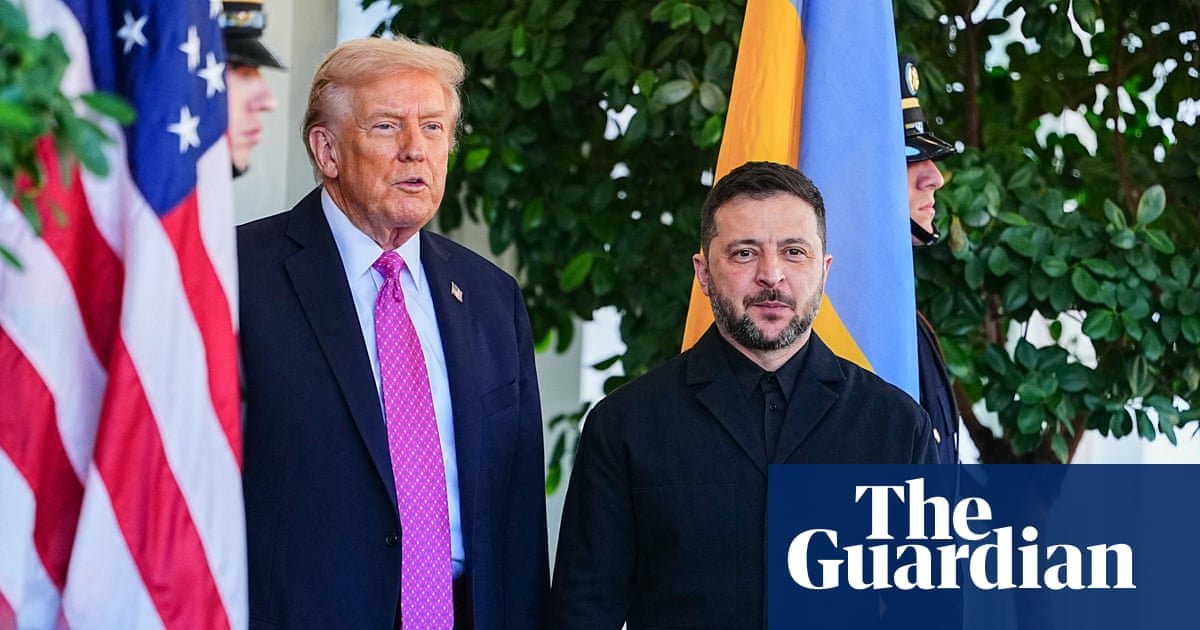
wWith Ukraine’s future on the geopolitical carving block, Europe faces its moment of truth. Is it prepared to protect Kiev from imposing a unilateral “peace” that rewards Vladimir Putin and undermines the security of the entire continent?
This is not the first time that European governments have been kept in the dark about Russia’s secret US-backed proposals to end the war. Leaked to the media last week, the latest incendiary 28-point plan was so tilted in Russia’s favor that there are suspicions it was partly drafted in the Kremlin (with vaguely translated Russian syntax).
The terms of this shocking punitive plan would stabilize the battle lines but would require Kiev to give up some of the territory it still controlled; drastically curbing the size of its army; Accept an apology for Russian atrocities and war crimes; And stay out of NATO forever. No wonder President Zelensky told his compatriots that this led to one of the most difficult moments in their history.
Yet, in a hurry to take credit for peace – apparently at any cost – Donald Trump gave Ukraine an ultimatum: sign Russia’s shopping list by Thanksgiving or, it was implied, risk losing US intelligence and military aid: not a celebratory deadline.
The days since have felt like a repeat of August, when Trump rolled out the red carpet for Putin in Alaska and left European leaders headed to the White House en masse, next to Zelensky, to limit the damage.
This time, despite Trump chiding Ukraine’s president for “zero gratitude”, emergency talks in Geneva have reportedly changed plans to “preserve Ukraine’s sovereignty.” Trump has softened his language (and deadlines), claiming that negotiations with Ukraine are succeeding and that his special envoy Steve Witkoff will return to Moscow soon.
If there is going to be a more palatable deal, it may be because France, Germany and Britain have helped Ukraine push back. It is not just about solidarity: these countries may need to have “boots on the ground” to maintain any final agreement.
foot in the door
However, there is no reason to believe that Moscow will engage in any plan that does not involve the surrender of Kiev – or even that Russia wants to end the war. “Putin sees no problem with continuing the war,” Tatiana Stanovaya of the Carnegie Russia Eurasia Center told the Guardian’s Russian affairs reporter Pjotr Sauer.
At such a dangerous moment, Europe has a greater responsibility than ever to demand that Ukraine achieve a just peace – both morally and in self-interest for the security of Ukraine’s European neighbours.
But how can Europe hold on to the US alliance, especially if Moscow retains its most unreasonable regional demands and Trump loses patience with Zelensky? Analysts say it is important to move forward ahead of the Trump/Putin summit. Ukraine’s European supporters need to make clear to Trump that Ukraine’s security is Europe’s security.
“Europeans complain about not being at the table, but they have agency,” Jana Kobzova, a Ukraine expert at the European Council on Foreign Relations, said on the think tank’s podcast. “They can get their foot in the door and say these are things we will not tolerate.”
Europe is already bearing most of the costs of Ukraine’s resistance, even if it has been too hesitant, divided or complacent to give Kiev the necessary negotiating cards.
After newsletter promotion
ruble roulette
The most game-changing piece of European leverage could turn to the nerve-wracking (and Belgians say legally iffy) EU plan for a €140bn “compensation loan” to Ukraine, secured on billions of dollars in Russian central bank deposits that have been frozen in the West because of EU sanctions. The seized assets (mostly held in a storehouse in Belgium) could turn around Ukraine’s near-bankruptcy and help it win the war. But the proposal also stipulated using $100 billion of these Russian assets for investment, with 50% of the profits going to the US. Now the EU must decide urgently whether it wants to move on the assets first, or dig deeper to find alternative cash.
Brussels suspects that Russia’s economy is in worse shape than it would like to admit because of measures such as new EU restrictions on Russian gas imports. “They (Moscow) want us to believe they can keep this war going forever. That’s not true,” EU High Representative and former Estonian Prime Minister Kaja Kallas told the BBC.
If Moscow refrains from forcefully changing the borders, it is dangerous for Europe. “If Ukraine surrenders as Russia plans, war in the rest of Europe is one step closer, and Europeans understand this. So it is not out of the goodness of their hearts that they will remain with Ukraine, but because they understand that their own security is at stake,” Nathalie Tosi, director of the Italian Institute for International Affairs and a contributor to Guardian Europe, told me.
For Tosi, the most likely medium-term scenario is not Ukrainian surrender, but one in which the US and Russia (by US supporters including JD Vance) reach a bilateral agreement, leaving Europe to remain with Ukraine.
“In this scenario, the Europeans should stop deluding themselves that they can work with Trump on Ukraine. They should warmly thank the US president and persuade him to place his bets on another conflict just to get the Nobel Peace Prize. Either way, the war will continue for now.”
To receive the full edition of This Is Europe in your inbox every Wednesday, please subscribe here.
<a href