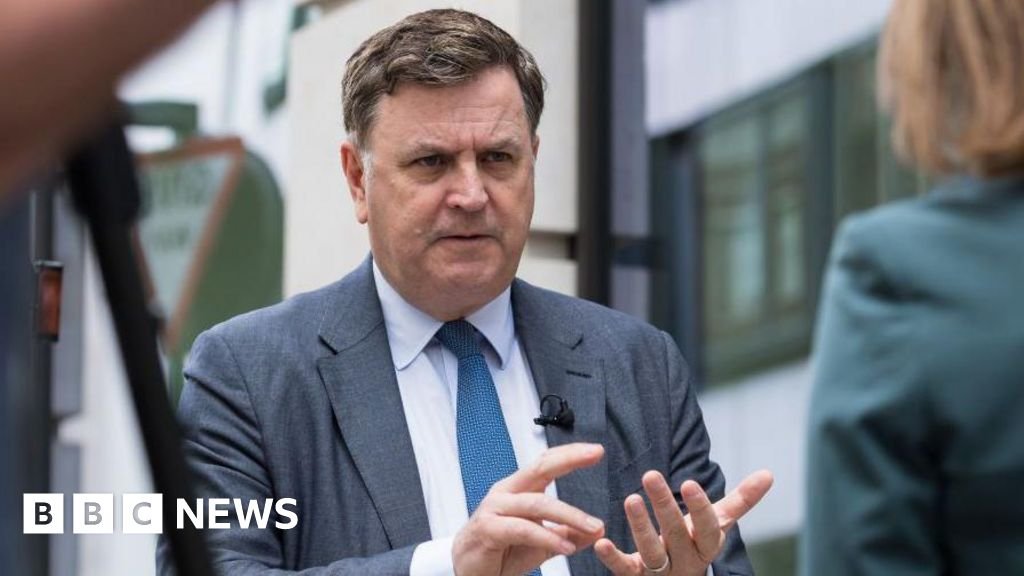
Shadow Chancellor Mel Stride has called for the UK’s financial regulator to investigate “potential market abuse” by people working at the Treasury and Downing Street during the Budget.
The move comes as Chancellor Rachel Reeves denied she misled the public on the country’s financial situation after it emerged she and officials were told they were in a better position than widely thought – but she still gave a briefing the Tories described as overly pessimistic.
The Conservatives have called on him to resign and Stride sent a letter to the Financial Conduct Authority (FCA) requesting an investigation into possible market manipulation.
He claimed, “It appears that confidential market sensitive information was disseminated, leaked and misused – and markets, businesses and households have paid the price.”
The FCA regulates financial services firms in the UK and part of its role is to handle and investigate reports of market abuse, such as insider trading or market manipulation.
In his letter to the regulator chief, Stride outlined the pre-Budget briefing on the country’s financial position, the economy picture and speculations of a tax hike.
“It seems clear that the Chancellor is giving an inaccurate picture of the economic and fiscal context and this appears to be motivated by political considerations,” he wrote.
He claimed that “leaks and spin” from the Treasury had led to market speculation becoming “rife and making gilt markets volatile”.
The FCA has confirmed that it has received the letter and the BBC understands that it will respond.
The reaction of financial markets before and after the Budget is closely watched to gauge the impact tax and spending policies may have on UK borrowing costs.
Many governments sell bonds – essentially IOUs – to raise money for public spending and in return they pay interest.
But how reliable the market views the chancellor’s grip on finances could affect how much it costs governments to borrow money.
Following Reeves’ budget on Wednesday, government borrowing costs fell slightly, indicating a vote of confidence with the policy announcements.
Reeves announced a series of tax rises, extending by a further three years the limits on which people pay tax and higher income tax rates, meaning millions of people will be hit and have to pay more out of their pay packet. He also removed the two-child benefit limit.
But the Chancellor has faced accusations of misleading the public about the state of the public finances.
Reeves repeatedly talked about the decline in the UK’s projected economic productivity, which would make it harder for it to meet its borrowing rules, leading to speculation that income tax rates themselves would rise, breaking the manifesto pledge.
On 4 November, he used a rare pre-Budget speech in Downing Street to warn that Britain’s productivity was weaker “than ever before” and that this “also has implications for the public finances in the form of lower tax receipts.”
Then, on 10 November, Reeves told the BBC: “It would certainly be possible to stick to the manifesto commitments, but it would require things like deep cuts in capital spending.”
However, it has since emerged that the Office for Budget Responsibility (OBR) told the Treasury on 31 October that it was on track to meet its main borrowing rule by £4.2 billion, although this figure was less than the £9.9 billion buffer that Reeves himself left last year.
In a letter to the Commons Treasury Select Committee, OBR Chairman Richard Hughes revealed that he had also told the Chancellor on 17 September that the public finances were in a better state than widely thought.
Along with the Conservatives, the SNP have also written to the FCA urging them to look into the claims of the briefing being “deliberately false and misleading”.
Pre-Budget reports suggested the Chancellor could face a £20 billion gap in meeting his tax and spending rules as a result of the OBR’s decline in productivity.
Speaking to the BBC on Sunday, Reeves hit back at critics, arguing that the £4.2 billion headroom he had was not an “extra $4 billion to play with” but was a downgrade from last year’s £9.9 billion buffer.
She said, “I obviously cannot deliver a budget with only £4.2 billion of headroom,” as it would have been “the lowest surplus any Chancellor has delivered”, and she would have “rightly” faced criticism for having too little headroom.
She said: “I was clear that I wanted to build that flexibility and that’s why I took these decisions to bring that headroom up to £21.7bn.”
Conservative leader Kemi Badenoch called on Reeves to resign, saying: “The Chancellor called an emergency press conference and told everyone how bad the state of the finances is and now we’ve seen the OBR tell him exactly the opposite,” she said.
“She was raising taxes on welfare.”
<a href