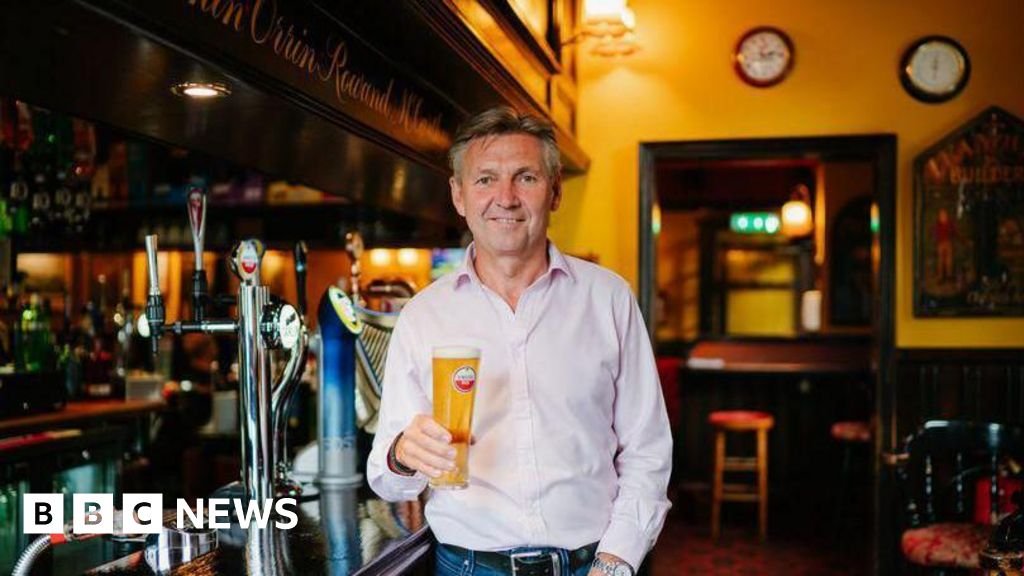
The owner of a small pub chain in the south east of England has said his costs will rise by £62,000 a year after budget changes were announced.
Phil Thorley, who runs the Thorley Taverns pub group, said business rates – taxes on commercial properties – would rise for 17 of his 18 sites, although Rachel Reeves has promised lower taxes for retail, leisure and hospitality firms.
Reeves vowed to impose the lowest taxes for pubs, restaurants and small shops since 1991 by increasing levies on high-value properties such as warehouses used by Amazon and other online giants.
The government said the changes it has made mean it is saving most “typical independent pubs” £4,800 a year.
A firm’s rateable value is based on how much it would cost to rent a firm’s property for a year, and is used to calculate a business’s rate bill.
The government said it would calculate business rates for 750,000 high street retail and hospitality firms using a lower percentage of the rateable value of premises, but this lower tax rate was not as generous as expected.
At the same time, many companies have seen their rateable value rise and face the phasing out of the Covid-era 40% discount from April.
The net result is that, despite some transitional relief, many of them will see significant increases in their business rates bills.
Analysis from tax consultancy firm Ryan shows the average small shop’s business rates bill will rise by 42%, restaurants will face a 45% jump and pub bills will be 66% higher.
Mr Thorley told BBC Radio 4’s Today program that rateable values on most of his sites had “gone north”.
“What this means for a small family company like ours is that our actual due rates are going to increase by about 27%,” he said.
“It cost the business an extra £62,000, which is absolutely crazy at the moment.”
He said the industry was already under significant pressure following the Chancellor’s first Budget last October, which increased recruitment costs with employer National Insurance contributions and increases to the minimum wage.
Mr Thorley said another increase in the minimum wage would mean “less employment, less investment, less training in the people we have and less jobs for young people”.
And he warned that the Chancellor’s budget “will be the death knell for the British pub”.
The Government said it is protecting pubs, restaurants and cafes with a £4.3bn support package, limiting companies’ business rates bills.
A Treasury spokesperson said: “This comes in addition to cutting the cost of licensing to help offer more sidewalk drinking and al fresco dining, in addition to our reduction in alcohol duty on draft pints and capping corporation tax.”
But Alan Wrigley, owner of Atlas Bar in Manchester, said Reeves’ latest budget was “smoke and mirrors”.
He told the BBC that the rateable value of his bar, which is used to calculate its business rates bill, has increased from £69,000 to £97,000 in 2023. And it said it was facing a 15% increase in its business rates bills despite the low multiplier for small retail, leisure and hospitality firms.
“They might have said it’s the lowest rates and the best support but it’s from the highest base,” Ms Wrigley said.
He said: “We have raised our prices four times in the last 12 months but we are now at a point where we feel we cannot burden our customers any further, so subsequently our margins are being reduced and squeezed which is not helpful.”
And Sacha Lord, chairman of the Night Time Industries Association (NTIA), said the change to business rates was tantamount to a “stealth tax” on high street pubs, restaurants and bars.
He reported that BBC operators had initially welcomed the budget, but within hours of the Chancellor’s statement the impact of the reappraisal became clear.
“Once this starts in April, we are expecting to see more closures than ever before, including during the pandemic,” Mr Lord warned.
The Conservatives branded the Chancellor’s business rates changes “a bombshell” and warned that bills for many pubs, restaurants and shops will “go much higher”.
Shadow Business Secretary Andrew Griffiths said the government had previously consulted on a much larger rebate in business rates, but it had been “bottled up”.
“The result will be more closures, fewer jobs and less growth,” he said.
He called on Reeves to immediately change course, and said that “businesses need certainty before they face these bills in April”.
The Liberal Democrats said Reeves should “give a lifeline to our hospitality sector”.
Treasury spokeswoman Daisy Cooper said: “Our pubs, cafes and restaurants are already on their knees, and these options will only force more high street businesses to close up shop.”
He urged the Chancellor to cut the VAT rate for the sector.
<a href