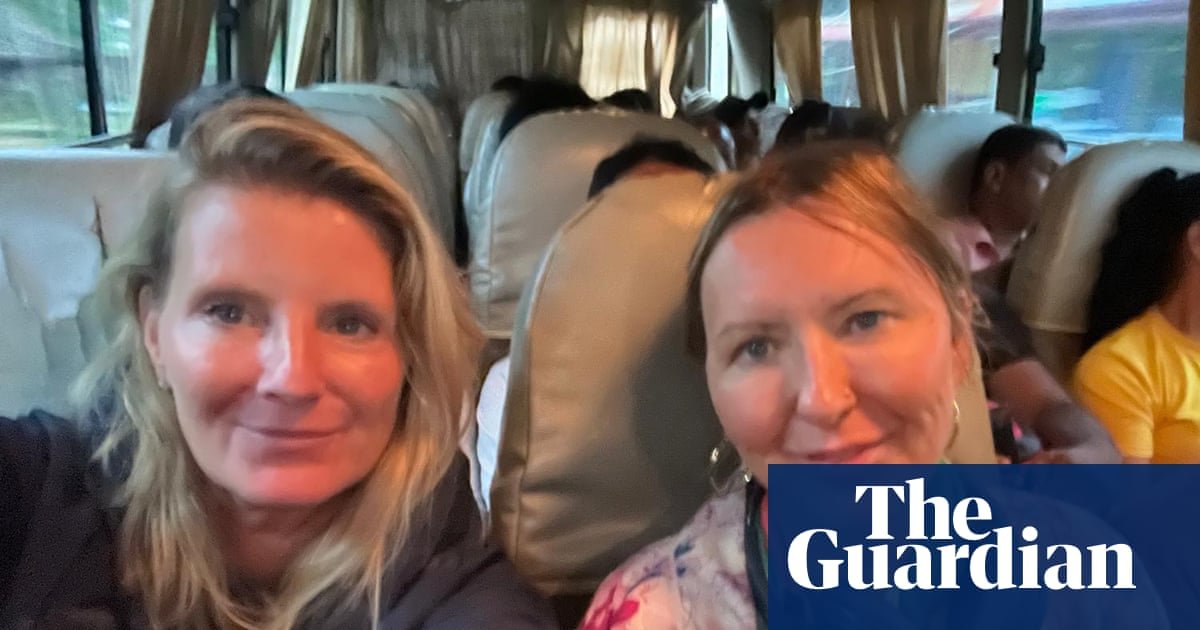
Two British women trapped by a landslide in Sri Lanka’s tea mountains are running out of food and water, the daughter of one of them has said, as officials said the death toll from Cyclone Ditvaha has reached 465.
Melanie Waters, 54, and her friend Janine Reid, 55, both from London, were driving through the mountains from Kandy in central Sri Lanka on Thursday when the road in front of them was flooded, causing a nearby bus to go over the edge of a cliff.
The women’s own car was stuck in a ditch and in danger of being swept away, but the friends and their driver had to stay in the vehicle overnight in the worsening conditions, said Katie Beeching, Waters’ daughter.
Beeching said the two women had since found shelter in a tea plantation, but added that they were running out of food, water and fuel, and roads in and out of the Pussellawa area remained impassable.
Despite repeated calls to the Foreign Office, Beeching, who is nine months pregnant, said she was told the UK government had no plans to facilitate the evacuation of the women, who were on two weeks’ leave when the cyclone hit.
Beeching said he had phoned the Foreign Office and told them: ‘This is your job.’ He said the response was: “It’s not our responsibility.”
He added: “Literally two British citizens are alone, no food, no water, no fuel, no way of getting in or out. It’s getting worse. The weather is going to change again in a few days. You know, there has to be a plan… I said: ‘If you don’t really take some sort of action it could cost lives.’ But he simply said: ‘No, there are no plans.’
The Foreign, Commonwealth and Development Office has been contacted for comment.
Indian authorities on Monday evacuated the last of its more than 330 citizens stranded in Sri Lanka.
Chetak helicopters from the Indian aircraft carrier INS Vikrant evacuated many people to safety, while Indian Air Force helicopters were said to have assisted the Sri Lankans in conducting search operations in areas without road access due to landslides and floods.
On Sunday, Sri Lankan President Anura Kumara Dissanayake described the damage caused by Cyclone Ditvaha as “the largest and most challenging natural disaster in our history.”
Beeching said her mother and friends, who left for the holidays on November 21 and were due to return this Wednesday, had been able to communicate intermittently since the cyclone struck.
She said: “They were traveling south-east from Kandy. They were originally going to take the train, but were advised not to take the train and to drive.
“They’re not on a tour or anything, it’s just them. As they were driving, it hit – this is where the cyclone has had the worst impact, in the mountains, in the plantation area.
“On Thursday afternoon we basically got messages saying: ‘It’s really scary, there are landslides everywhere, we saw a bus go over the edge of the cliff.’
“Where they were there was the greatest loss of life because apparently landslides covered people’s houses. Their driver turned around and they were going back towards Kandy but they reached a place called Pussellawa.”
Beeching, who works for an NGO and was previously at the National Crime Agency, said she had liaised closely with the Foreign Office in the past.
She said she was disappointed by the lack of efforts by British authorities and that she was unable to speak to Andrew Patrick, Britain’s High Commissioner to Sri Lanka.
“(Sri Lankan tourist police) said the army would have been there a few days ago but they still haven’t arrived,” he said. “They can hear the helicopters flying, but they’re clearly taking out bodies.”
<a href