Brazil’s federal police have indicted 31 suspects for fraud and land grabs in a massive criminal carbon credit scheme in the Brazilian Amazon. According For Brazilian national media outlets folha de s.pauloThis is the largest known criminal operation involving carbon credit fraud in the country so far,
A police investigation called Operation Greenwashing was launched after a Investigation Mongabay reporter Fernanda Wenzel published in May 2024 about two REDD+ carbon credit projects that appeared to be linked to illegal timber laundering.
The Netherlands-based Center for Climate Crime Analysis (CCCA) analyzed the REDD+ projects Unitar and Fortaleza Itsuki at the request of Mongabay, finding a mismatch between their declared amounts of logged wood and estimated log amounts through satellite images, suggesting possible wood laundering.
The police investigation confirmed that two REDD+ project areas were generating carbon credits, as well as being used to clean wood taken from other illegally deforested areas.
Both projects, covering more than 140,000 hectares (about 350,000 acres), are located in the Labreya municipality in the south of Amazonas state. This area has been identified as one of the newest and most aggressively deforested areas in the Brazilian Amazon.

Federal Police said Folha It consisted of three interconnected groups.
One group was led by Ricardo Stopes Jr., known as the largest individual seller of carbon credits in Brazil. They have actively participated in climate talks and public events to promote their business model, including the COP28 climate summit held in the United Arab Emirates.
stop sold millions Dollar amount in carbon credits to corporations including Nestle, Toshiba, Spotify, Boeing and PwC.
The other two were led by Elcio Aparecido Moco and José Luiz Capellaso.
Moco Stope’s son, Ricardo Villares, shares a business group consisting of seven companies with Lot Stope. In 2017, Moko was sentenced for wood laundering, but in 2019, another court vacated his conviction. In 2019, he was also charged with allegedly bribing two public officials.
Capellasso was sentenced in 2012 for illegally trading certificates of origin for forest products, but was later released. At the time, police alleged that Capellaso was charging 3,000 reais (about $1,500 in 2012) for each fake document.
According to Operation Greenwashing, the scheme was made possible by corrupt public servants working in Brazil’s land reform agency, INCARA, in the Amazonas state registrar’s offices, as well as in the Amazonas state environmental protection institute, IPAM.
folha de s.paulo There was no response from any of the accused’s legal defense teams. Both IPAM and INCRA said they support and are cooperating with the police investigation.
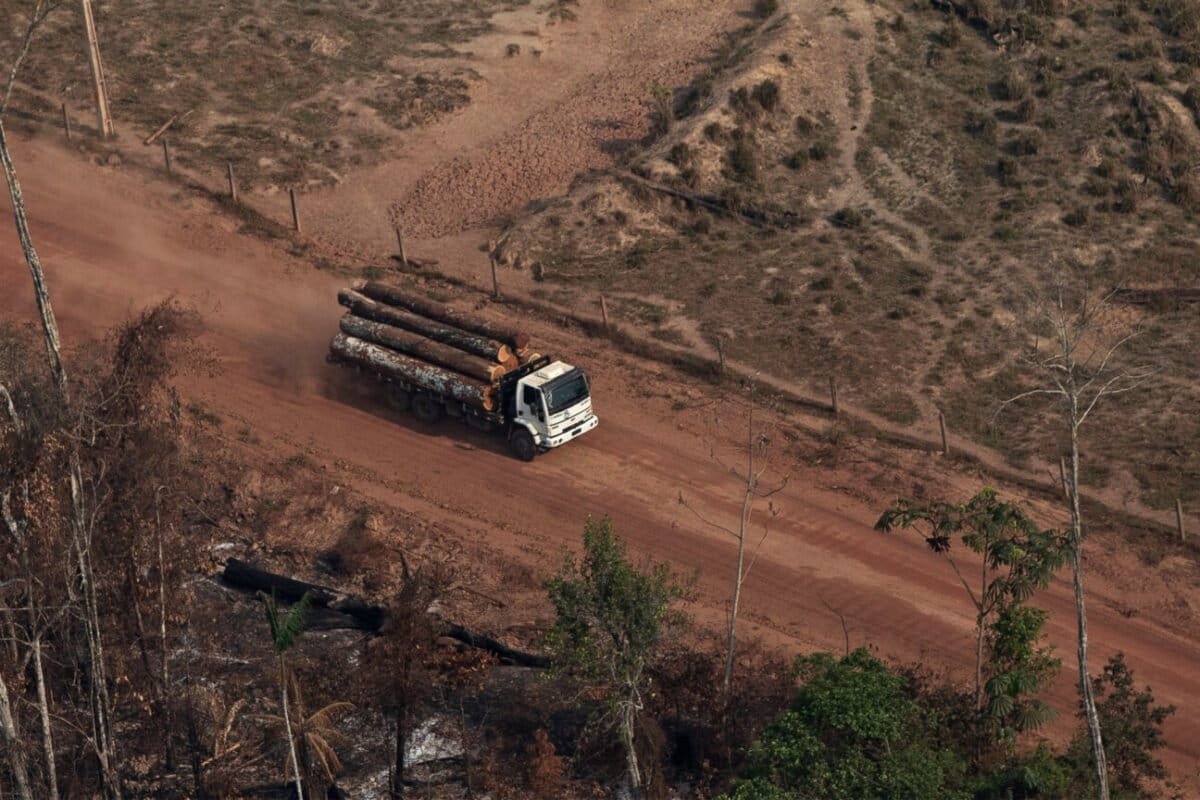
Banner Image: Logging into the Brazilian Amazon. Image © Bruno Kelly/Greenpeace.
