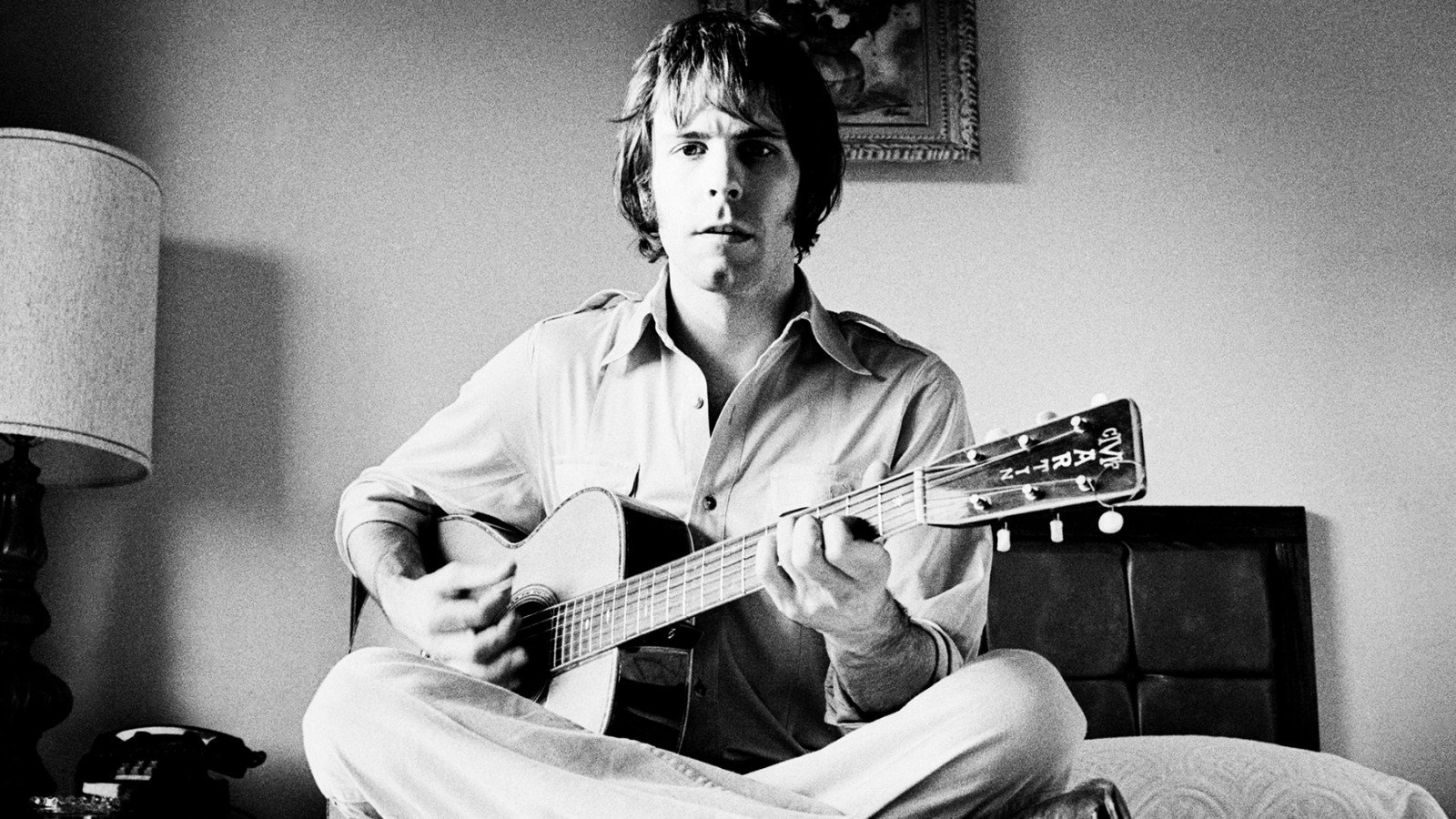
Singer, songwriter, guitarist and Grateful Dead co-founder Bob Weir, whose songs about sunshine daydreams and trucking helped turn the jam band into a 60-year music empire, has died at the age of 78.
“It is with extreme sadness that we share the passing of Bobby Weir,” Weir’s family wrote in a statement. The date of death was not immediately available. “After courageously beating cancer like only Bobby does, he passed away peacefully, surrounded by his loved ones. Unfortunately, he succumbed to underlying lung problems.”
“Bobby will always be a guiding force whose unique artistry reshaped American music,” the statement said. “His work did more than fill rooms with music; it was warm sunshine that filled the soul, creating a community, a language, and a sense of family that generations of fans carry with them. Every chord he played, every word he sang was an integral part of the stories he wove. There was an invitation: to feel, to question, to wander, and to belong.”
As the band’s co-lead singer, writer and guitarist with Jerry Garcia, his elliptical riffs, eccentric song structures and slightly different stage presence made him an intrinsic component of the Dead, until its demise following Garcia’s death in 1995. Weir often received less recognition than the larger-than-life Garcia (one of the first songs he wrote in the Dead was called “The Other One”). Nevertheless, the band’s bassist Phil Lesh characterized Weir’s contributions as “a secret machine”.
Robert Hall Weir was born on October 16, 1947, in San Francisco to a college student who gave him up for adoption. He was raised in an affluent Bay Area suburb, where he managed to flunk out of both preschool and Cub Scouts, and suffered from undiagnosed dyslexia. At Fountain Valley, a Colorado school for boys with behavioral problems, he met John Perry Barlow, who became his most frequent lyricist.
Weir began playing guitar at the age of thirteen and soon began hanging out at Tangent, a Palo Alto folk club, where he performed bluegrass numbers with the Untitled Four and first saw Jerry Garcia play banjo during a “Hoot” night. Weir learned his first guitar playing lessons from David Nelson and future Jefferson Airplane member Jorma Kaukonen.
On New Year’s Eve, 1965, Weir and his friends heard banjo music from Dana Morgan’s music store. He went in and found Garcia, and the two decided to form a band. The acoustic Mother McCree’s Uptown Jug Champions evolved into the Electric Warlocks, who changed their name to the Grateful Dead.
As the youngest and best-looking member of the Dead, Weir owed some dues. Too Much LSD took Weir back somewhat during the group’s tenure as the house band for Ken Kesey’s Acid Test, as Garcia and bassist Phil Lesh were connecting more deeply on a musical level. “I was definitely the low man on the totem pole,” he explained. rolling stone in 1989, “Especially in the beginning. And for a long time I just had to shut up and accept it.”
The lyrics of “The Other One” describe Weir’s introduction to both LSD and the trickster hero of Jack Kerouac’s Beat-generation masterpiece. on the waywith whom Weir shared a room in the Dead’s infamous 710 Ashbury Street house. In 1968, Weir and fellow founding member Ron “Pigpen” McKernan were kicked out of the band due to their musical shortcomings, although both returned within a few months.
Throughout the seventies, Weir flourished as a member of a band that could produce music of almost indescribable warmth and country-rock majesty – as on their pair of 1970 masterpieces, death of workingman And American Beauty – as well as playing more freely improvised music to more listeners than any other band in history. Weir sang the band’s country covers and its own original material, and played rhythm guitar in a brilliantly eccentric manner that belied the second-string implications of the job – even when soundman Dan Healy was disowning him in the mix. Lesh described Weir’s technique as “weird, eccentric and silly”, while Weir claimed the left hand of jazz pianist McCoy Tyner as his greatest influence.
With Pigpen’s death in 1972, Weir stepped smoothly into the second-vocalist role. aceHis first solo album established him as the band’s second most productive songwriting source, with singles like “Playing in the Band,” “One More Saturday Night,” and “Cassidy” turning into Dead standards.
Usually alternating with Garcia on lead vocals, they developed a repertoire that ranged from country-rock originals and rhythmically unconventional tunes to their ambitious and grandiose “Weather Report Suite”. He also began performing outside the Dead with a variety of acts: first with Kingfish in 1974, then the guitarist formed the Bob Weir Band with keyboardist Brent Mydland – who later joined the Dead in the late seventies and released two albums with Bobby and the Midnights in the eighties. His second solo album, 1978’s heaven help the foolProved he could sound just as slick as any other California rocker.
During the eighties, Weir had to compensate on stage as Garcia slipped into drug addiction – and he later admitted that he sometimes acted as a “bag man” for the guitarist’s drugs. Garcia temporarily recovered towards the end of the decade, an era that Weir lauded as the Dead’s finest. “For me, that was our peak,” he explained. rolling stone in 2013. “We could hear and feel what each other was thinking, and we could guess each other’s actions. Jerry, Brent and I reached new heights as singers. We had a blast.”
Although deeply affected by Garcia’s death in August 1995, Weir continued performing; As he famously sang in a Dead classic, “The Music Never Stopped.” His band Ratdog played his Dead material and originals, and Weir eventually began singing Garcia’s own material in various configurations with former Grateful Dead members of the 21st century, including The Dead and Furthur, among others. After collapsing on stage with Furthur in 2013 and canceling a Ratdog performance in 2014, Weir admitted that he was struggling with his addiction to painkillers.
As the remaining Grateful Dead members approached their golden anniversary in 2015, Weir was the first to support a reunion, stating rolling stone“If there are some issues that we need to overcome, I think we need to move forward and overcome them. If there are some nastiness that needs to be buried, let’s get to work. Let’s start digging.”
Following the surviving members’ Fare Thee Well concert celebrating the Grateful Dead’s 50th anniversary in 2015, Weir enlisted one of the gig’s guests, John Mayer, to join Mickey Hart, Bill Kreutzmann and other Dead collaborators in the new offshoot Dead & Company. That group would keep the Spirit of the Dead alive for another decade, culminating in a 2023 “Final Tour” and two stints in the Las Vegas arena.
“We speak a language that no one else speaks,” Weir said. rolling stone In March 2025. “We communicate, we go things back and forth, and then put our own little statement in more universal language. For us, it’s a look with a shoulder or a motion, or the way you reflect a phrase or something that signals to other people where you’re going with it. And then they work on getting where you’re going, getting there with a little surprise for you. It’s a formula that’s worked really well for us over the years. is doing, and there’s not enough for us to do anymore.”
Weir’s third and final solo studio album, blue MountainCame in 2016. Two years later, the guitarist started another musical project with bassist/producer Don Was and drummer Jay Lane as Bobby Weir and the Wolf Brothers.
In December 2024, shortly after the death of Dead bassist Phil Lesh in October 2024, the surviving members of the Grateful Dead were recipients of the Kennedy Center Honors. Dead & Company celebrated the Grateful Dead’s 60th anniversary with a three-night stand in San Francisco’s Golden Gate Park in August. Those concerts marked Weir’s final performances, ending his “long strange journey” on the stage.
“Bobby’s final months reflected the same spirit that defined his life. Diagnosed in July, he began treatment just weeks before returning to his hometown stage for a three-night celebration of 60 years of music in Golden Gate Park. Emotional, soulful and light-filled, those performances were not a farewell, but a gift. Another act of resilience,” Weir’s family said in their statement.
“There’s no final curtain here, not really. Only the feeling of someone departing again. He often talked about a 300-year legacy, determined to ensure that the songbook would endure long after him. Hopefully that dream will live on through future generations of Dead Heads., And so we send him off just as he sent off so many of us: with a farewell that is not an end, but a blessing. The reward for living a meaningful life.
<a href