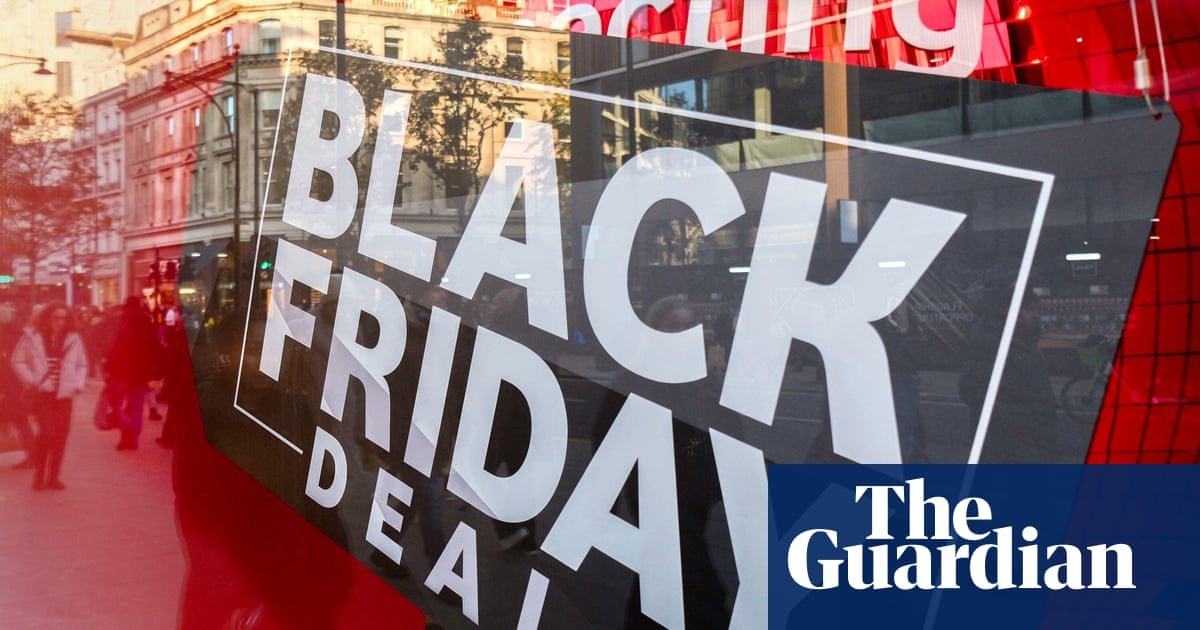
According to the British Retail Consortium (BRC), shop price growth slowed during November due to competition between retailers trying to lure customers with early Black Friday deals.
The retailers’ trade association said prices in stores rose 0.6% last month compared to November 2024. That was less than the 1% increase in October and the three-month average of 1%.
Black Friday has become one of the most important trading periods for many retailers, marking the beginning of the Christmas shopping season and giving stores an early insight into customers’ spending appetite.
Originally an American event based around Thanksgiving in late November, it now covers a much wider period globally, with many retailers offering discounts from the beginning of the month.
BRC chief executive Helen Dickinson said: “Black Friday deals started earlier than usual (this year) because competition between retailers was extreme.”
BRC said discounts were most prevalent in the electricals, fashion and health and beauty sectors, as retailers attempted to lure cash-strapped shoppers who continue to cut back on discretionary spending.
Recent surveys measuring consumer confidence showed a decline in November, as households grew pessimistic about their spending, the labor market and the outlook for the UK economy.
Official data from the Office for National Statistics (ONS) also showed that UK retail sales fell by 1.1% in October, a sharper decline than expected and the first decline since May.
However, Dickinson said retailers would expect consumer confidence to return during the crucial winter trading period as uncertainty around the budget fades.
“They will continue to do everything they can to keep prices low and help customers get more bang for their buck this Christmas,” he said.
The BRC also said food prices fell 0.3% month on month in November, after falling 0.4% in October at the sharpest rate in five years. However, on an annual basis, households are still feeling the pinch on their food bills, with prices rising 3% year on year.
After newsletter promotion
The BRC said inflation for oils and fats, as well as meat and fish, “remains quite high”, as rising production costs are being passed on to consumers.
“Retailers will need to keep any price rises as low as possible in the run-up to Christmas to entice shoppers to spend,” said Mike Watkins, head of retailer and business insight at market researcher NIQ.
The BRC figures cover the first week of November, making them more up-to-date than the latest official inflation data, and will provide some optimism for those expecting an interest rate cut before the end of the year.
The consumer price inflation rate fell for the first time in five months to 3.6% in October, according to the Office for National Statistics, increasing market speculation that the Bank of England will cut interest rates from 4% to 3.75% at its next rate-setting meeting on December 16.
<a href