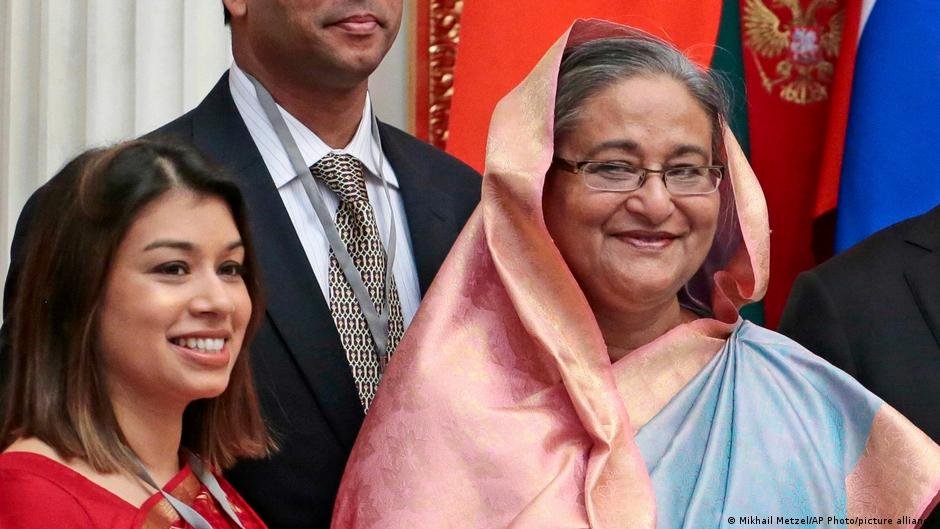
The case involves the alleged illegal allocation of a plot of land in the capital Dacca, which was to be used for a new township to ease housing pressure. A judge said Hasina abused her power as prime minister, while Siddiq influenced his aunt to help his mother and two siblings get land.
Siddiq was sentenced in absentia to two years’ imprisonment. Hasina, who has been living in India since fleeing an insurgency in Bangladesh in August last year, was sentenced to five years in jail, while her sister Rehana was also sentenced in her absence to seven years.
Hasina was already sentenced to death last month for her crackdown on the rebellion, which ultimately led to her ouster from power. According to UN figures, 1,400 people were killed in the crackdown.
What is Siddiq and his Labor Party’s reaction to the court’s decision?
Siddiq, who resigned from his role as Britain’s minister for financial services and anti-corruption efforts in January following an investigation into his financial ties to his ousted aunt, condemned Monday’s decision and called the trial process “flawed and ridiculous.”
“The outcome of this kangaroo court is as predictable as it is unfair,” he said in a statement. “My focus has always been on my constituents in Hampstead and Highgate and I refuse to be distracted by the dirty politics of Bangladesh.”
A spokesperson for Siddiq’s Labor Party said that he did not receive access to a fair legal process and was not informed of the details of the charges against him.
The spokesperson said, “Any person facing any charge should always be given the right to have legal representation when the charges are brought against them. Given that this did not happen in this case, we cannot recognize this decision.”
Prosecutors said the interim government of Bangladesh would formally inform British authorities regarding the decision. The UK has no extradition treaty with Bangladesh.
Hasina condemned the court’s decision
In a statement to the French AFP news agency, Hasina condemned the verdict, which joins other corruption verdicts that have already been processed in her absence.
In reference to Bangladesh’s Anti-Corruption Commission, he said, “No country is free from corruption. But corruption must be investigated in a manner that is not itself corrupt. The ACC has failed that test today.”
The ousted prime minister’s Awami League party described the decision as the latest example of a politically driven process led by “frustrated, unelected people” – a reference to Bangladesh’s interim government led by Nobel laureate Muhammad Yunus.
Elections are to be held in Bangladesh in February next year.
Edited by: Kieran Burke
<a href