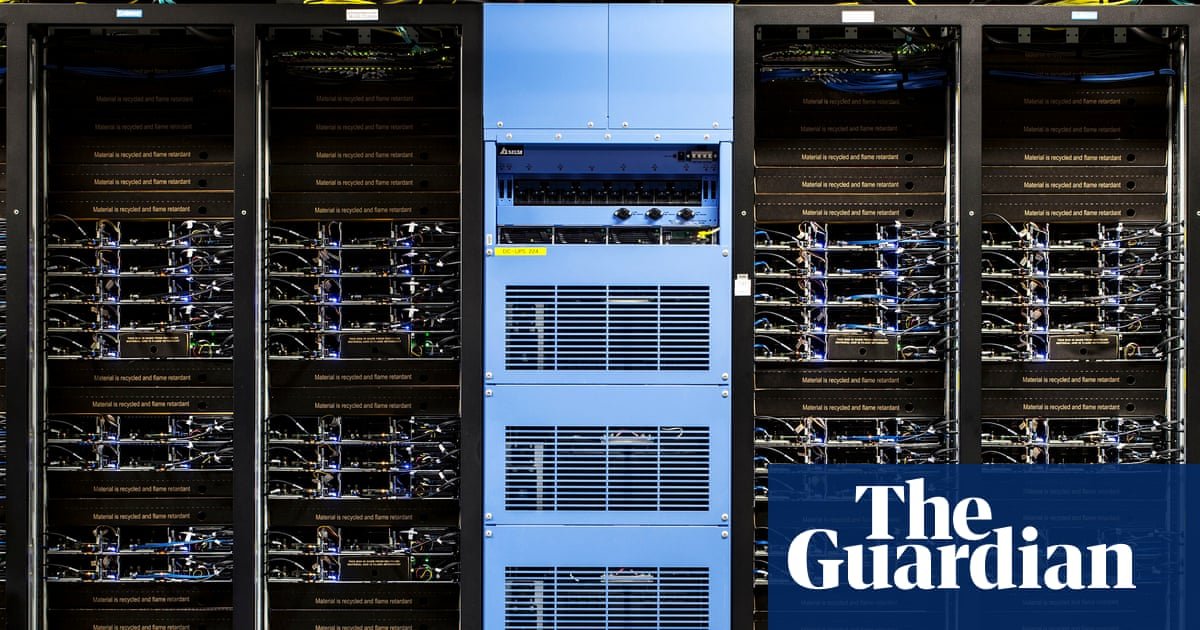
Rising investment in data centers fueled by a boom in AI technology and rising household spending on essentials like electricity and rents boosted economic growth in the three months to September.
National accounts data showed real gross domestic product grew 2.1% on the year, faster than 2% in June.
Despite positive signs that the private sector is beginning to drive economic activity after a period of strong government support, the quarterly pace of growth was a disappointing 0.4% – well below the expected 0.7% rate.
And after accounting for population growth, there was no growth in real GDP per capita in the quarter, and only 0.4% growth in the year to September, highlighting ongoing weak improvements in living standards.
Still, CBA’s head of Australian economics Belinda Allen said the national accounts showed how far the economy has come.
“It was just a year ago when (annual) growth was weak at just 0.8%,” Allen said.
“Fast forward a year and households are spending again due to strong income growth leading to improved sentiment, businesses investing, residential construction picking up and public sector growth at the bottom.”
However, this welcome bounce means the economy is now already exceeding its capacity to grow without spiking inflation – a key risk that will be considered at next Monday’s meeting of the Reserve Bank’s Monetary Policy Board.
Ahead of the release of the GDP figures, RBA Governor Michelle Bullock said it was unclear how much more economic activity could increase without adding to price pressures.
After inflation rose to 3.8% in the year to October – well above the 2-3% target range – Bullock said in the Senate Estimates that the board would “try to determine to what extent this (the recent increase in inflation) is temporary, or to what extent it is signaling to us that there are some more permanent pressures in the economy”.
Analysts and investors have largely rejected any further rate cuts, and now expect a hike to be the next move.
A major positive in the latest national accounts was a surge in business investment, which rose 2.9% over the three months and which the ABS attributed to “major data center investment in NSW and Victoria”.
This was the fastest quarterly growth in private investment in four and a half years, and accounted for half of overall economic growth in the quarter.
Analysts also saw a pick-up in productivity growth, albeit a relatively weak 0.8% over the year and a major challenge to the country’s growth prospects.
Housing construction also contributed to the quarter, with Jim Chalmers highlighting in a statement that the economy is now expanding at its fastest annual pace in two years.
“The best way to improve living standards and achieve more growth in the future is to make our economy more productive and resilient and our budget more sustainable, and that is our focus,” the Treasurer said.
Households were forced to pay more on electricity bills in the three months to September, as electricity rebates were discontinued, and on other essentials such as rent, food and healthcare – the latter “due to the prolonged and severe flu season”, the ABS said.
Spending on essential goods rose 1% in the latest quarter compared with a 0.6% increase in the previous three-month period, while discretionary spending fell 0.2% after rising 1.5% in the previous quarter.
The household savings rate increased from 6% to 6.4% in the September quarter, which also showed that consumers are becoming more cautious.
<a href