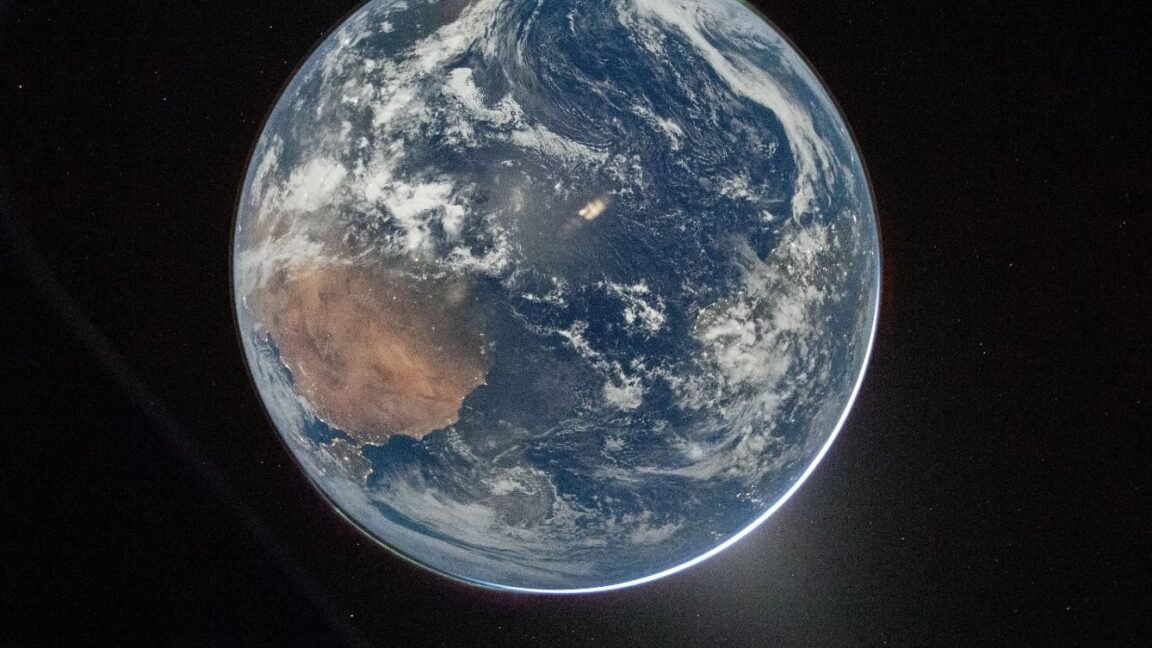
Because that engine firing was so successful, NASA passed up the opportunity to conduct a “corrective” burn on Friday.
During their daily briefing with reporters, NASA officials did not have any significant issues to report. Orion program manager Howard Hu said NASA is tracking a problem with the helium system that pressurizes Orion’s service module propulsion system to deliver fuel and oxidizer to the engine. However, he said, Orion no longer needs to use this helium regulator for the remainder of the mission, and in addition, a backup system is working as expected.
other minor issues
Some “false alarms” were also detected from various environmental sensors in the cabin. However, Hu said, these are not a threat to the crew at all, but rather reflect conservative limits set for those systems. He described it as a “learning curve” that will be adjusted for the Artemis III mission, which could fly next year.
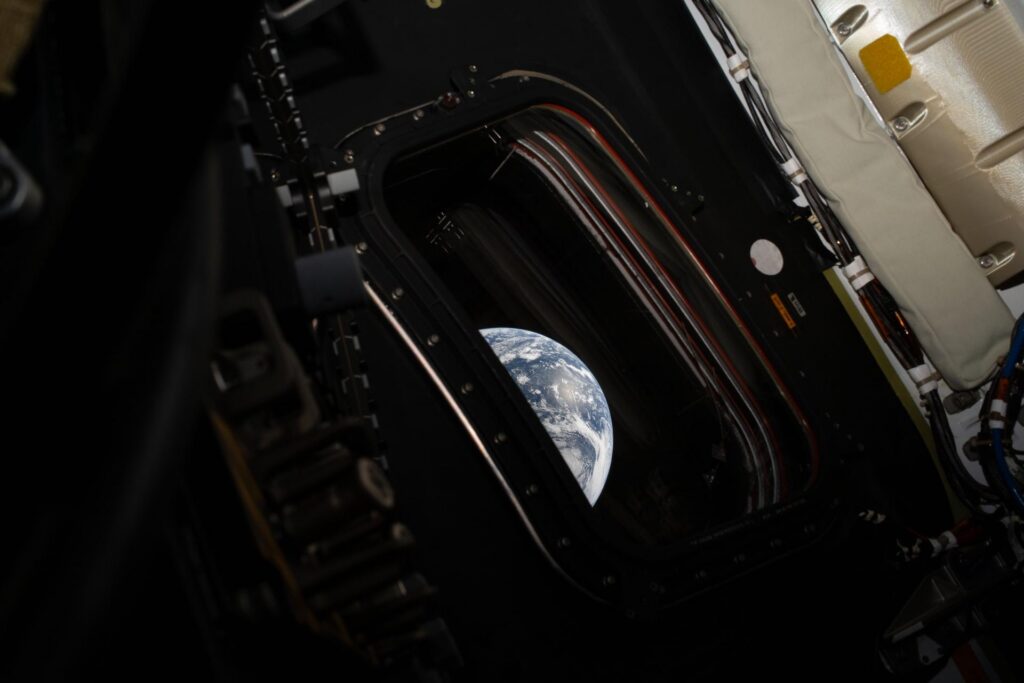
Another image of Earth as seen from Orion.
Credit: NASA
Another image of Earth as seen from Orion.
Credit: NASA
The only other real issue experienced by the crew was the cabin temperature, which the astronauts described as a little cool at night. Judd Freeling, one of the mission’s flight directors, said the crew started out with temperatures in the mid-70s, but after several “shell heaters” were turned off, it became about 10° F cooler. Many factors affect cabin temperature, and flight controllers were able to adjust the cabin environment to a more comfortable level.
Similarly, humidity levels were slightly below optimum for devices removing carbon dioxide from the atmosphere. These “scrubbers” work better with higher humidity, and crews are able to find a comfortable level of humidity between “desert dry” and “Houston humid,” Friling said.
So the crew is comfortable as they fly farther from Earth than anyone else in half a century.
<a href