Just hours before the crew begins lunar flight, here’s how things are going on Artemis II.
When will they reach the far side of the Moon?
While Artemis II won’t actually land on the Moon (that won’t happen until Artemis IV), that doesn’t make this mission any less attractive. Once the Artemis II astronauts finish flying to the dark side of the Moon, they will have the historic distinction of being the farthest humans have traveled from Earth.
They will also test all systems needed for future lunar missions, validating life support, navigation, spacesuits, communications and other human operations in deep space.
But when do they have to reach this far point? First, the Orion capsule visited what is known as the moon’s “impact zone” on Sunday night. This is the point where the Moon’s gravitational force is stronger than Earth’s gravitational force.
Currently Orion is revolving around the Moon. Once the capsule is on the dark side of the Moon, about 7,000 kilometers from the surface, communications with Earth will be disrupted. For six hours, they will be able to see a far side of the Moon that no human has ever seen with their own eyes – not even the astronauts of the Apollo program, because this area of the Moon was always too dark or difficult for them to get there.
The six-hour flyby of the dark side of the moon is expected to begin at 2:45 pm EDT and 7:45 pm London time on Monday, April 6.
After that, the capsule will use the Moon’s gravity to return itself to Earth. Splashdown, when the astronauts reach Earth, is scheduled for April 10 in the Pacific Ocean, not far from the coast of California, the tenth day of the mission.
Remember that you can follow the live broadcast of the Artemis II mission from NASA’s official channels.
What has happened so far?
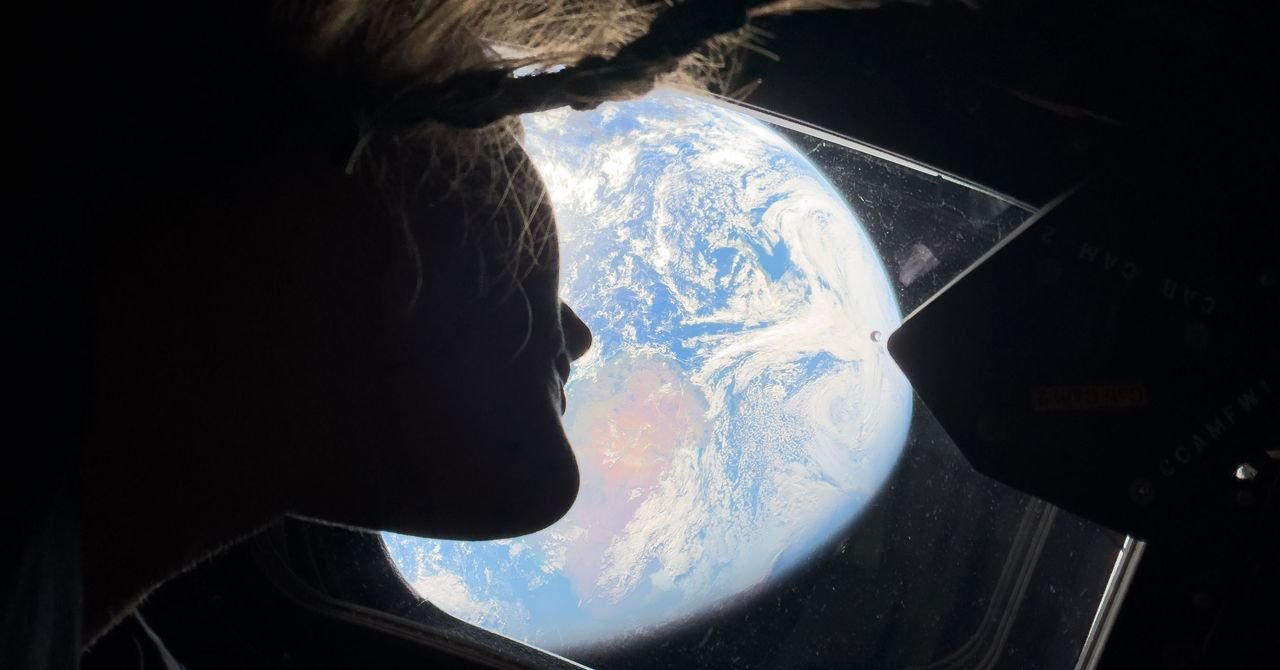
Since its successful launch from Kennedy Space Center on April 1, the Artemis II crew has shared many spectacular photos, such as the image featured in this post, which shows mission specialist Christina Koch looking toward Earth through one of Orion’s main cabin windows.
This incredible photo of Earth, taken on April 2, went viral on social media, referencing the famous “Blue Marble” image taken by the Apollo 17 astronauts in 1972.

View of Earth taken from the window of the Orion spacecraft by astronaut Reed Wiseman after completing the translunar injection maneuver on April 2, 2026.Photograph: Reed Wiseman/NASA/Getty Images
<a href