
 getty images
Is it caring or domineering?
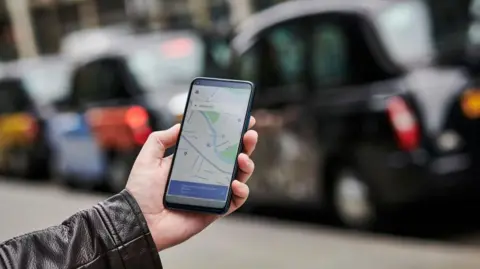
Many parents are turning to their phones to keep an eye on their adult children – but is it okay (if they agree to it) or is it a sign of a parent struggling to let go?
Father-of-two Steven Medway, 53, has his entire family on a tracking app and he doesn’t understand why it’s such a divisive topic among fellow parents.
He said it became especially useful when his daughter Martha moved 100 miles away from home for university.
“When you have that thing, it feels a little less distant,” he said.
Research conducted by Unite Students, which surveyed 1,027 parents of first-year university students across the UK, found that 67% of parents use an app to track their child’s location, but only 17% contact them daily.
Dr Martin Brunet, a GP and author who posts mental health content on social media, said that although it was “a personal choice”, he strongly advised parents to “let them fly the nest” for their own well-being.
She added, “One of the hardest parts of parenting is letting go and our modern world has made it easy for us not to do that, and I’m not sure that’s a good thing.”
Steven, from Michaelston-y-Fedw, near Cardiff, has been using the Life 360 app for years, having first discovered it when his daughter Martha, now 19, started spending time with friends away from their village.
“We live quite rural (and) we thought it was a good idea because if she needed to be picked up or do something… it would give you directions to Martha, no matter where she is.”
So, when Martha started enrolling at the University of Reading in September, it felt natural for her to continue using the app.
“She goes to parties, she doesn’t come to her hall until 3:30. But it’s not a problem, I’m not calling her saying ‘What’s up?’
“It’s like, when I wake up in the morning, I can see she’s back in the hall. If she wasn’t, if she was still in the middle of studying, or her phone was there, I might have called her.
“It’s not that I don’t want her to do anything, I just like knowing she’s back.”
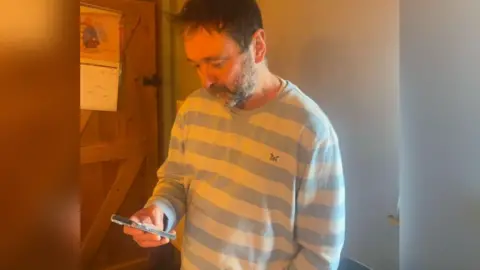 steven medway
Steven said that Martha was “quite an independent girl” who had spent a month traveling alone in Japan as well as traveling across Europe with friends, so he was used to her being away from home.
He said that Martha would “never” close the app, but that he would respect her choice if she did.
“Many people have mistakenly thought that I am forcing her to be tracked. At any time, if Martha does not want to be tracked, she can turn it off. I won’t tell her.”
‘that’s my child’
Pub landlady Maria Connolly’s 19-year-old son Owen also recently moved away from their Swansea home to go to university in Hertfordshire.
Because Owen is autistic, Maria, 56, said he can be “quite naive”, and sometimes has difficulty socializing with other people his age, so the app provides “peace of mind”.
She checks her phone twice a day to make sure Owen is out and about and to keep an eye on his battery so she can remind him to charge it when needed.
“He was a little reluctant at first, but I said, ‘I pay your mobile phone bill, so if you want me to keep paying the bill you have to have this app on your phone.’
“I say ‘I see you’re in Wetherspoon, what table and I’ll send you some drinks?’ So we keep it fun, but with it in mind that it’s for safety.”
She said she would be “disappointed” if Owen no longer wanted to use the app, but she would “stick with it” while admitting that he texted and called her frequently.
“I’ve let him go, he’s got his freedom. I’m not constantly checking on it, it’s just knowing there’s a little safety net there.
“He’s not a baby, but he’s my baby. He’s my baby.”
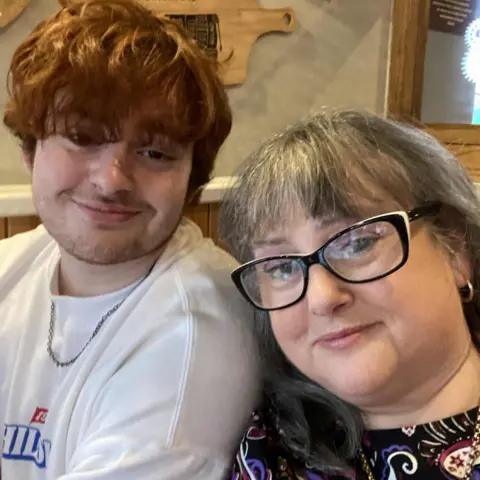 Maria Connolly
Safety is the biggest motivator for Steven, who cited cases such as the triple death crash at St. Mellons in 2023, when it took police two days to find the car.
“Those situations often depend on speed and accuracy, and (a tracking app) gives us that. To me, that’s invaluable.”
Although he has been accused of not trusting his daughter, the opposite is true because “you have to trust your family completely if you’re allowing them 24-hour access to your space,” says Steven.
The Unite Students survey found that 71% of fathers use tracking apps for their children at university, while 59% of mothers do.
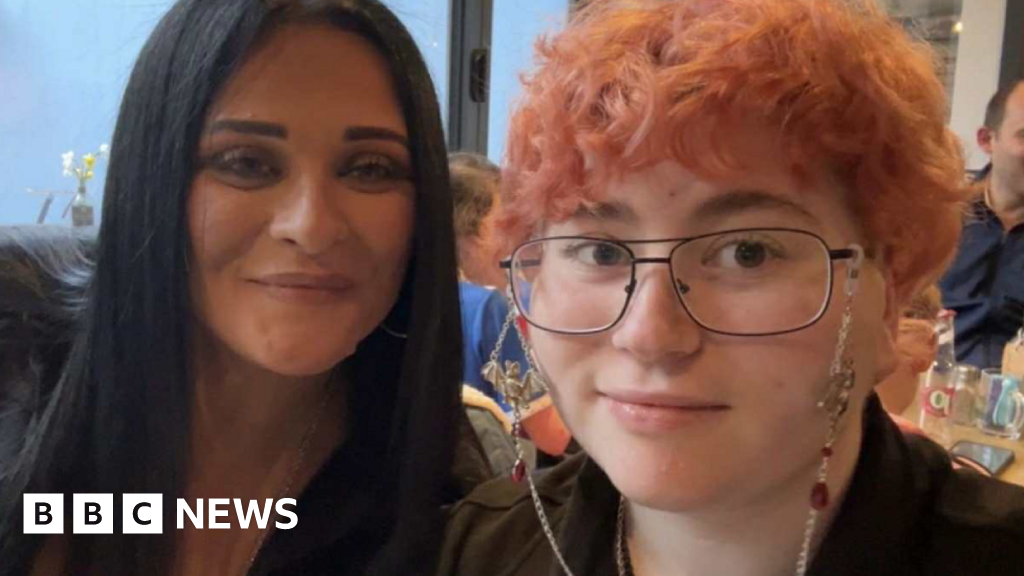
Lianne Hannam, from Cardiff, also uses Life 360 with her daughter Erin Mae, 21, and son Austin Lee, 15.
“In this day and age, the way the world is, I like to know where my kids are,” he said.
It was actually Erin Mae who suggested her mom download the app about a year ago, since she was using it with her friends.
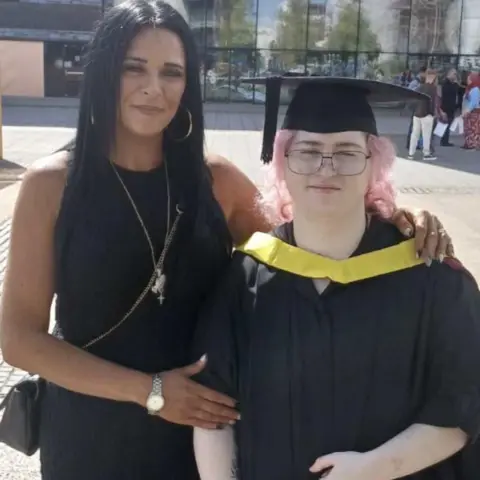 lianne hannam
Lianne, 45, thought it was a good idea, especially because her daughter is a new driver and starting a job that involves night work.
“It gives me peace because I worry a lot. But I can give him space because I know where he is, I’m not always there,” she said.
“It’s not that I struggle with leaving my kids as they grow up, it’s just that I worry about the outside world. The world scares me.”
Dr Brunet said she doesn’t think parents are more anxious on days when they are unable to contact their children so easily.
“If you track them when they go to university, will you still track them five years later? When does it stop?
“I don’t think tracking companies are bad, but they are trying to sell their product and at the same time, sell the myth that if you love your kids you will want to track them and that will make you feel cool.
“In the short term, you may think it helps your anxiety, but like a lot of short-term things for anxiety, you have to think about the long term.
“If you grow a tree indoors without air, it grows tall but not strong. You need to expose your children to challenges in a reasonably safe environment.”
<a href