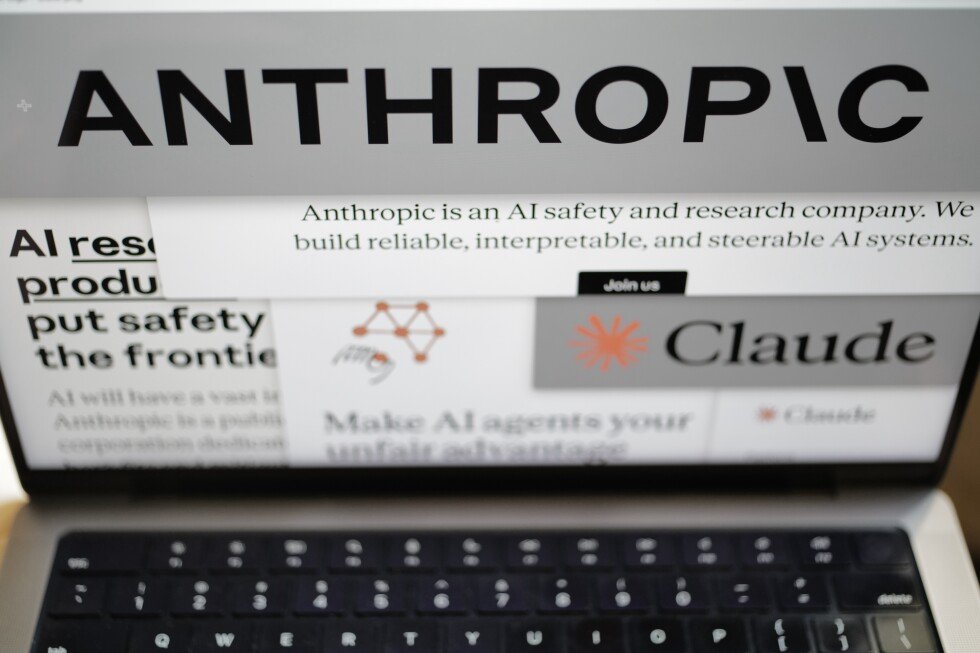
The maker of AI chatbot Cloud said in a statement that it was not backing out of negotiations, but that the new contract language it received from the Defense Department “makes almost no progress in preventing the use of Cloud in mass surveillance of Americans or fully autonomous weapons.”
The Pentagon’s top spokesperson has reiterated that Army wants to use Anthropic’s artificial intelligence The technology will not allow the company to set any limits before the Friday deadline through legal means and to agree to its demands.
Sean Parnell said on social media Thursday that the Pentagon “has no interest in using AI to conduct mass surveillance of Americans (which is illegal) nor do we want to use AI to develop autonomous weapons that operate without human involvement.”
Anthropic’s policies prevent its models, such as its Chatbot Cloud, from being used for those purposes. It is the last of its peers – the Pentagon also has contracts with Google, OpenAI and Elon Musk’s xAI – to not supply its technology to the new US military internal network.
Parnell said the Pentagon “wants to use Anthropic’s model for all legitimate purposes” but did not provide details about what that would involve. He said opening up access to the technology would prevent the company from “jeopardizing critical military operations.”
“We will not let any company dictate the terms of how we make operational decisions,” he said.
During a meeting between Defense Secretary Pete Hegseth and Amodei on Tuesday, military officials warned they could void Anthropic’s contract, designate the company as a supply chain risk, or invoke the Cold War-era law. Defense Production Act is called Giving the military more broad rights to use its products, even if the company doesn’t approve.
“The latter two threats are inherently contradictory: one calls us a security risk; the other calls the cloud essential to national security,” Amodei said Thursday.
Parnell dropped the threatened use of the Defense Production Act in a Thursday post on X and said Anthropic “has until Friday at 5:01 pm ET to make a decision.”
“Otherwise, we will end our partnership with Anthropic and consider them a supply chain risk,” he wrote.
The conversation that escalated this week started months ago. Amodei said that “given the substantial value that Anthropic’s technology provides to our armed forces, we hope they will reconsider.” But if they don’t, he said Anthropic will “work to enable a smooth transition to another provider.”
Sen. Thom Tillis, a North Carolina Republican who is not seeking reelection, said Thursday that the Pentagon is handling the matter unprofessionally while Anthropic is “trying its best to help us.”
“Why are we having this discussion in public?” Tillis told reporters. “This is not the way you treat a strategic vendor that has contracts.”
He adds, “When a company is resisting a market opportunity out of fear of negative consequences, you should listen to them and then find out behind closed doors what they are really trying to solve.”
Senator Mark Warner of Virginia, the ranking Democrat on the Senate Intelligence Committee, said he was “deeply troubled” by reports that the Pentagon is “working to intimidate a leading American company.”
“Unfortunately, this is yet another sign that the Department of Defense intends to completely ignore AI governance,” Warner said in a statement. It “underscores the need for Congress to create strong, binding AI governance mechanisms for national security contexts.”
As Pentagon officials say they will always follow the law with the use of AI models, Hegseth told Fox News last February, just weeks after becoming defense secretary, that “Ultimately, we want lawyers who provide solid constitutional advice and are not there to try to obstruct anything.”
___
Associated Press writer Ben Finley contributed to this report.
<a href