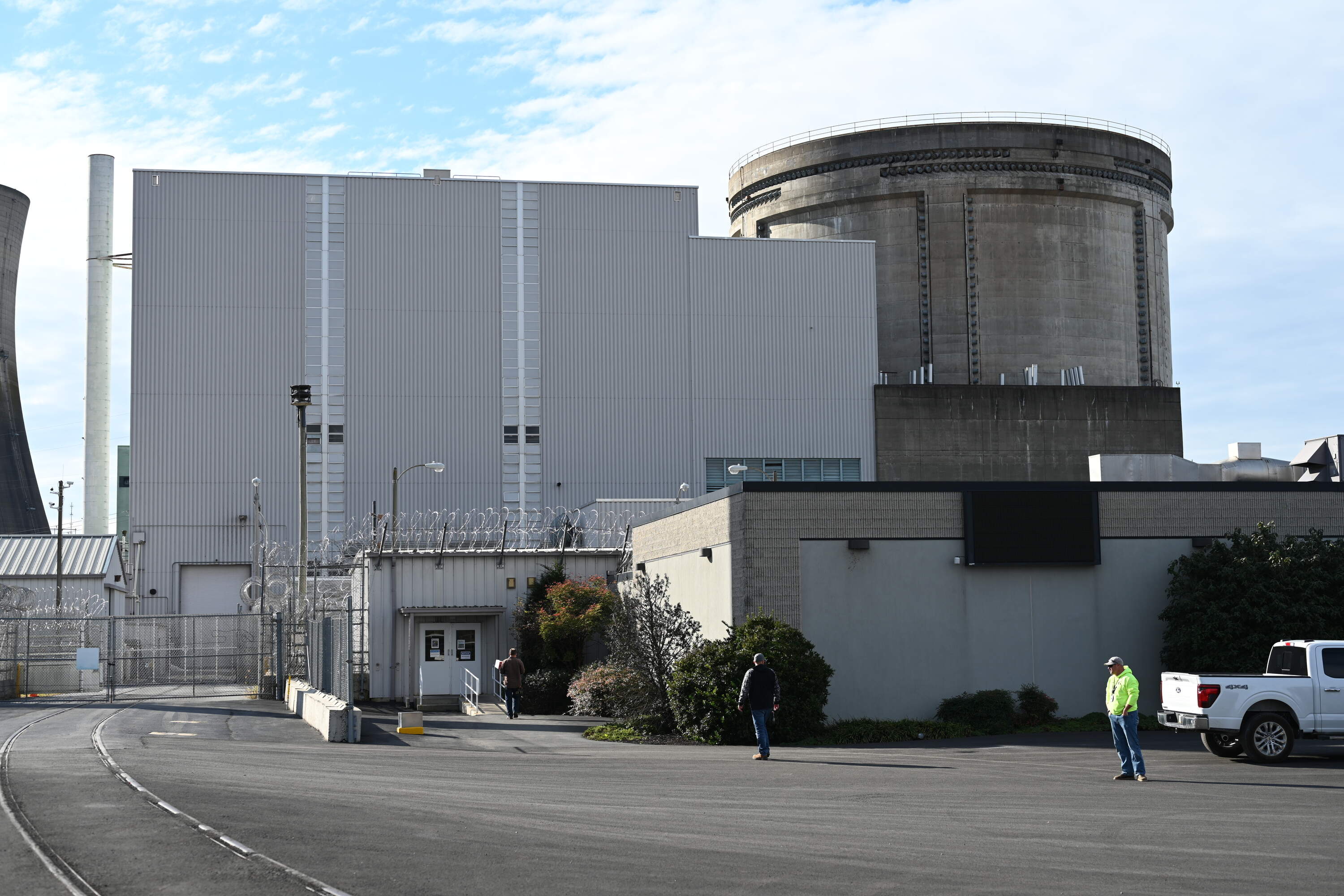
The Palisades Nuclear Generating Station is located among the sand dunes on the eastern shore of Lake Michigan. It closed due to financial reasons in 2022. Three years later, it is on the verge of reopening, with hundreds of workers crossing its security barriers every day.
Palisades is on track to reopen in early 2026. When that happens, it will be the first nuclear plant in the United States to generate electricity again after being shut down. Nick Culp of Holtec, the company that owns the plant, said its revival is a response to increased demand for electricity.
“We have seen [Michigan]”Baseload generation has increasingly gone offline as they have moved away from fossil generation,” Culp said. “How do you backfill it when you see demand on the horizon [artificial intelligence]Like data storage, like keeping the lights on at home, and like new manufacturing?
Nuclear is part of the answer to that question, Culp said, and the government agrees. Michigan committed $300 million to the restart – part of its goal of 100% carbon-free electricity by 2040 – and the federal government loaned the project more than $1.5 billion.
That money is part of the Trump administration’s investment in what it’s calling a “nuclear energy renaissance.” In May, the White House released a plan to quadruple US nuclear power by 2050, following a similar pledge from the Biden administration.
To meet that goal would require dozens of new reactors. But whether they are conventional power plants or new designs, nuclear reactors are expensive and slow to build. Facing a crisis amid climate goals and rising electricity demand, Michigan, Pennsylvania and Iowa are reopening plants that were closed a few years ago.
powering up
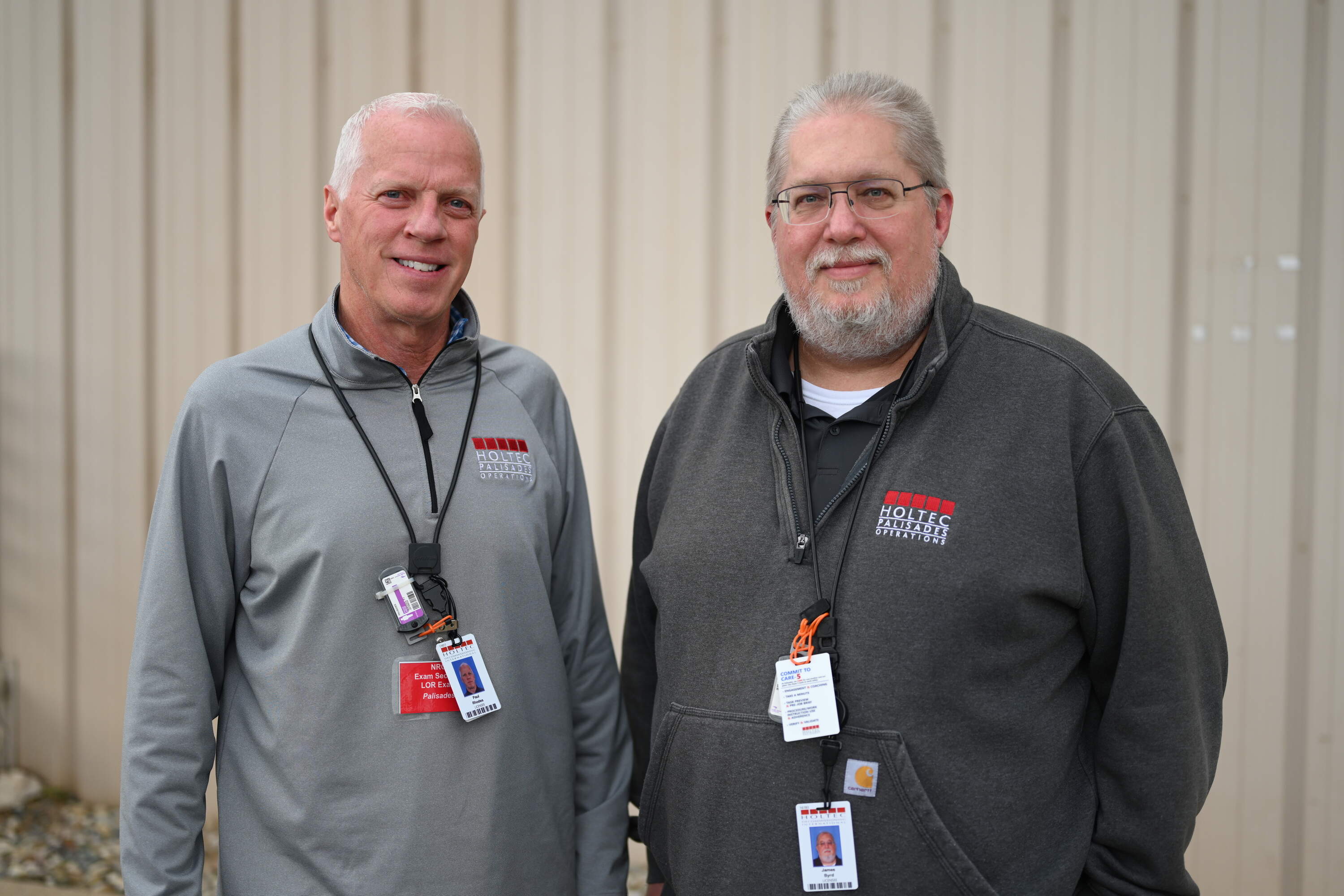
When the Palisades plant in Michigan closes in 2022, Jim Byrd said he left his office of more than two decades “with a heavy heart.”
He was working at a nuclear plant in Mississippi last year when he heard about the plan to restart the Palisades. Then he got the call he’d been waiting for, asking him to come back.
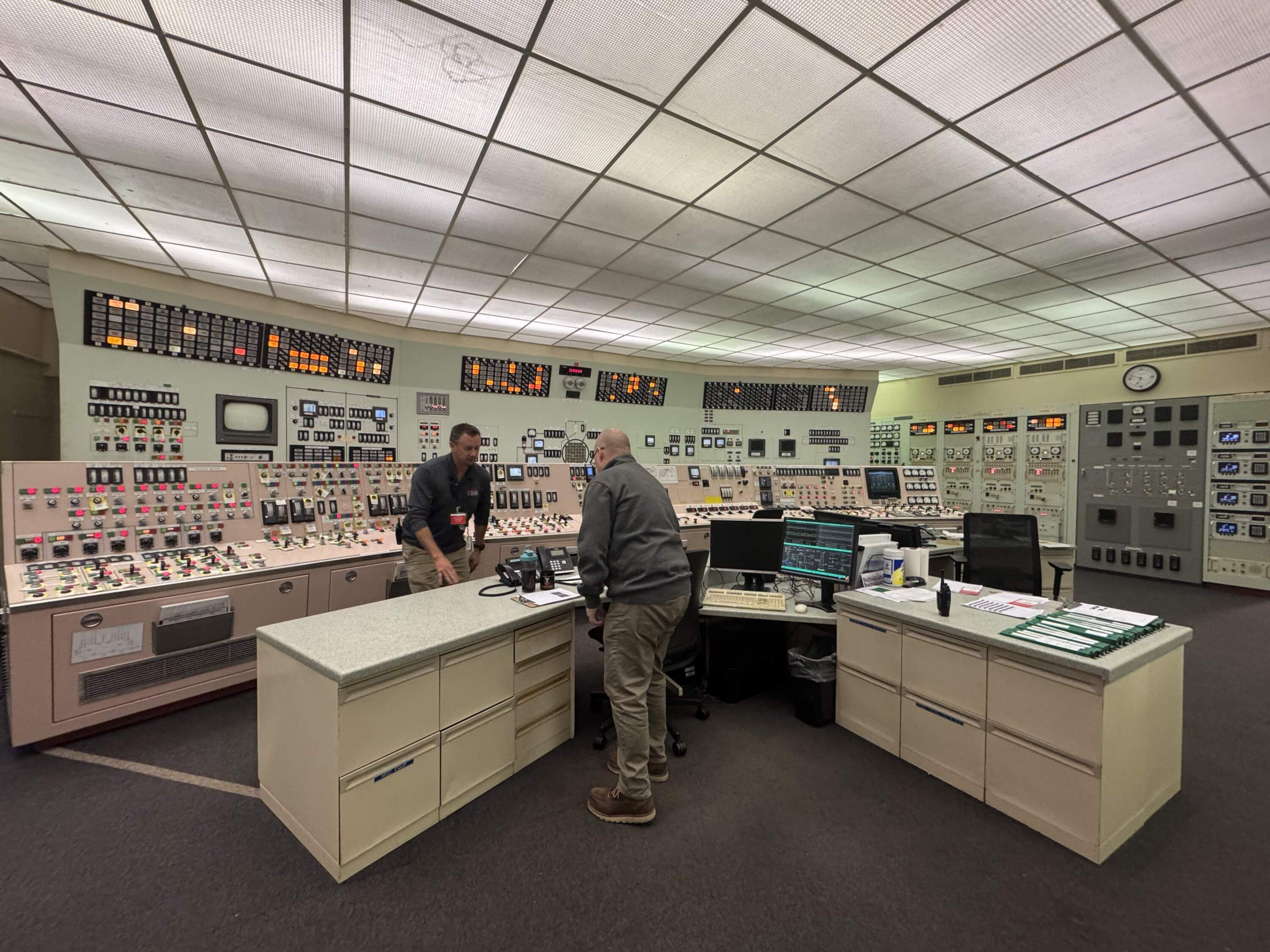
“Palisades is my home. These people are my family,” Byrd said. Since his return, he has been training new employees in an exact replica of the reactor control room, right down to the pink and green color scheme of the 1960s.
While the plant was in good condition, restarting still required repairing equipment and overcoming mountains of paperwork.
“We’re putting together a roadmap on how to do this, and the entire industry is watching,” Bird said. “I had existing licensed operators that had licenses from the Nuclear Regulatory Commission when we shut down, so we had to work on getting them back.”
All the work done to get the plant running again is worth it, he said.
“What we’re doing here is exciting,” Bird said. “Having a reliable energy source that keeps your electricity costs down is something everyone should strive for.”
The restart also attracted employees from elsewhere in the industry. The plant’s new chief nuclear officer, Rich Baroni, came from New York’s Indian Point Energy Center, which closed in 2021.
“The trend five years ago was to do a lot of work on decommissioning,” he said, “and now that’s all changed.”
More changes may be coming for the Palisades. The Energy Department said this month it would give Holtec up to $400 million in federal funding to build small modular reactors in Michigan. According to many in the industry, this technology could help accelerate the deployment of new nuclear power in the future, but it is not yet commercially viable.
Currently, retrofitting a plant costs less than a third of what it does to build a new plant, Holtec’s Culp said.
“When you consider how long it takes to build a new nuclear power plant, especially here in the United States, and how much money it costs,” he said, “it’s a very good value proposition.”
‘Accepted’
Many Palisades employees live within 10 miles of the plant, meaning they could be exposed to the radioactive plume in an emergency.
That area also includes the city of Covert, Michigan. Township Supervisor Dewey Cook’s father helped build the plant in the 1960s.
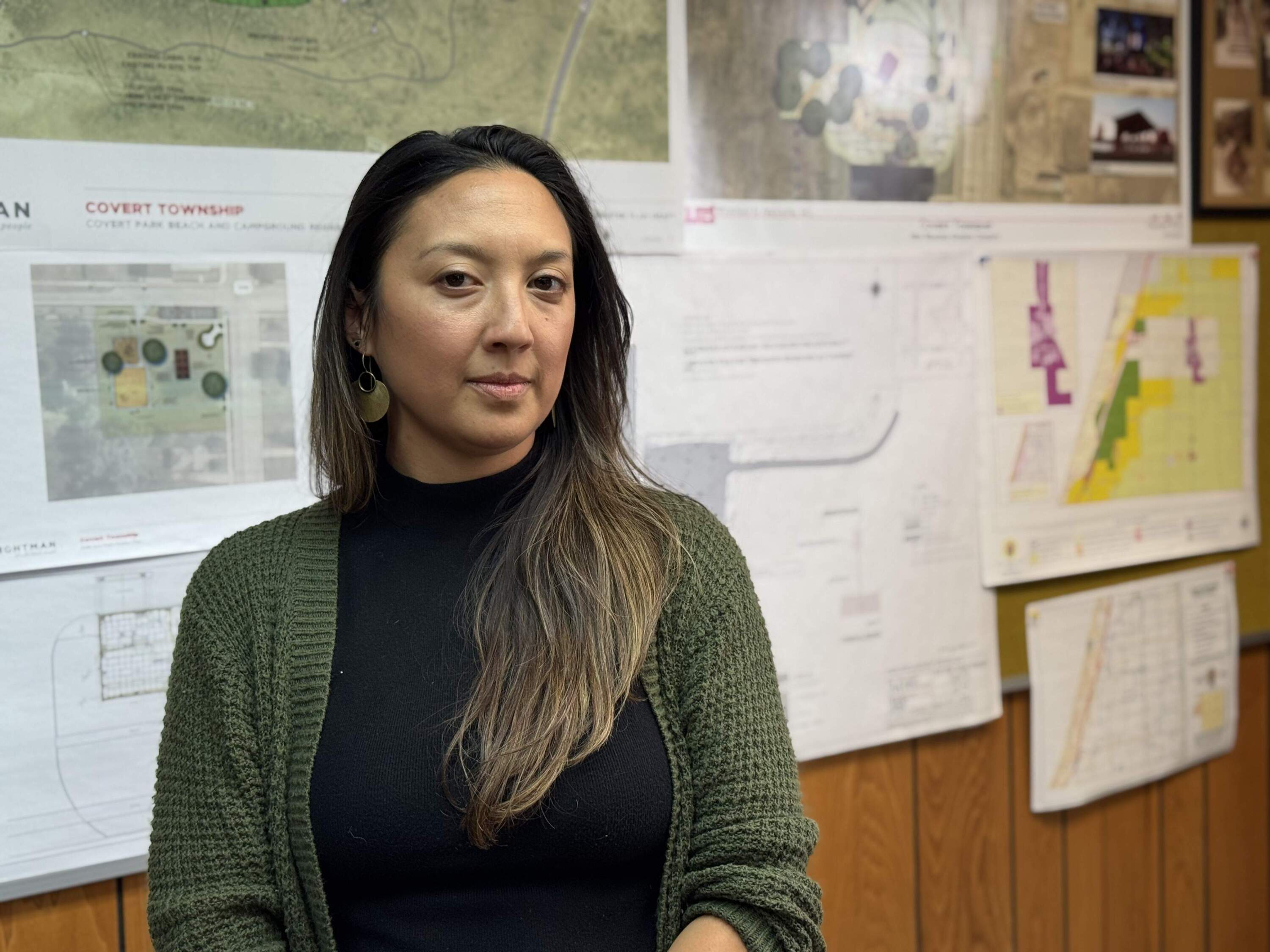
Cook said, “I grew up with the siren tests. I think it was every last Saturday of the month.” “It was a completely normal thing.”
Friends and family members who worked at the plant helped demystify nuclear power, she said, and she came to see the plant as part of the community.
At one point, taxes from the plant accounted for 40% of the township’s revenue. Now, as Covert’s township supervisor, Cook said he’s glad the plant is reopening.
“Having that stability and having jobs available for people who live here is something that I think was taken for granted for too long,” he said. “I think what’s important is that we educate ourselves as residents near the plant and Holtec continues to be a good neighbor in being transparent with the community.”
Zach Morris, head of the economic development group Market One, said the Palisades are an important part of the local economy.
Morris said, “Southwest Michigan is a beautiful area. It’s a wonderful community of small towns. I call it Americana.” “Americans need power. So the good news is that we have a reliable source of power that is clean. It pays its workers well. So we’re excited to be able to keep it online.”
Not everyone agrees with the plant’s reopening. Environmental groups have filed a lawsuit to stop it, and protesters have raised concerns about long-term storage of used fuel next to the Great Lakes.
three mile island
While nuclear power has a safety record, many Americans remember the 1979 disaster at Three Mile Island in central Pennsylvania. One of the two reactors on the island partially melted and released radioactive gases into the environment. There were no deaths, and the Nuclear Regulatory Commission stated that the accident had “no detectable health effects on plant workers or the public.”
This left only one working reactor at the plant, which produced electricity until 2019, but was shut down due to financial reasons. Today, that reactor, like the one at Palisades in western Michigan, is in the process of coming back online.
“When you walk through the plant now, all the equipment is still there, but it’s deathly quiet. You don’t hear the roar of the motors, the steam going through the lines,” said Craig Smith, who is in charge of bringing back the plant on Three Mile Island, renamed the Crane Clean Energy Center. “It’s a strange feeling when you walk through a plant.”
That horrible feeling may end soon. A red LCD clock in Smith’s office counts down the hours until the plant reopens in late 2027, backed by a billion-dollar loan from the Trump administration.
The recommended reactor on Three Mile Island would pump 835 megawatts into the regional grid, but all that power is bid up by Microsoft, which has agreed to buy an equal amount of power from the grid for the next 20 years to feed its data centers.
“The dynamics of the energy economy have changed significantly, primarily due to artificial intelligence,” Smith said.
In his view, the atom was suitable for this time because of its stability.
“On the hottest day of the year, coldest day of the year, cold weather, the plant continues to operate,” Smith said. “As far as a reliable energy source, you can’t beat it.”
Smith was in high school in nearby Hershey in 1979 and remembers the evacuation after the disaster on Three Mile Island. This failed to dissuade him from pursuing a career in nuclear energy, and he said that today, the industry is safer due to regulations implemented after the partial meltdown.
“The people here at the plant take it personally,” he said. “Industry standards have improved significantly, and we have made significant improvements in the way we design plants and operate them.”
‘No viable solution’
Jean Stilp has a different perspective. He is one of many people in the area who say the official story of the 1979 disaster failed to account for the long-term health problems they believe are related to the accident.
Stilp has been fighting nuclear power on Three Mile Island since before the plant opened, and said its recommendation is an unnecessary risk to public safety.
“We’re working for the people who live here, not the shareholders of Microsoft and Constellation,” Stilp said.
“What they’re proposing for evacuations doesn’t work, and so this is my line in the sand,” he said, adding that the 10-mile emergency planning area includes a major hospital complex and several schools. “The population is growing in Central Pennsylvania, realizing there are a lot of people at risk here, the best you can do is remove that risk.”
Eric Epstein of Three Mile Island Alert, another longtime opponent of power plants, said the country is making mistakes by rushing toward power data centers. He said the economics for nuclear power may have changed, but the risks have not.
“There was no public discussion about whether we were going to reopen Three Mile Island or not,” Epstein said. “There’s this mental rift in the fabric of the community that can’t be covered up on paper. You can throw as much green paint on nuclear power as you want, but there is no viable solution to separating nuclear waste.”
The planetarium said spent fuel at the site has been safely stored on the island in strong containers required by the government to withstand natural disasters for decades, and all the waste created over 40 years fits in an area the size of two tennis courts.
Dauphin County Commissioner Justin Douglas said he is listening to local concerns about reopening the plant.
Douglas said, “I’m personally very interested in transparency and accountability for this, in the sense of making sure it’s as safe as possible, that we’re tracking costs and making sure there’s no burden on taxpayers, that we have a good plan for waste management and that ultimately the impact on the community is positive.” “We plan for the worst, and we hope for the best.”
‘A slam dunk’
To meet the country’s growing power demand, it will take more than just reviving some of the recently closed plants.
Jacopo Buongiorno, a professor of nuclear science and engineering at the Massachusetts Institute of Technology, said, “It’s a fantastic idea. It’s kind of a slam dunk. The downside is that there aren’t that many reactors out there that are actually capable of restarting.” “You’re looking at a little less than three gigawatts of power out of 50, which is obviously needed for data centers and AI.”
There are also technological variations called apparatuses that can squeeze more power from existing plants, which could help alleviate the immediate power crisis.
“You probably have five to eight gigawatts of capacity across the entire fleet. So you add that to the two or three that we get from the restart, you’re looking at 10 [gigawatts]“Or only one-fifth of the total AI electricity demand expected by 2030,” Buongiorno said.
“If that demand continues into the 2030s, you can invest now to build new reactors,” he said, “and then nuclear can really take over 20%.”
<a href