By Chandni Shah and Siddharth Kaivale
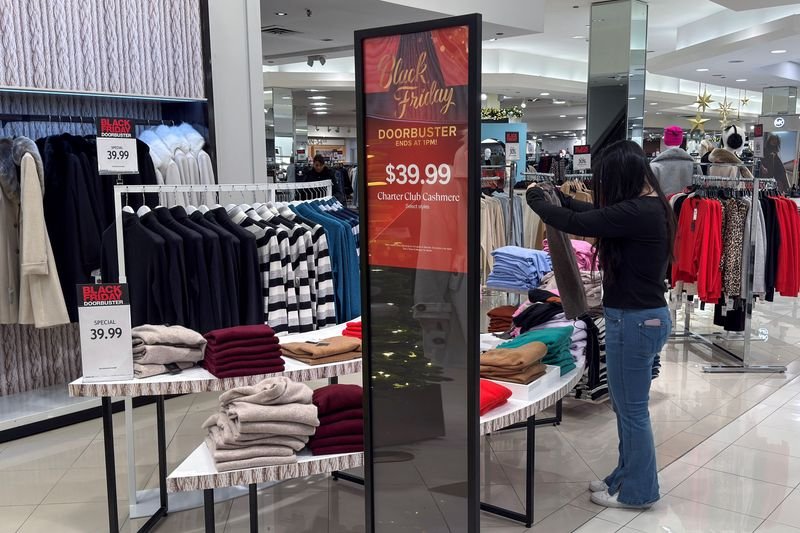
Nov 29 (Reuters) – AI-powered shopping tools helped drive a surge in online spending in the US on Black Friday, as shoppers avoided crowded stores and turned to chatbots to compare prices and secure discounts amid concerns about tariff-driven price rises.
U.S. Shoppers spent a record $11.8 billion online on the biggest shopping day of the year, up 9.1% from 2024, according to Adobe Analytics, which tracks the 1 trillion visits made by shoppers to online retail websites.
The holiday shopping season comes amid tight budgets, unemployment near four-year highs, U.S. consumer confidence at a seven-month low and falling prices, leaving shoppers eyeing every dollar.
According to MasterCard SpendingPulse, consumers turned smart during the holiday season, driving demand for online shopping, which saw e-commerce sales increase by 10.4% on Black Friday, while in-store sales increased by 1.7% in 2024.
AI-powered traffic to U.S. retail sites increased 805% compared with last year, Adobe said, when artificial intelligence tools like Walmart’s Sparky or Amazon’s Rufus had not yet launched.
“Consumers are using new tools to get what they need, faster,” said eMarketer analyst Suzy Davidkhanian. “Gift giving can be stressful, and LLMs (large language models) make the search process feel faster and more directed.”
Hot sellers on Black Friday included Lego sets, Pokemon cards, gaming consoles like the Nintendo Switch and PlayStation 5, and products ranging from Apple AirPods to KitchenAid mixers.
AI agents influence $14.2 billion in online sales globally
Globally, AI and agents influenced $14.2 billion in online sales on Black Friday, according to software firm Salesforce, of which $3 billion came from the US alone.
Salesforce, whose data includes non-discretionary items like groceries, reported that U.S. consumers spent $18 billion online on Black Friday shopping, up 3% from a year ago, with the most popular categories including luxury apparel and accessories.
Although U.S. consumers spent more this Black Friday than last year, price increases hindered online demand as shoppers purchased fewer items at checkout than last year, according to Salesforce.
Discount rates also remained flat compared to 2024, AI helped shoppers find the best deals, and rising price tags made it difficult for retailers to offer deep discounts.
According to Davidkhanian, promotions and discounts may not be as sharp as last year due to higher product costs driven by inflation and tariffs, and the final price does not appear to be as attractive to buyers.
<a href=