The couple found dead on Sunday were from the dominant Sunni Bani Khalid tribe. On the walls next to their bodies, their apparent killers had written communal slogans.
Recommended Stories
list of 3 itemsend of list
Homs, a city known for its diverse religious structure, was under threat. Tribal members united and reportedly began firing on houses in Alawite-dominated areas. And on Tuesday, large protests called by an Alawite religious leader took place in Latakia and Tartous, the religious minority’s traditional strongholds.
But, so far, almost a year after the fall of former President Bashar al-Assad, Syria has, unlike on many occasions, escaped another outbreak of sectarian violence – such as in coastal areas in March and again in Suwayda in July. Security forces of the Home and Defense Ministers were deployed in the area and along with some tribal leaders, the situation was calmed down. A curfew was imposed by the Syrian authorities.
How dangerous is the prospect of sectarian violence in Syria? What is the government doing to stop this? And why are some minority communities in Syria worried about their future?
What was the government’s reaction to the violence?
The government appears to have taken immediate action to ease tensions, especially after the violent reaction to the killing of some tribal members in an Alawite neighborhood of Homs. No casualties were officially reported, although monitoring groups said dozens were injured.
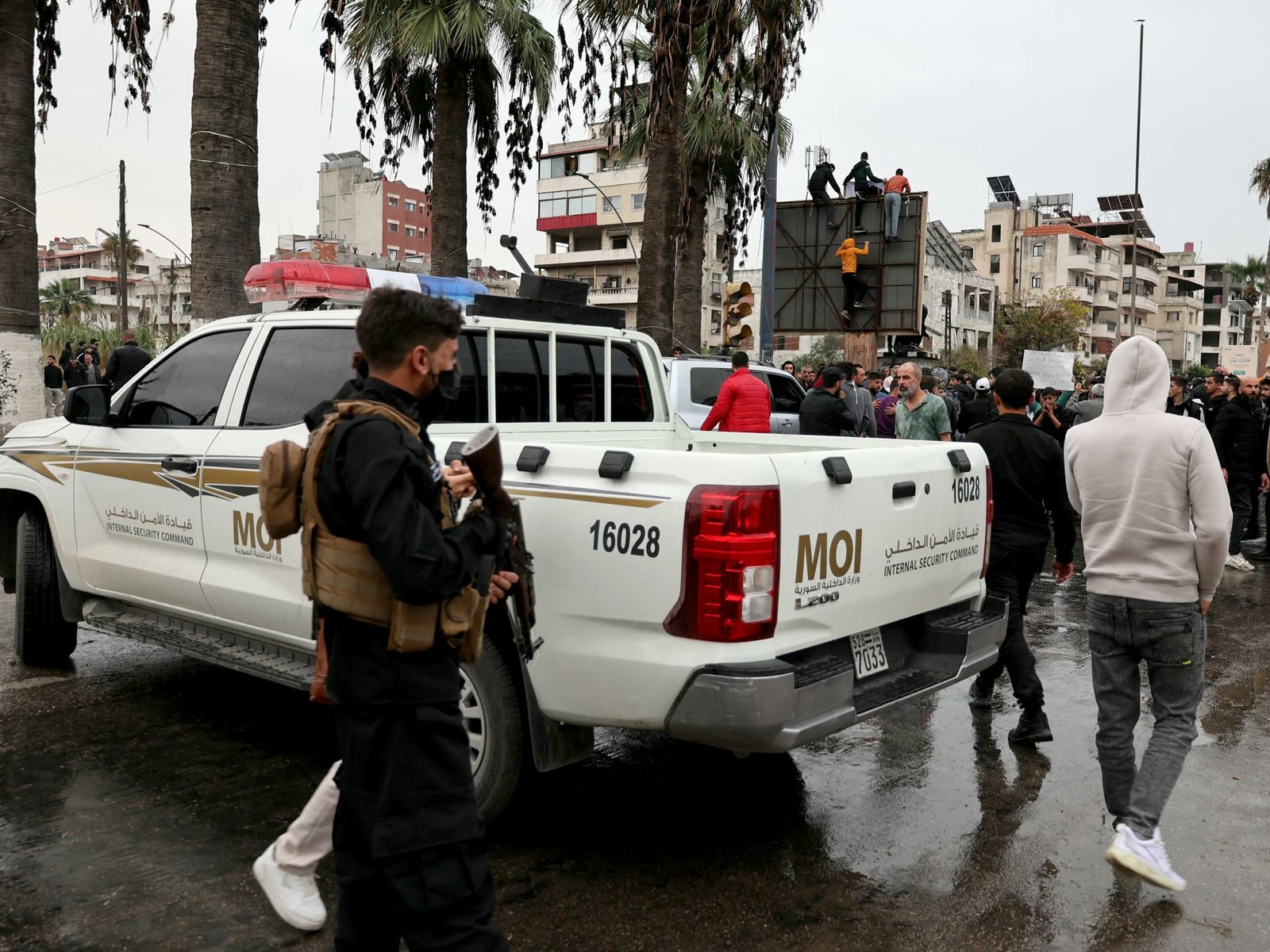
Government security forces, along with tribal leaders, defused the tension and arrested 120 people involved in the violence.
Reports on the ground indicate that the deployment has had a positive impact in preventing violent clashes, in contrast to incidents on the Syrian coast and in Suwayda earlier this year, when allegedly government-affiliated groups or tribes mobilized alongside armed fighters from minority groups and contributed to widespread violence.
The new Syrian government has faced international criticism for its failure to stop those attacks, even after it announced an investigation. With international legitimacy one of the main priorities of Syrian President Ahmed al-Shaara, the government has taken immediate action to ensure that another round of clashes does not occur.
The Syrian government, which is led by the country’s Sunni Muslim majority, has also sought to cast doubt on whether sectarianism was a motivating factor behind the killing of the Bedouin couple. Interior Ministry spokesman Nour al-Din al-Baba said sectarian messages found next to the bodies were likely planted “to mislead investigators and incite conflict.”
The Homs internal security commander, Brigadier General Marhaf al-Nassan, posted a statement on Facebook, saying that the government “strongly condemns this heinous crime and affirms that its purpose is clearly to incite sectarian rhetoric and sow discord within our community”.
What is the current situation in Homs?
Communal tension has not ended, but the curfew was lifted by Tuesday morning.
During the Syrian uprising that ultimately ousted al-Assad from power, some activists described Homs as the heart of the revolution. Members of its Sunni Muslim community in particular have long complained about oppression from the al-Assad regime, which is led by Alawites.
Homs is still a multi-faith and multi-ethnic city, with Sunni, Alawite and Christian communities.
Since the ouster of al-Assad from power in December 2024, Alawites in Homs have reported cases of discrimination, violence, and eviction from their homes. Following coastal violence in March, some Alawites fled Syria for villages in the Akkar region of Lebanon.
What has happened elsewhere in Syria after the Homs violence?
The situation in Homs sparked protests across the coast – known for its large Alawite communities – particularly in Latakia, where hundreds of people gathered.
Protests took place in Latakia’s Agriculture Roundabout, Al-Azhari Roundabout and Al-Hammam Square. According to Syrian local media outlet Enab Baladi, a sit-in was also held in the al-Qusour neighborhood of Baniyas city.
According to Enab Baladi, protests in Jableh, Qardaha, Safita, Dreikish, Sheikh Badr – all in Latakia or Tartus regions – were observed against “the human right to live in security and dignity” and “the killing of Alawites”.
Reports said some protesters chanted slogans calling for the Syrian people to be united, while others called for federalism. There were also calls to release Alawite prisoners detained by the new government.
The head of the Supreme Alawite Islamic Council Ghazal Ghazal had called for protests on Monday. Ghazal called on his community to protest peacefully.
Pro-government protests also gathered in Jableh and Baniyas. Reuters reported security forces firing at the protests to break up two rival demonstrations. The government told Reuters that “unidentified attackers had also fired on civilians and security forces”.
Is this a turning point for the Syrian government?
It is too early to say whether the government is fully capable of preventing a new wave of sectarian violence, but the fact that the situation in Homs has not resembled the days of widespread violence is an important step towards regaining the trust of many people across the country.
“Communication from the government side was good,” Syrian researcher and human rights expert Lina Ghotouk told Al Jazeera. “It was clear that this violence, aggression or sectarianism is completely unacceptable.”
But Ghotouk said more progress is needed to disarm the tribes and bring them under the authority of state security forces.
“The problem is that the root cause has not been controlled,” he said.
“With the use of uncontrolled weapons (such incidents) can happen again.”
<a href