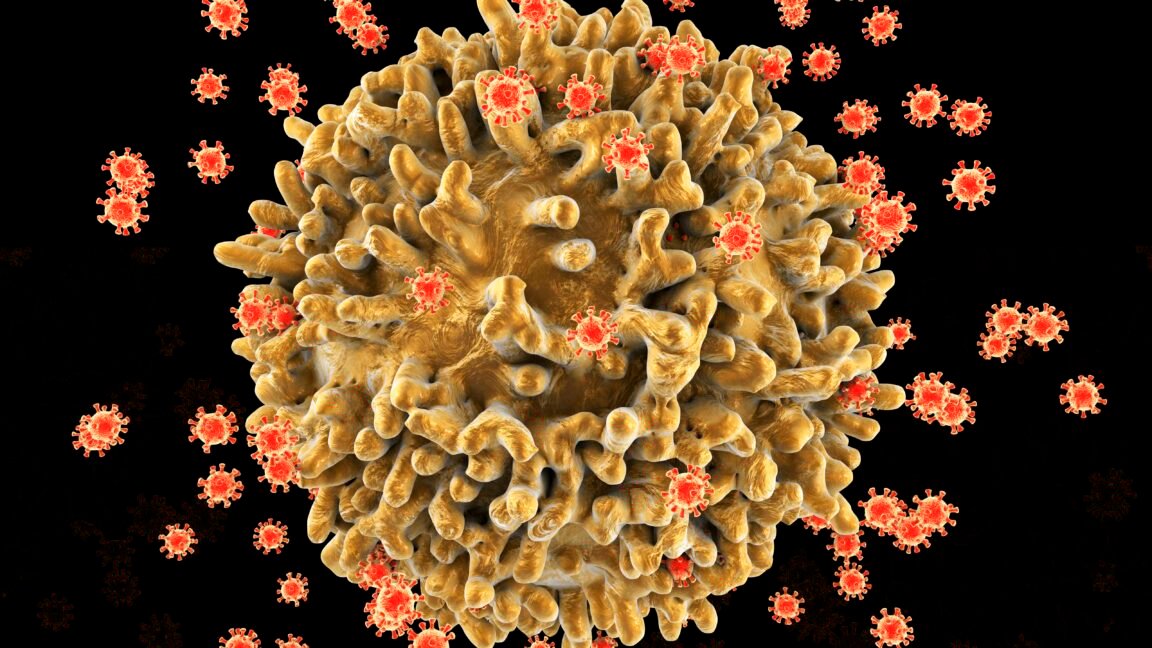
A particularly promising finding of the RIO trial was that the antibodies also hit latent HIV in some cells. These reservoirs are how the virus rebounds when people stop treatment, and antibodies are not thought to touch them. Researchers speculate that T cells boosted by antibodies can recognize and kill latently infected cells that display even small amounts of HIV on their surface.
Meanwhile, the FRESH intervention targeted stubborn HIV reservoirs more directly by incorporating another drug, called vegatolimod. It is designed to stimulate immune cells to respond to the threat of HIV, and hopefully “knock” dormant HIV particles out of hiding. Once this happens, the immune system, with the help of antibodies, can recognize and kill them.
FRESH’s results are exciting, Ndung’u says, “because it may indicate that this regimen worked to some extent. Because it was a small study, obviously, it’s difficult to draw too many strong conclusions.” His team is still examining the data.
Once he secures funding, Ndungu aims to run a larger trial in South Africa, including chronically infected individuals. Meanwhile, Fiedler’s team is recruiting a third arm of RIO to try to determine whether stopping antiretroviral treatment longer before giving antibodies induces a stronger immune response.
A related UK-based trial, called Abvax, will add a T-cell-stimulating drug to the mix to see if it boosts the antibodies’ long-lasting, vaccine-like effects. “It may be that combining different approaches boosts different parts of the immune system, and that’s the way forward,” says Fiedler, who is co-principal investigator of that study.
For now, Fiedler and Ndung’u will continue to track virally afflicted participants — who are living free from the demands of daily treatment for the first time since receiving an HIV diagnosis.
This story originally appeared in Knoebel Magazine.
<a href