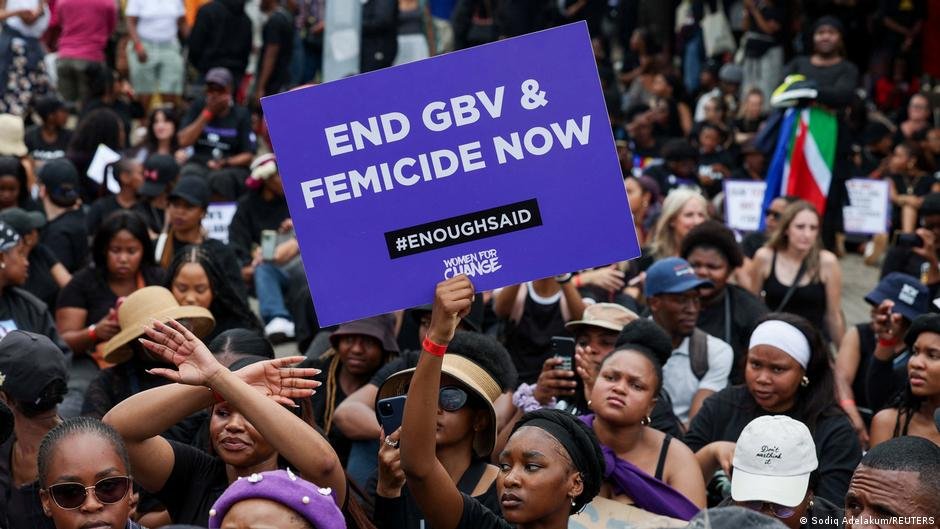
The 2025 Femicide Report by the United Nations Office on Drugs and Crime (UNODC) and UN Women said no real progress has been made in addressing such killings.
The United Nations said the release of the report coincided with the International Day for the Elimination of Violence Against Women.
Thousands of women and girls murdered in 2024
Through 2024, the report found That approximately 83,000 women and girls were deliberately killed. About 60% of them – or 50,000 – died at the hands of intimate partners or family members.
This is equivalent to a woman or girl being murdered by a partner or family member approximately every 10 minutes.
In comparison, the United Nations said 11% of male murders were committed by intimate partners or family members.
“For too many women and girls around the world, home remains a dangerous and sometimes deadly place,” said John Brandolino, Acting Executive Director of UNODC.
“The 2025 Femicide Brief is a clear reminder of the need for better femicide prevention strategies and criminal justice responses,” Brandolino said.
The report also highlights how technology has made some types of violence worse, such as cyberstalking, coercive control and image-based abuse. It was found to be a potential risk factor that extended to the physical world and, in some cases, led to the murder of women and girls.
Sarah Hendricks, Director of UN Women’s Policy Division, said, “Femicides do not occur in isolation. They are often based on a series of violence that can begin with controlling behaviour, threats and harassment – including online.”
Femicide rate in Africa was highest in 2024
The United Nations said that women and girls are victims of extreme violence in every part of the world.
By regional breakdown, Africa had the highest rate of femicide at 3 per 100,000 women and girls in 2024, followed by the Americas at 1.5, Oceania at 1.4, Asia at 0.7 and the lowest in Europe at 0.5.
The report called for “urgent, coordinated prevention” and specified six key areas, including strengthening legal frameworks, survivor-centred services and firearms restrictions.
Edited by Shawn Sinico
<a href