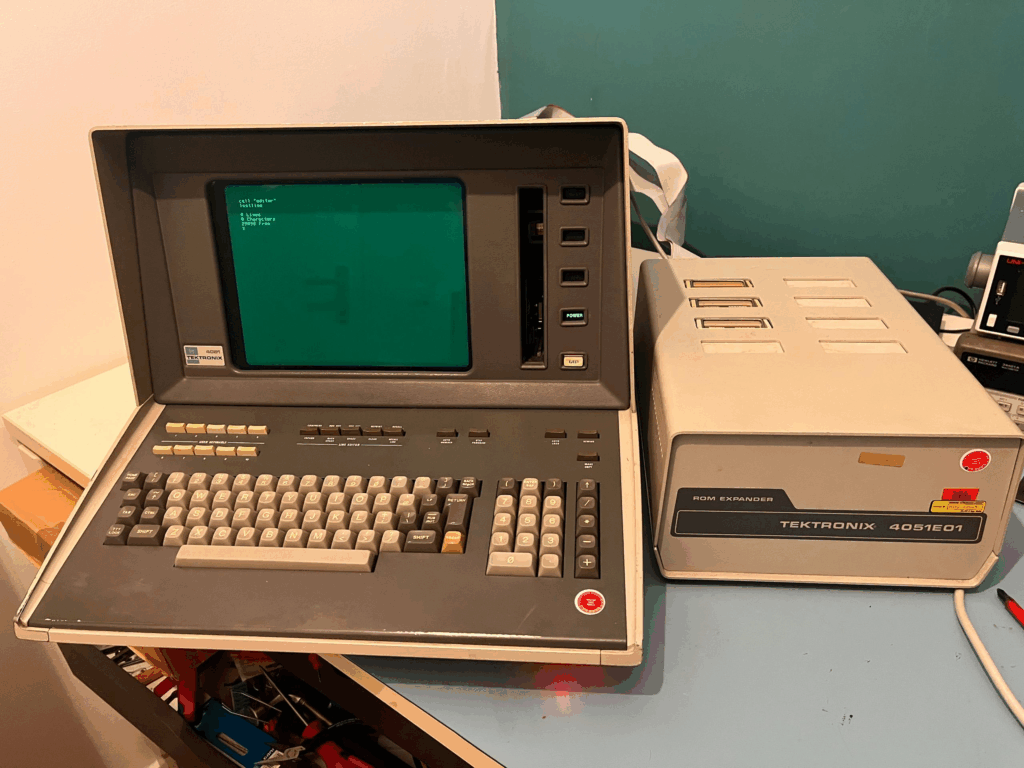
This repair has been on the to-do list for a long time, so let’s finally get to it!
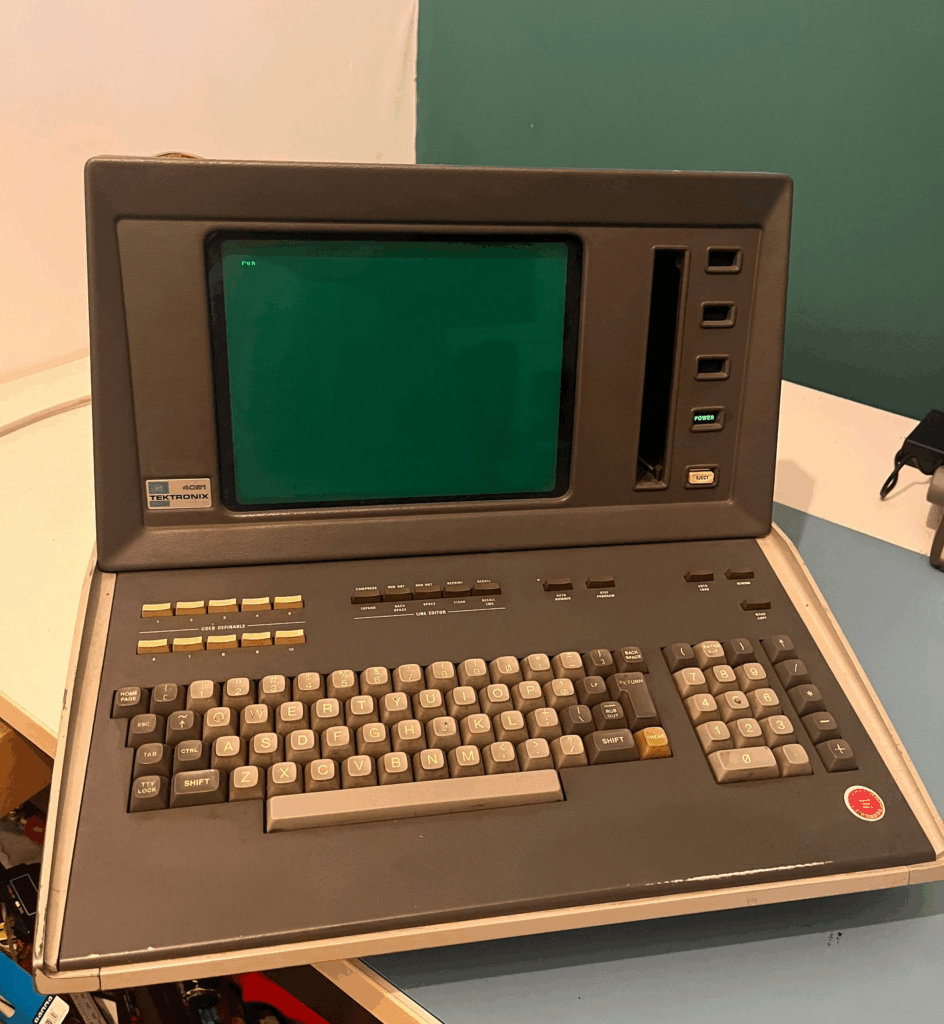
In my opinion, Tektronix is a brand that makes electronics laboratory equipment like oscilloscopes and logic analyzers. Turns out, they made a lot of terminals and some computers! A good friend saw it for sale locally, and I pestered him until he agreed to pick it up for me.
Picking it up might be the wrong word, this thing is big and heavy! It weighs about 35 kilograms and is almost a meter long!
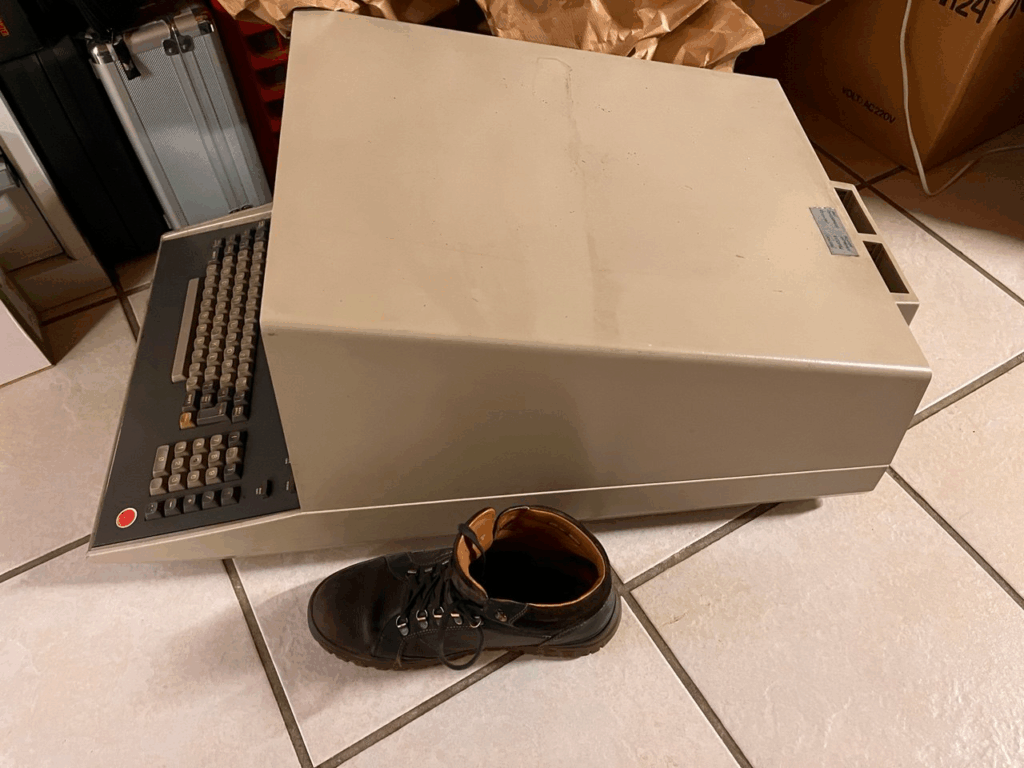
So let’s see what it is, what I need to do to repair it and what it can do!
some history
The machine I got is a Tektronix 4051 Graphics Workstation, released in 1975, but let’s take a little look at Tektronix’s history before its release. Tektronix began in late 1945 as Techrad, but soon changed its name to Tektronix. One of their first products was the 511 oscilloscope, the first oscilloscope with a trigger!
This proved to be a good thing, and soon, Tektronix became synonymous with oscilloscopes and became known as a company that made some of the best test and measurement equipment. In the 60s, mainframes and then minicomputers became more popular, which often required terminals. At this point Tektronix was making storage oscilloscopes, which used a storage CRT tube that could “remember” the signals captured. Using this technology, Tektronix released its first terminal, the 4002, in 1969. An 11″ terminal that was capable of displaying graphics with 400×300 pixel resolution. Since the CRT remembered the drawn data, there was no need for a RAM framebuffer!
A few years later in 1971 they released the 4010, again 11″ but now with 1024*780 pixel resolution. Because they used storage CRTs, these terminals were significantly cheaper than competitors. Keep in mind, cheap still means about $4000, or about $30,000 in 2025 money. But the IBM 2250 cost about $280,000 in 1970s dollars, which is more than $2 million USD today!
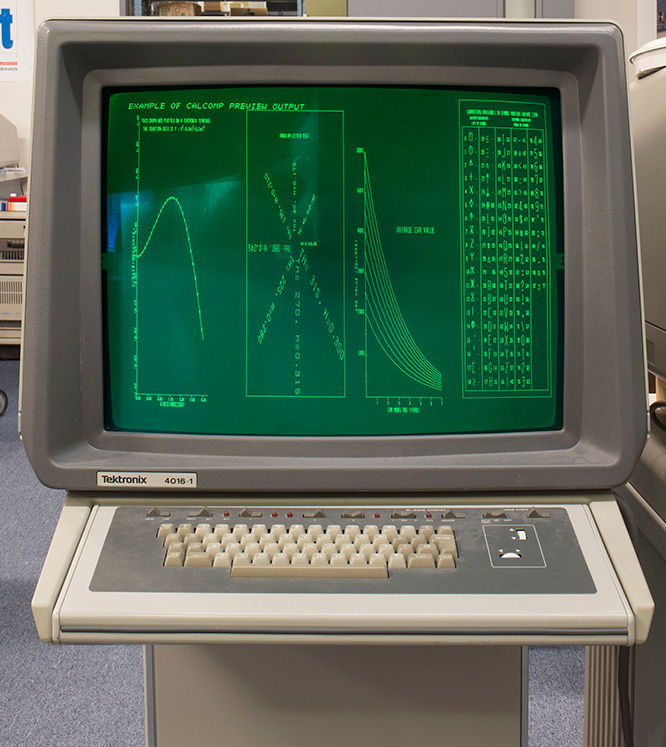
One last bit of good news before we move away from these terminals. Tektronix made the 4010 in several sizes, the largest was the 25″ 4016 with 4096*3120 pixel resolution. 1974 in 4K, sign me up!
405x computer
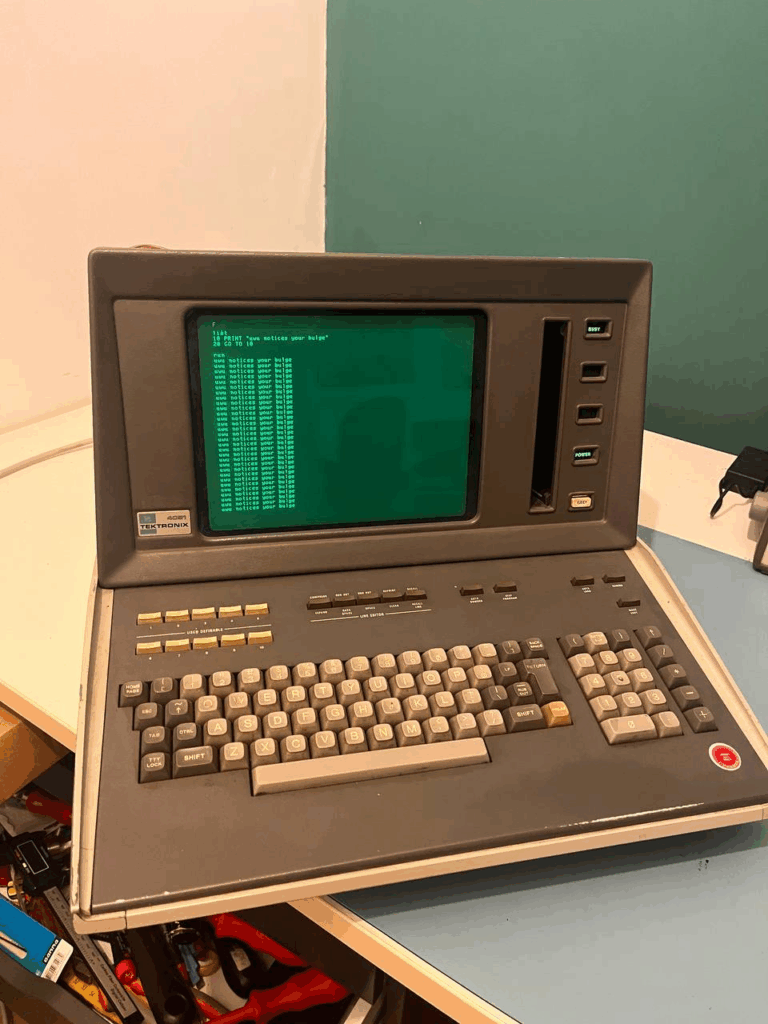
Okay, I promised a computer, so let’s move on to the Tech 4051 I got! Released in 1975, it was based on the 4010 series of terminals, but had a Motorola 6800 computer inside. This machine, like other machines at the time, ran BASIC, but with additional subroutines for drawing and manipulating vector graphics. 8KB of RAM was standard, but up to 32KB of RAM could be installed. For example, to add DSP routines, additional software was installed via a ROM module on the back. Data can be saved on tape, and external devices can be attached via RS232 and GBIP!
Overall, a fairly capable machine, especially in 1975. Basic computers had become common, but graphics were quite new. According to Tektronix the 4051 was ideal for researchers, analysts, and practitioners, and it can be yours in 2025 for the low price of 6 grand, or about $36,000. I couldn’t find sales figures, but it seems it was a fairly successful machine. Tektronix also made a 4052 with a faster CPU and a huge 4054 with 19″ 4K resolution! Tektronix continued making workstations through the 90’s but like almost all workstations of that era, x86/Linux eventually took over the entire workstation market.
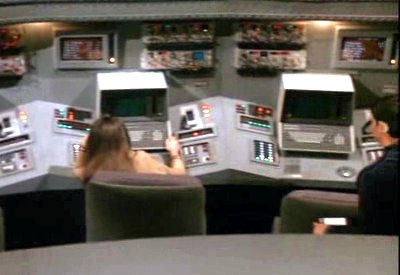
The 4051 was also used in some series/movies, storage CRTs don’t flicker when recorded like normal CRTs do and since they are basic, it was quite easy to get something good on the screen! The most famous example was Battlestar Galactica:
tektronix computer repair
History aside, what’s the shape of what I found?
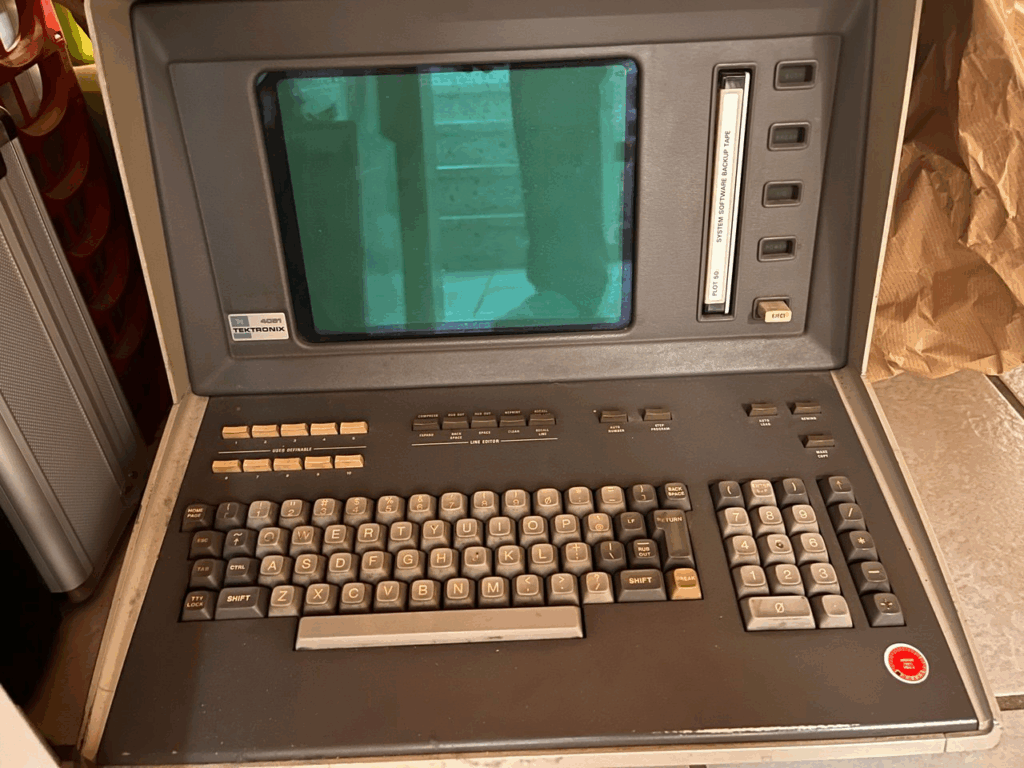
How long it was stored in a shed is unknown, but it looked like it was in fine shape. A little dirty but who isn’t sometimes. The fuse is intact, and upon opening it, nothing appeared to be “off”, no protruding cap or anything like that. But nothing happens when you turn it on. Anti climate…
Later, after extensive tracing of the wires, it was discovered that the on/off switch was broken. So some wires can be used to solve this quickly.
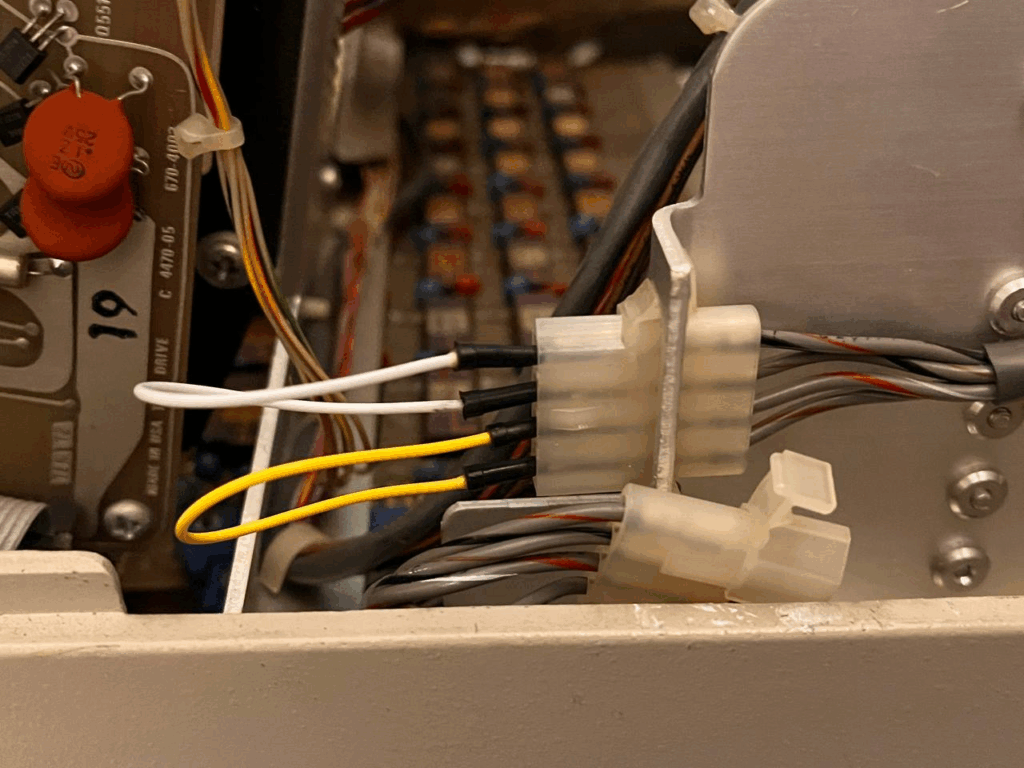
I don’t recommend it. 230V through cheap breadboard wires is not smart. But with this, still nothing. Argh. So later after debugging it was found that one wire of the main transformer was not connected to the terminal.
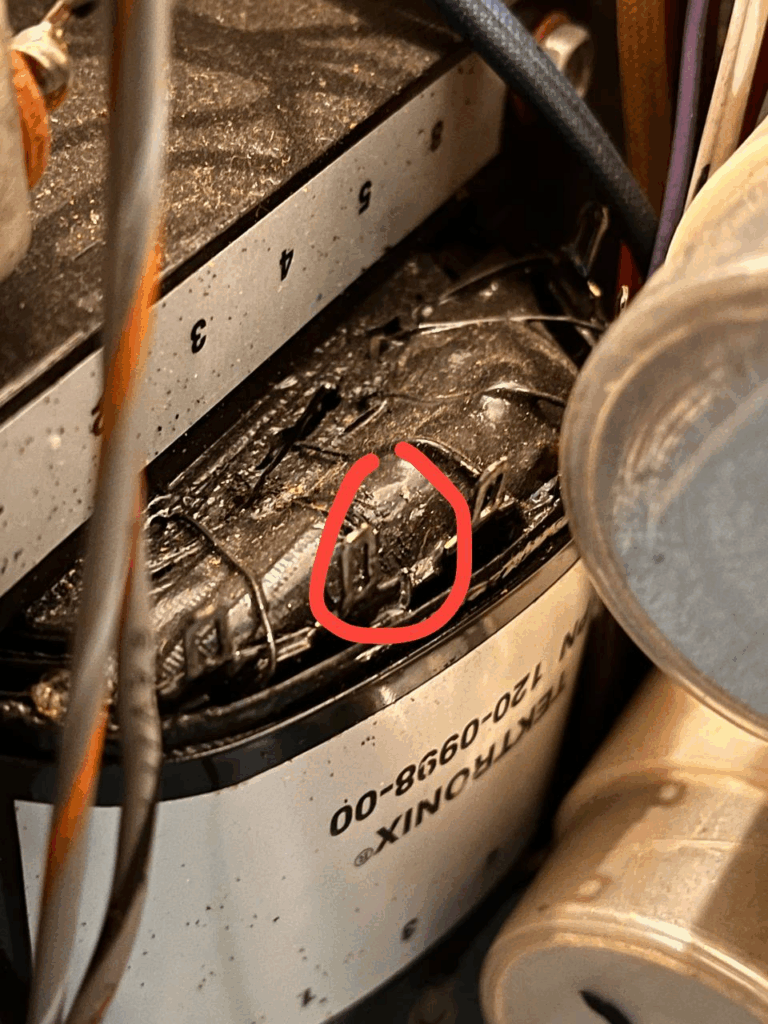
It is visible in this photo, there are wires going from the transformer to the tab for selecting the voltage and one of them is broken. Luckily there was enough wire left to solder and repair it, it would have been impossible to get a replacement! After this improvement, I got the power back! I disconnected as much as I could to check all the voltages I could. We needed 15V, 12V, 5V, -12, +20, -20 +185 and +365 and they all turned out to be typical. tektronix 🙂
So, now it’s time to slowly put the boards back together and see if anything is torn!
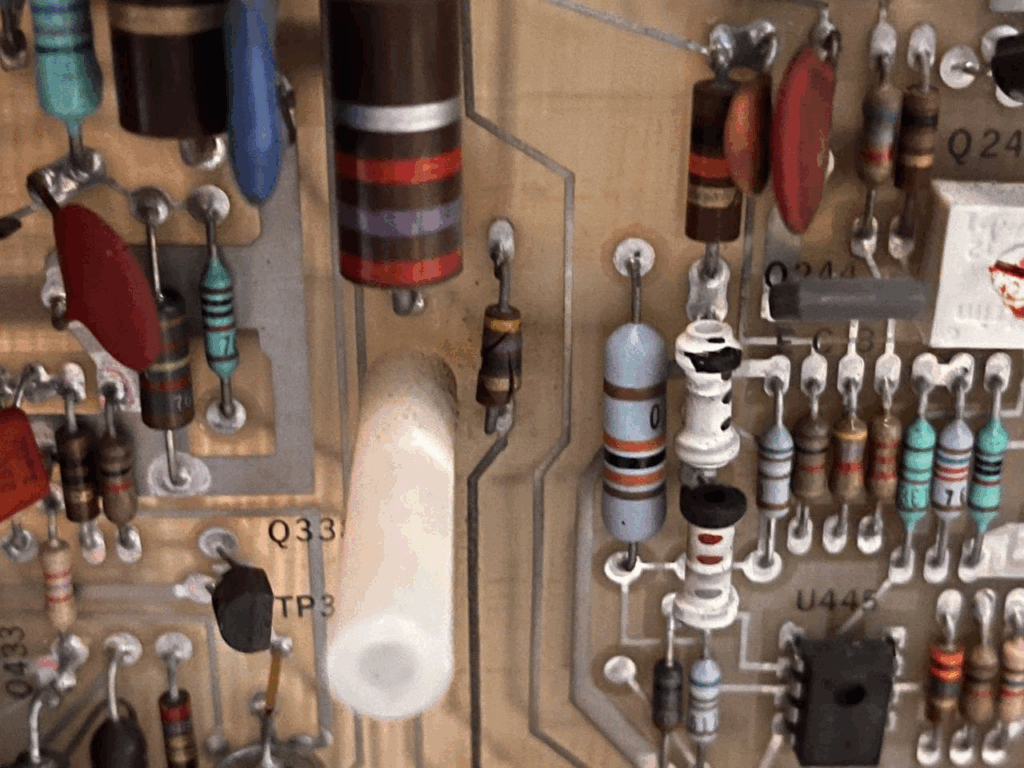
Wait, I didn’t mean that as a suggestion… Sadly, this blocker didn’t get the sarcasm and decided to smoke. This is a 47 Ohm resistor which limits the 320V supply slightly. Perhaps it had become too hot, or age had taken its toll. I checked everything after the resistor and everything was found to be fine. No transistors that are shorted or capacitors that are blown. So let’s change it and pray?
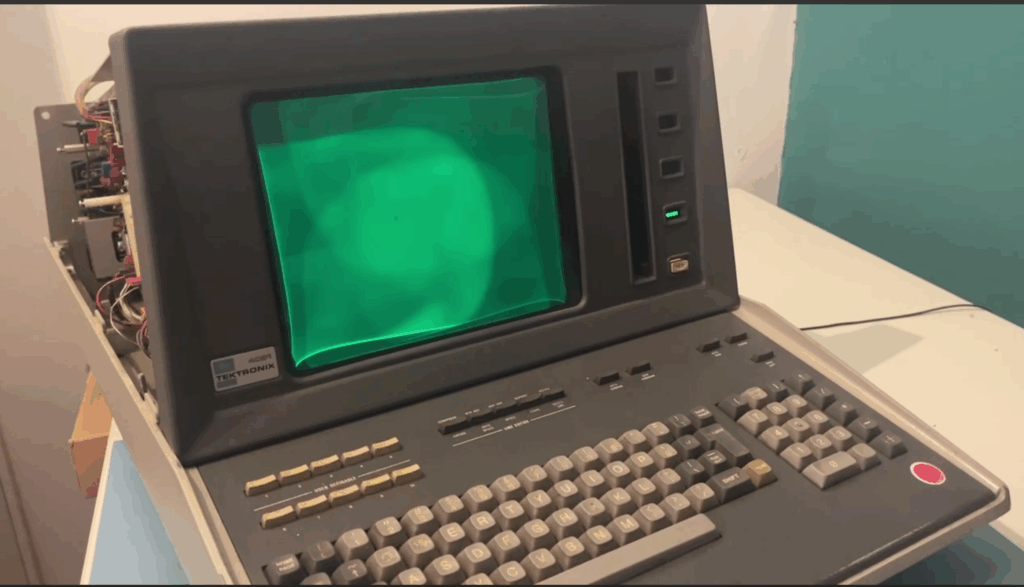
Well, it worked!
calibrating that display
Something appeared on the display, which is a big improvement, and it all looks like the machine wants to boot. But the display is completely unreadable, which means it’s time to calibrate all voltages.
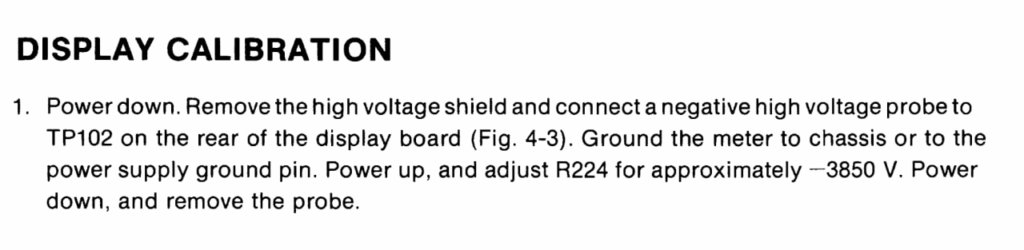
Which means, measure a power supply that is around 4KV. spicy!
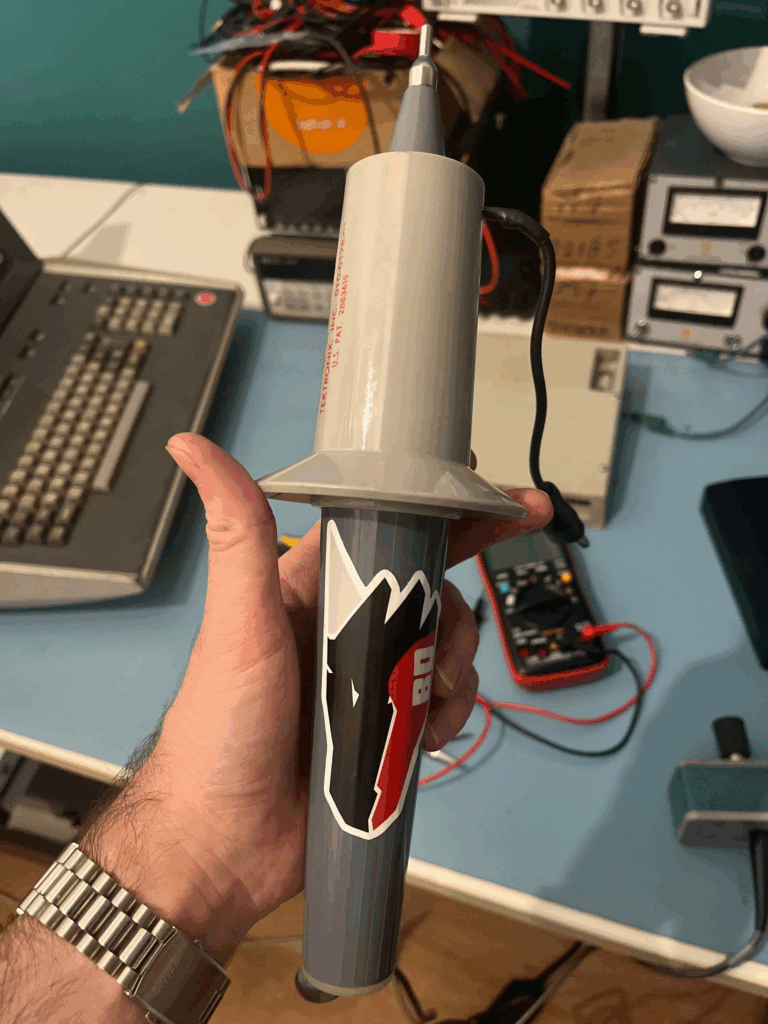
Luckily I have a HV scope probe on loan from a friend! And HV is in imagination. So that’s good, but all the other voltages are not. These CRTs are all quite sensitive to the required voltages, so sensitive that they are calibrated at the factory and have the exact CRT voltages written on them:
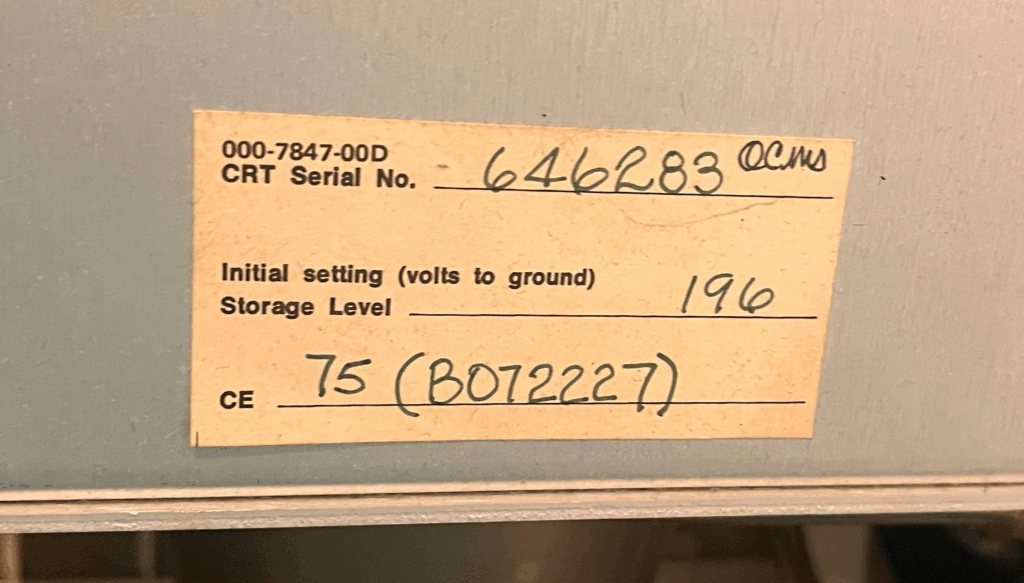
It measured 196V and 75V, and I measured 160V and 55V. Yes, he will do that! After a few calibration steps the display turned out to be quite well readable and in good condition!
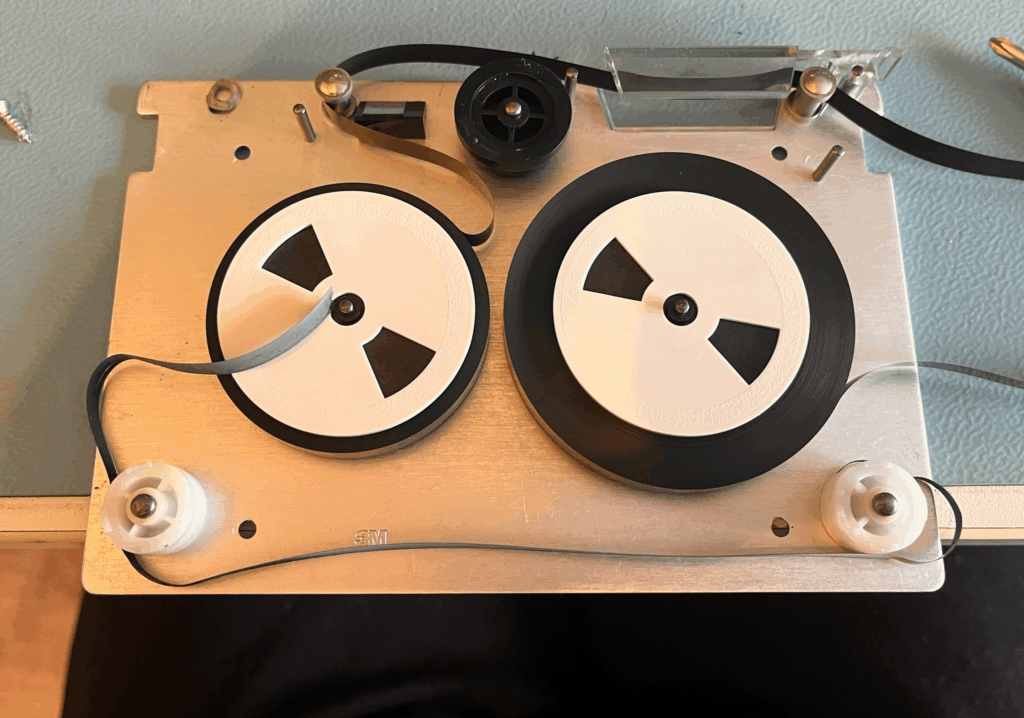
The one tape I had is sadly broken. The belt broke, which seems to be a common problem with these. The drive itself seems to be working, and the tape I found is an OS backup tape, so probably nothing critical. This can be fixed, but it’s not very high on my to-do list right now.
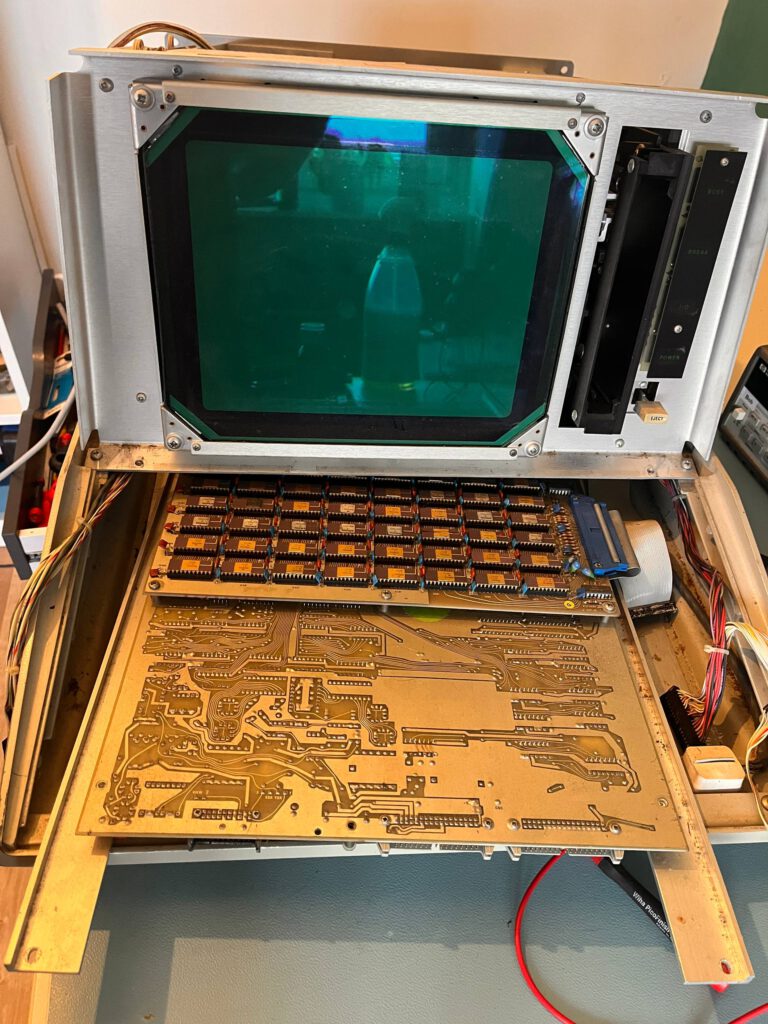
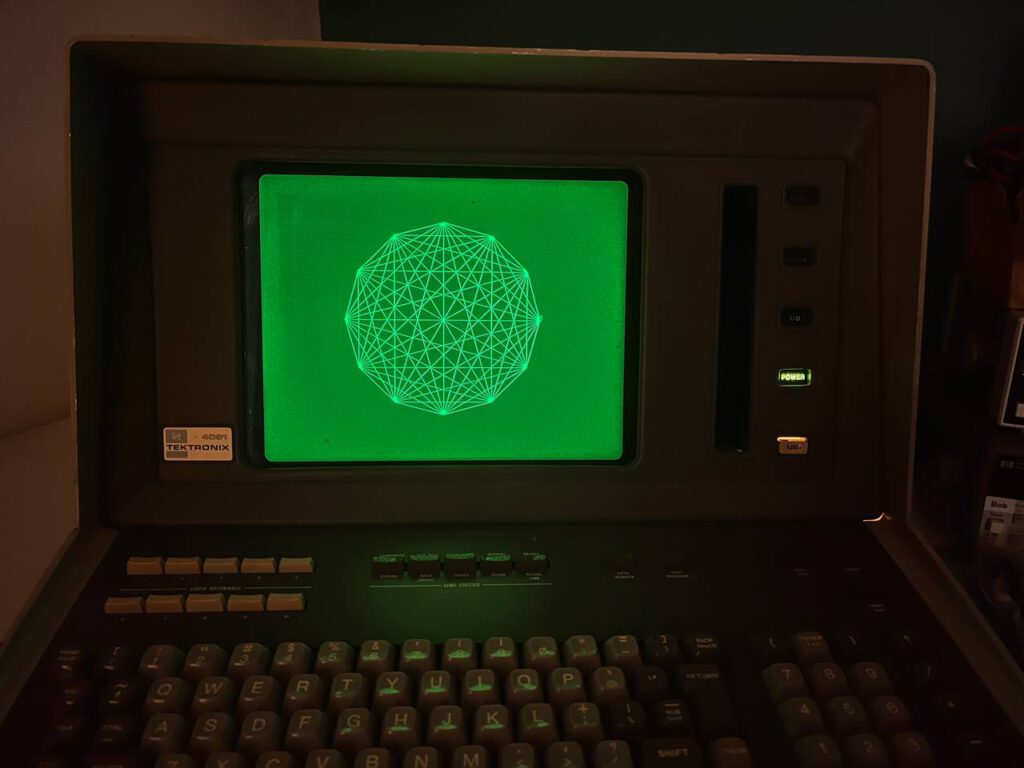
This proved to be a less complicated repair than expected. Some of the keyboard switches are a little worn out, need cleaning, but the 50 year old computer is mostly just working, it’s pretty amazing! So let’s wrap up this renovation with some fun beauty shots of the inside and more:
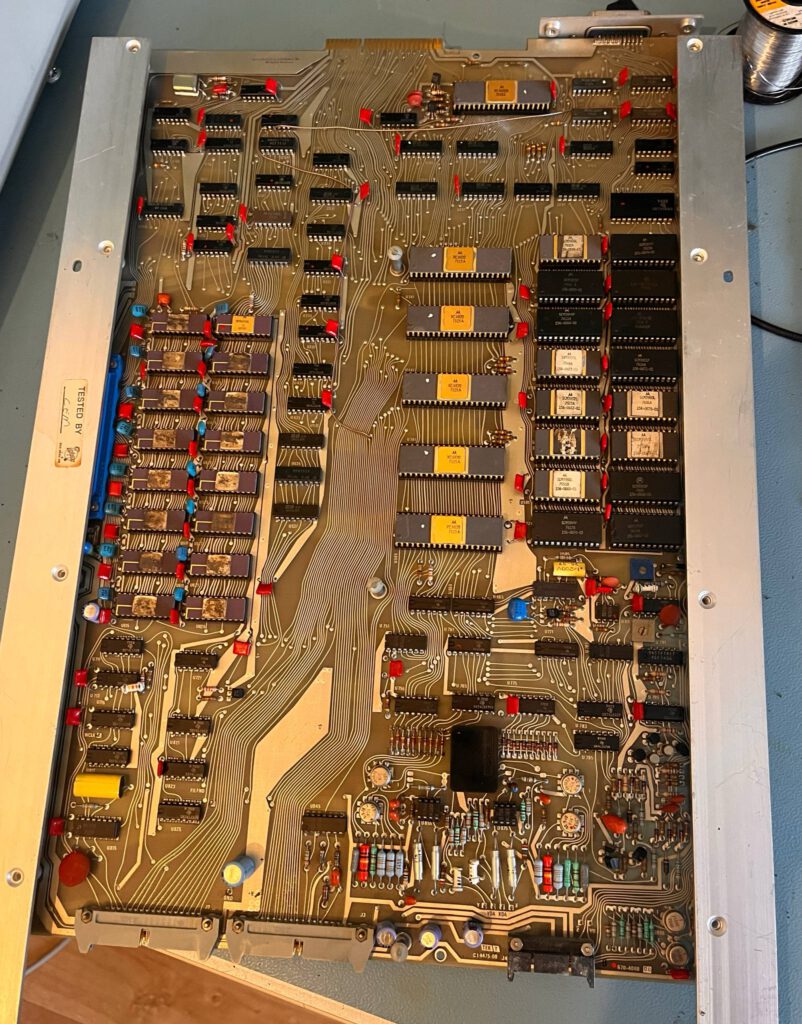
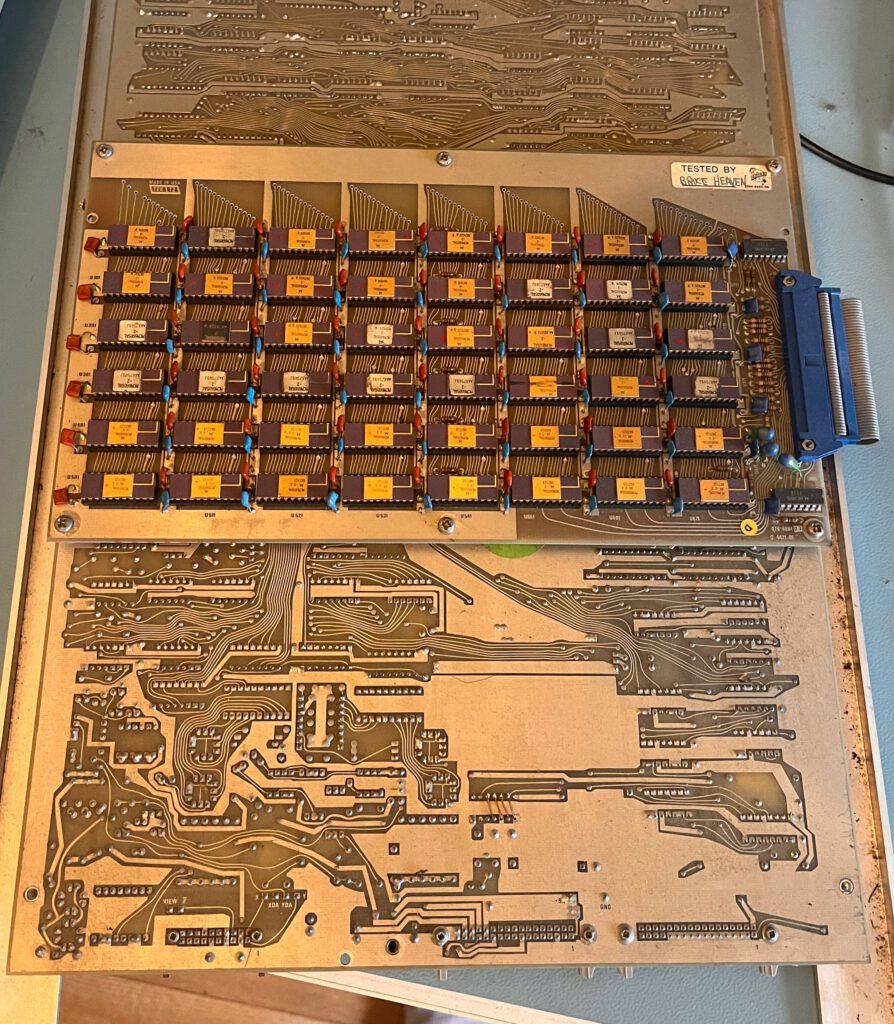
What did I actually pick up?
Taking a look at my machine, it has a max of 32KB of RAM, sadly no serial port, but it came with a ROM expander!
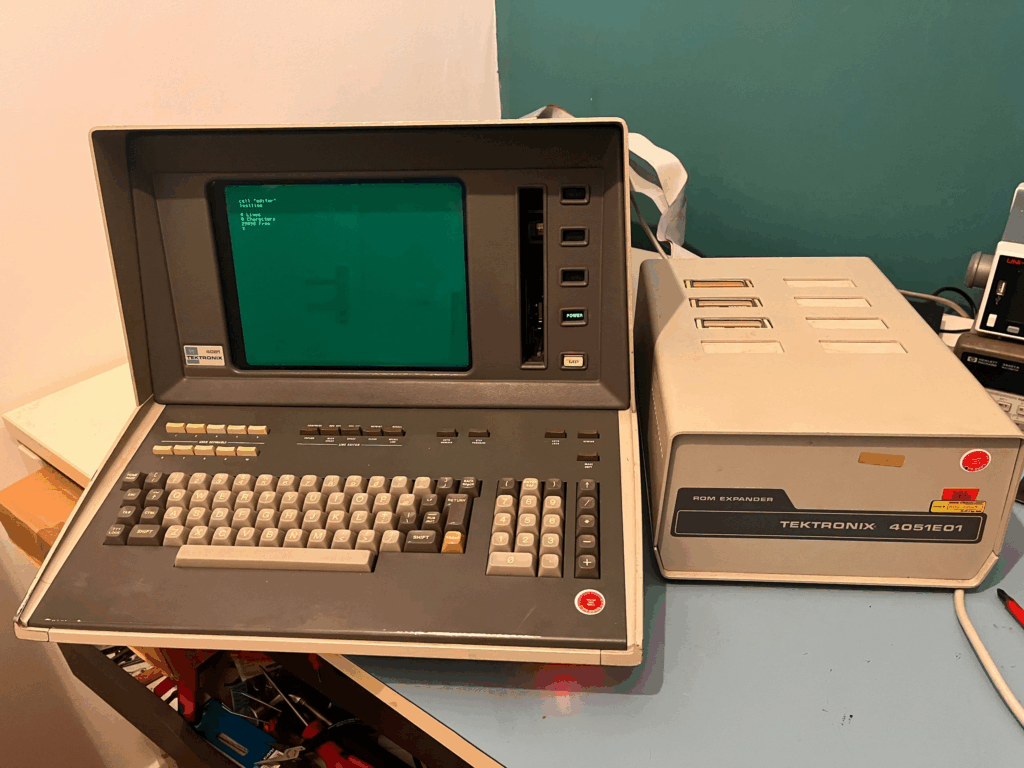
There is space for 2 ROM cards on the back of the 4051. These include things like additional programs, subroutines for DSP algorithms, and more. These can contain 8KB of ROM, and are memory mapped.
If you want more than 2 at any time, the ROM Expander allows you to have 8! Only one memory is mapped at any time, but the 4051’s OS scans all ROMS when it starts, and when you run a program on the ROM, it makes sure to send some commands to the expander to map the correct memory. All this is invisible to the end user and the machine works like it has 8 ROMs, or if you have 2 expanders, 16 ROMs!
I got 3 ROMs with me, one for the editor program, one to load/store binary data to tape, and one for an optional external floppy drive. Oh yes, there is a floppy drive! Sadly I don’t have one, but if anyone has one collecting dust, let me know 🙂
But can it run DOOM?
No
ok any game?
How about some Monopoly!
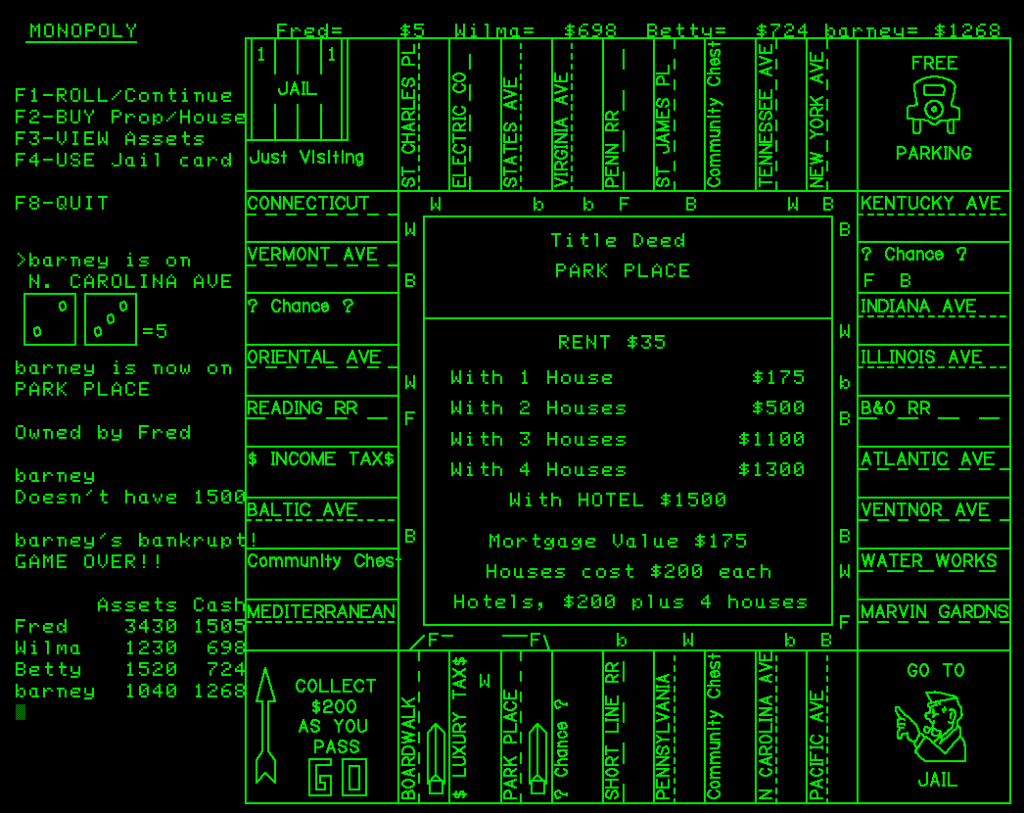
Due to display technology, most games don’t work very well. Other than completely erasing the display, the display cannot be easily cleaned. So some games like tic tac toe or monopoly work but anything more active than that is sadly difficult.
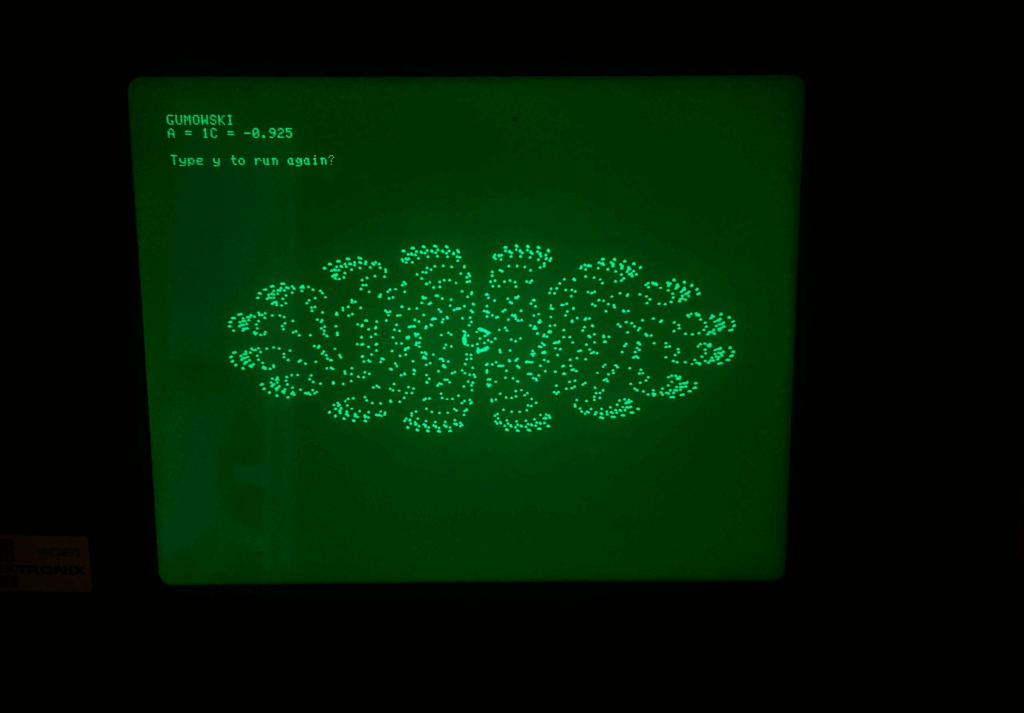
Luckily there are plenty of good demos and programs out there for the 4051 and its bigger siblings. Lots of programs, manuals, and more can be found on Monty McGraw’s Github page. It even has an emulator so you can try it all out using any modern computer!
what will happen next
Monty has a project on Github called GBIP Flash Emulator. There is currently no way to load/store programs into my 4051, and typing a 1000 line BASIC file is a bit of a pain. So I’ll definitely be ordering parts for that!
There are also a lot of ROM cards that I don’t have, so I’m working on a ROM board to clone them.
Ultimately getting this beautiful machine up and running is a great move, and I’ll leave it at that for now!
As always, if you liked this blog post, you can buy me a coffee!
<a href