TL;DR – We keep the windows closed in cold weather. The air becomes “stale”: humidity often rises above 60%, which can harm our health and promote mold. Also the level of CO₂ in the air increases, which affects our ability to concentrate. So I created a room air monitor that remains invisible as long as everything is in the green zone, but intentionally becomes noticeable once the threshold is crossed. For my personal love of statistics I also visualize measurements in a clear dashboard.
Comment: This English version was created with the help of automatic translation and I am not a native English speaker. If you see any unclear or incorrect wording, feel free to indicate it in the comments or contact via e-mail so that I can improve the text.
Why this project?
When windows are closed for extended periods of time, indoor air quickly becomes “stale.” Both humidity and CO₂ levels increase. CO₂ is measured in parts per million (ppm) – essentially “CO₂ molecules per million air molecules”. This makes it easy to compare how much more CO₂ is present indoors compared to fresh outdoor air. At high levels, the following problems may occur:
| CO₂ level | Meaning/Potential Impact |
|---|---|
| Around 400-450 ppm (normal outdoor air) | Baseline for fresh air. |
| up to ~1000 ppm | Often used as an upper limit for good ventilation. Values above ~1000 ppm indicate inadequate ventilation. |
| about 1 000-1 500 ppm | Concentration increases – decreased performance, concentration problems and fatigue become more likely. |
| >1 500 ppm or more | Very poorly ventilated room. Health and comfort issues become more frequent. |
| Extreme values (eg > 5000 ppm) | Serious symptoms are possible, such as trouble breathing or loss of consciousness. Very rare in normal indoor environments. |
Source: Ashre (2022). ASHRAE Position Document on Indoor Carbon Dioxide – PDF
Too much or too little humidity is also unhealthy. If it is too low, it can cause dry mucous membranes, irritate the skin and increase the chance of infection. If it’s too high, it promotes the growth of mold, dust mites and other bio-organisms that can contribute to respiratory illnesses, allergies and asthma.
| Relative Humidity (RH) | Meaning/Potential Impact |
|---|---|
| <30% | Very dry: irritated mucous membranes, dry skin, eyes, possibly nosebleeds, increased susceptibility to respiratory infections. |
| ~30-40% | This is often cited as the lower limit of the “healthy” range. |
| ~40-60% | The ideal range often recommended for indoor spaces from a health and comfort point of view. |
| >60% (up to 75%) | Risks: Fungal and mite growth, damp rooms, uncomfortable indoor climate. |
| very high (>75%) | High humidity + poor ventilation = substantial health and building risks (mold, respiratory disease). |
Source:
Wang, W., Zhang, X., and Li, W. (2023). Impact of indoor humidity on human health and comfort: a systematic review.Building and Environment – Articles
All this shows how important regular broadcasting is. The e-Paper Room Air Monitor helps me and my flatmates keep these values under control and maintain a healthy indoor climate.
hardware overview
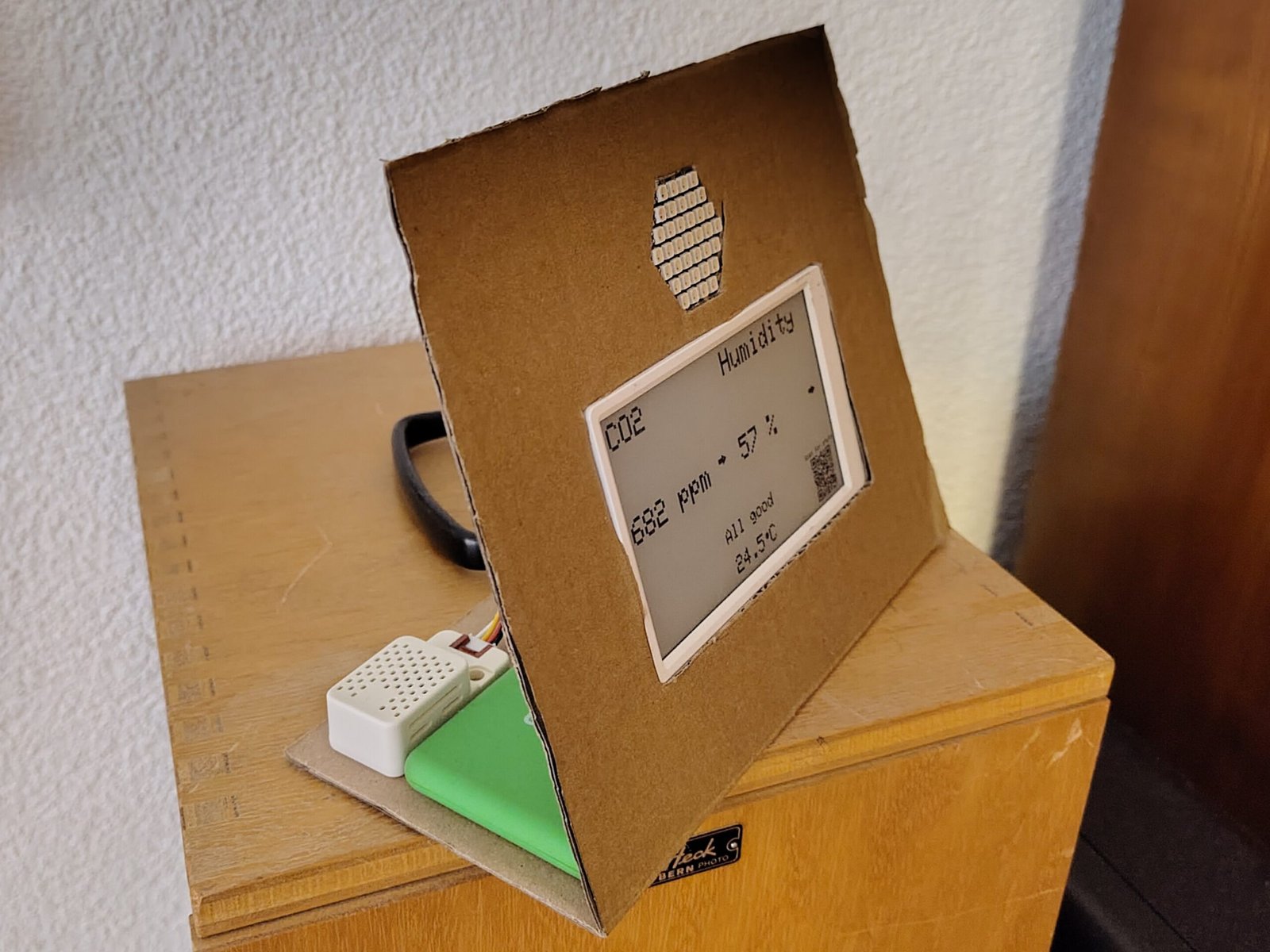
The hardware is intentionally simple – mainly components I already had at home:
e-paper room air monitor
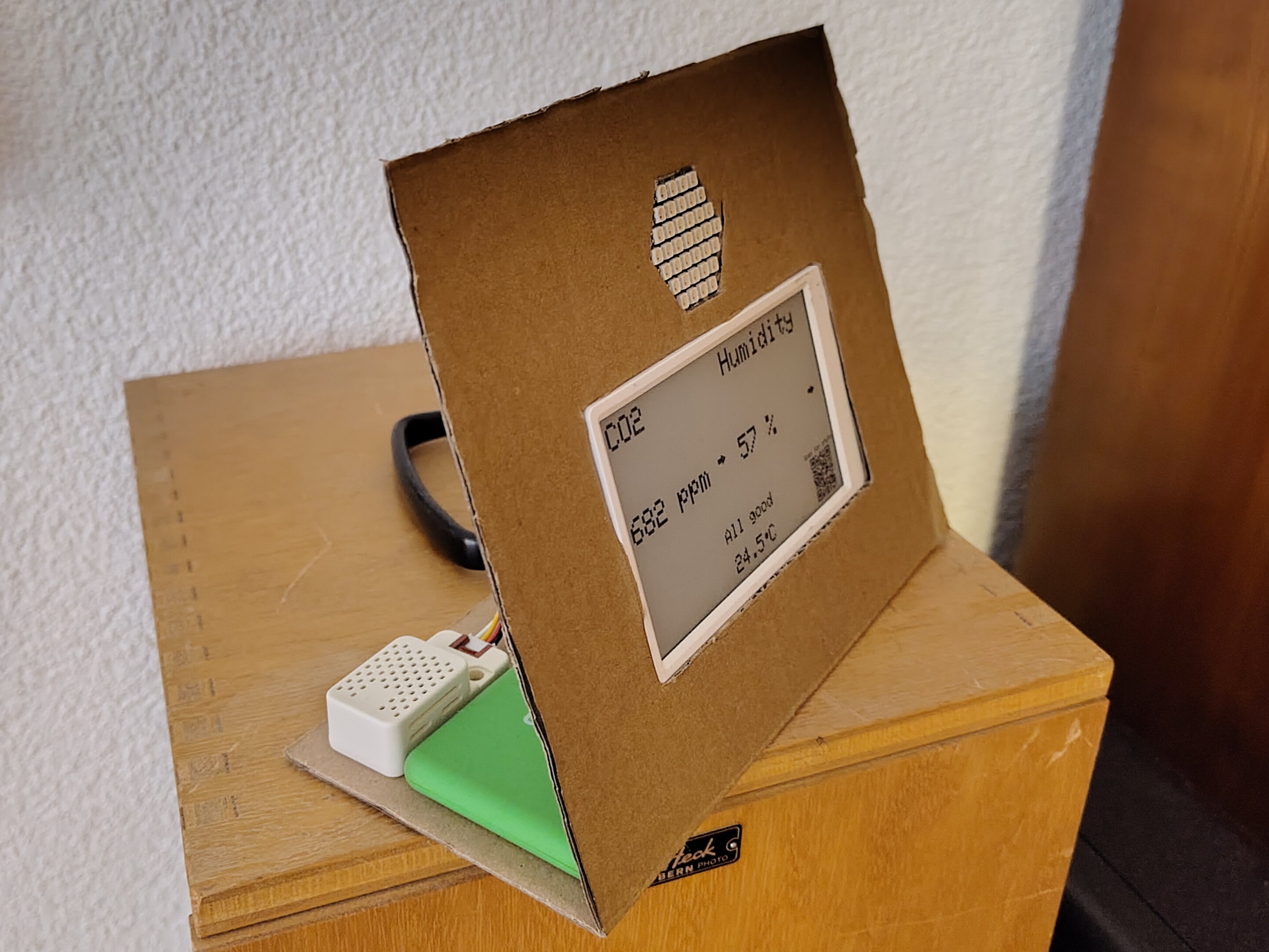
The e-Paper Room Air Monitor aims to remain unobtrusive as long as the air quality is within the green range, but clearly visible when defined limits are exceeded. This is achieved through the LED board, which starts blinking when the value reaches the warning level. The e-paper display always shows the current air quality as well as a brief recommendation of what to do.
dashboard
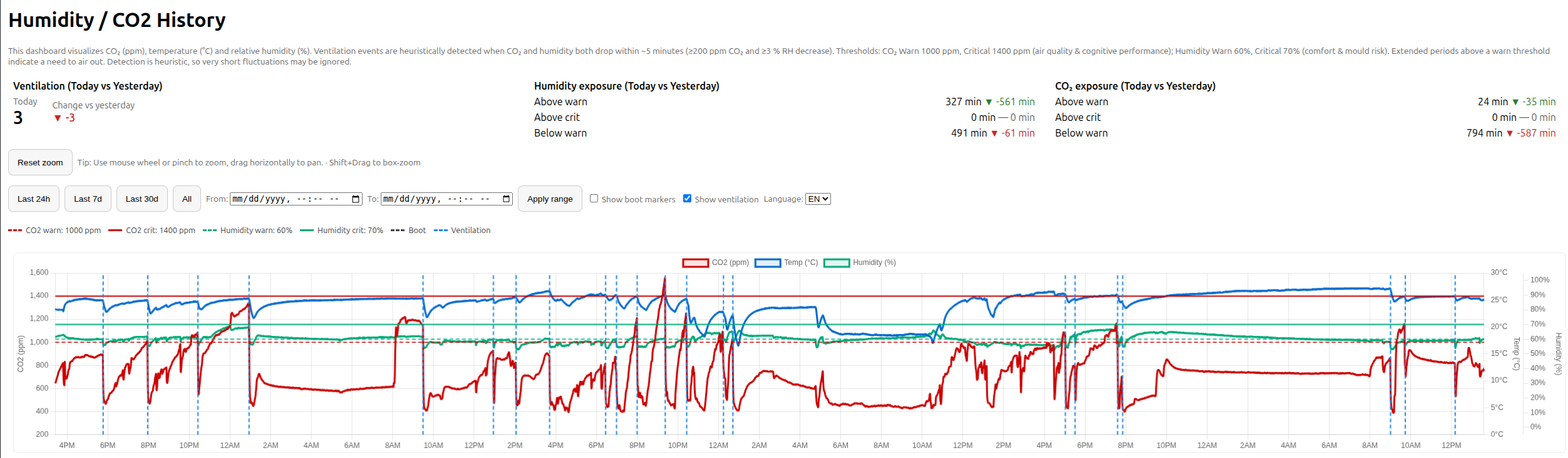
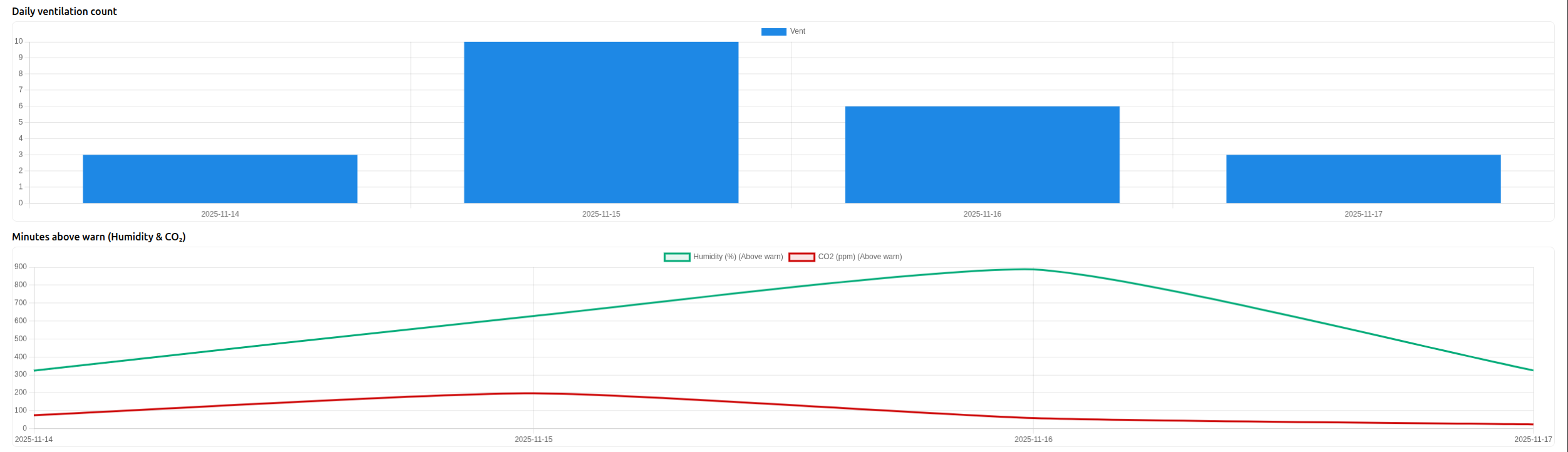
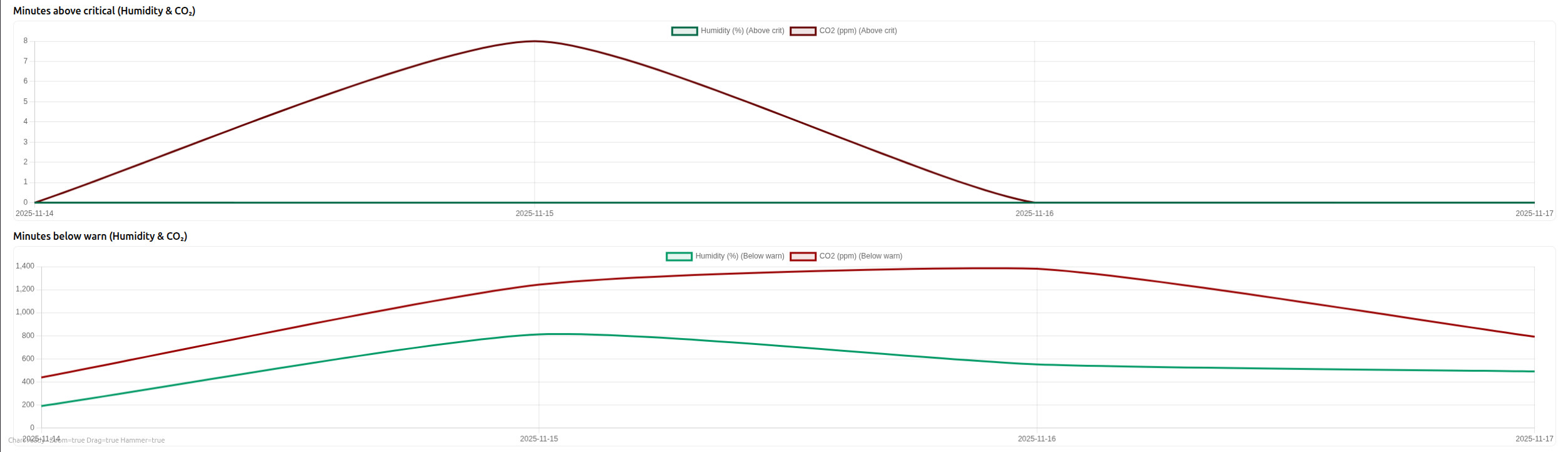
The dashboard is meant to help us understand how air quality evolves over time and inspire us to improve it. It shows interactive charts and some metrics that are easy to interpret. The dashboard is meant to be a gentle prompt to monitor indoor air quality over a long period of time. Here’s a small preview:
telegram bot
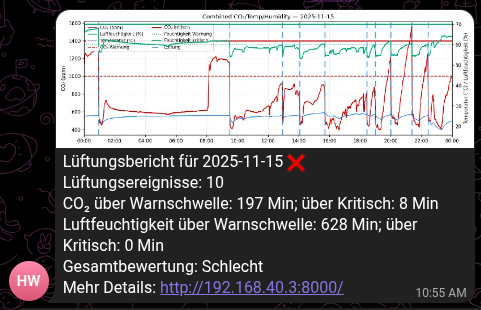
Actively opening the dashboard and viewing graphs is a conscious decision that is easy to forget in everyday life. To combat this, I created a Telegram bot that posts a short summary of the previous day to a group chat in our flat every morning at 7am. This helps raise awareness and makes it easier to improve air quality habits.
what’s coming in part 2
In the second part of this blog series I want to dive deeper into the code and implementation and talk about the challenges I faced. I also plan to make the GitHub repository public by then, so that interested readers can study the code, propose improvements, or create their own version of the e-paper room air monitor.
At the end
GitHub
The GitHub repository is not public yet. I’ll open this up at the latest when Part 2 of this series is published.
Want to contribute?
If you find this project interesting and would like to contribute, here are some ideas:
- Contribute code to the GitHub repository (once it’s made public).
- Do you have a 3D printer and experience designing 3D objects?
- I would love a nice case design for the e-paper room air monitor.
- Do you have ideas for additional sensors?
- Leave a comment and/or sponsor a sensor.
- Do you have hints, feedback or general comments?
- Leave a comment or contact me directly.