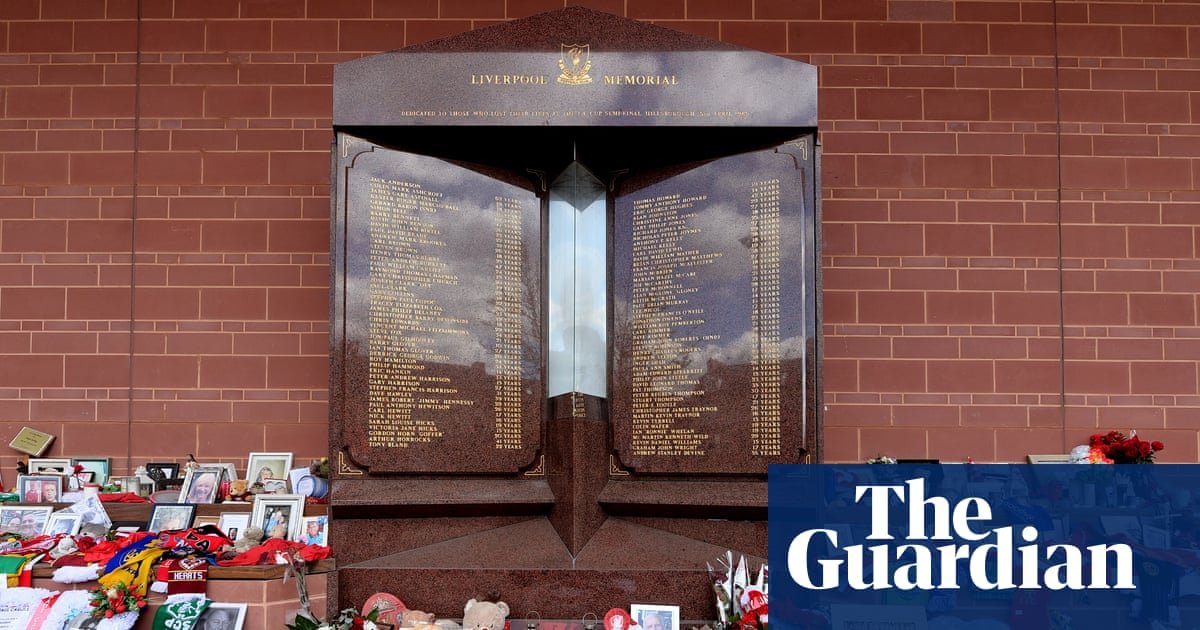
Twelve police officers would have faced disciplinary cases of gross misconduct over a litany of professional failings relating to the Hillsborough disaster if they were still serving, the police watchdog has said.
However, none of the former officers named by the Independent Office for Police Conduct (IOPC) will face disciplinary proceedings as they have all retired. Some people have died, including Peter Wright, Chief Constable of South Yorkshire Police at the time of the 1989 disaster.
Ten of those facing gross misconduct cases were in the South Yorkshire force, including senior officers responsible for security at Hillsborough. The IOPC listed six allegations of gross misconduct against Wright, including seeking to diminish the force’s responsibility and place blame on the victims, Liverpool Football Club supporters.
Two other men were senior officers in West Midlands Police, who were appointed to investigate the South Yorkshire force after the disaster. Mervyn Jones and Michael Foster would have faced allegations that they “failed to investigate effectively” and “were biased against supporters in favor of South Yorkshire Police”.
The 366-page report, handed to bereaved families in recent days, marks the culmination of 14 years of work by the IOPC, which describes it as “the largest independent investigation ever conducted into alleged police misconduct and criminality in England and Wales”.
The Warrington-based inquiry began in 2012 after the Hillsborough Independent Panel made landmark findings on police culpability, leading to the verdict of accidental death from the first inquiry in 1991 being overturned.
The IOPC said in the report that it found 110 complaints upheld or cases to be answered against former officials, including “falsehood and pretense”, “disgraceful conduct”, “abuse of authority” and “neglect of duty”.
Some people whose relatives died at Hillsborough told the Guardian they welcomed the findings, but were angry that the IOPC did not find more cases to answer against South Yorkshire Police officers for falsely accusing Liverpool supporters. Families and survivors have long described it as a police cover-up, and have spent decades fighting for truth and justice.
The IOPC has made clear its view that in the absence of candor to positively assist the investigation, the South Yorkshire force and its officers were not breaking the law or conduct rules by “presenting their best case” about the causes of the disaster in 1989, even if this involved withholding vital information and amending the statements of hundreds of officers.
There is also disappointment among survivors that the IOPC has not criticized the West Midlands Police investigation more widely. The watchdog upheld some complaints, but said it did not find that West Midlands officers were generally intimidating the survivors they interviewed, asked them excessively about supporters’ drinking, or were biased towards South Yorkshire Police.
Ninety-seven men, women and children were killed in the FA Cup semi-final clash between Liverpool and Nottingham Forest at Hillsborough Stadium in Sheffield Wednesday on 15 April 1989.
The jury found a series of failures by South Yorkshire Police in a second inquest into the disaster in April 2016, and that the victims were unlawfully killed by manslaughter due to gross negligence by the commanding officer, Captain David Duckenfield. The jury also determined that no behavior by Liverpool supporters contributed to the disaster.
Duckenfield was acquitted in a criminal trial in 2019. No police officers have been convicted of any criminal offense in relation to the Hillsborough failures, and none faced disciplinary proceedings while they served.
Following Operation Resolve, an investigation overseen by the IOPC into how the disaster occurred, the watchdog found that Duckenfield would have faced 10 counts of gross misconduct, including his infamous lie told at the time of the disaster that Liverpool supporters had forcibly opened the exit gates to gain entry to the stadium. In fact, Duckenfield had ordered the wide gate to be opened to relieve the severe crowd outside the ground.
The IOPC said Superintendent Roger Marshall and Superintendent Bernard Murray, who had senior crowd protection roles, would also have faced cases of gross misconduct, as would the then Assistant Chief Constable Walter Jackson of South Yorkshire Police. He was off duty but on call, and was at the match; The charge against him was that: “ACC Jackson failed to organize and direct junior-ranking police officers to help save lives…ACC Jackson failed to gain control of the disaster.”
Sir Norman Bettison, who was Chief Inspector in South Yorkshire Police and later became Chief Constable of Merseyside Police, will face charges that he made “misleading and inaccurate press statements” which minimized his role in South Yorkshire Police after the disaster, and that he “deliberately been dishonest about his involvement in the disaster” when he applied for the Merseyside post. Liverpool MP Ian Byrne has written to the Cabinet Office demanding Bettison be stripped of his knighthood.
A mounted police officer, PC David Scott, would have faced charges that he lied when he said his horse had been burnt by Liverpool supporters.
The last chair of the Hillsborough Family Support Group, Margaret Aspinall, whose 18-year-old son James was one of the 97 people unlawfully killed, has successfully campaigned with other families for a “Hillsborough Law”. Introduced into Parliament by Keir Starmer’s government in September, it aims to prevent official cover-ups by introducing a duty of “candor, transparency and candor” for police officers and public officials.
Aspinall said: “I cannot accept or understand how 97 people could be unlawfully killed, the police could lie, and no one could be held accountable. I recognize that the IOPC and Operation Resolve have worked hard and some of these findings are strong. But it is absolutely ridiculous to accuse so few people of gross misconduct for the lies and cover-ups we have had to fight for 36 years Has gone.”
IOPC Deputy Director General Kathy Cashel said she sympathized with families who still felt they had not received a proper explanation or justice, describing it as “extremely unsatisfying” to “still be looking for those answers” 36 years later.
He said, “South Yorkshire Police had taken a completely defensive stance, having made allegations about the behavior of fans which have been repeatedly refuted. But there is a difference in having that as a fact, and then having individuals convicted of gross misconduct or misconduct.”
“To meet the evidentiary threshold, it is a high hurdle to prove not only that it (a statement) was false, but also that it was knowingly put forward as false.”
The IOPC made clear that it supported the Hillsborough law, saying in the report: “If such a duty had existed in 1989, it would have helped to bring out the full facts of what happened sooner.”
<a href